- Industrial LCD display
-
Industrial Products
- DC Servo Drive
- AC Servo Drive
- other
- Heidelberg
- FANUC
- IFM
- Meter
- CCD
- Membrane Keypad
- Film
- YOKOGAWA Module
- Card
- ABB
- MITSUBISHI
- FANUC
- KEYENCE
- BECKHOFF
- Honeywell
- HOLLYSYS
- FUJI servo drives
- HP
- solenoid valve
- thermostat
- Siemens adapter
- color oscilloscope
- Fujitsu connector
- CHELIC
- SMC
- CISCO Module
- INTEL
- Key board
- FAIRCHILD
- Motherboard
- Board
- Bearing
- other
- Control Panel
- Contactor
- Circuit
- OMRON
- Relay
- Controller
- Photoelectric Switch
- Photoelectric Sensor
- Original
- Fan
- Motor Driver
- Limit Switch
- Amplifier
- power supply
- LENZE
- Cable
- Encoder
- Sensor
- Transformer
- Fiber Optic Sensor
- Protection Relay
- Temperature Controller
- Proximity Switch
- Switch Sensor
- Siemens
- Industrial board
- HMI Touch Glass
-
HMI Full Machine Whole unit
- OMRON HMI Touch Panel
- Siemens HMI Touch Panel
- Mitsubishi HMI Touch Panel
- Allen-Bradley automation HMI Touch Panel
- DELTA HMI Touch Panel
- EVIEW DELTA HMI Touch Panel
- KINCO DELTA HMI Touch Panel
- HITECH HMI Touch Panel
- WEINTECK HMI Touch Panel
- TECVIEW HMI Touch Panel
- WEINVIEW HMI Touch Panel
- PRO-FACE HMI Touch Panel
- SIMATIC HMI Touch Panel
- AMPIRE HMI Touch Panel
- HEIDELBERG HMI Touch Panel
- PANASONIC HMI Touch Panel
- PATLITE HMI Touch Panel
- KYOCERA HMI Touch Panel
- KEYENCE HMI Touch Panel
- WEINVIEW HMI Touch Panel
- HITECH HMI Touch Panel
- FUJI HMI Touch Panel
- HAKKO HMI Touch Panel
- SCHNEIDER HMI Touch Panel
- SAMKOON touch panel
- other
- Module
- lcd inverter
- Membrane Keypad Switch
- Winni Touch Screens
- Frequency Inverter
- Servo Motor
- PLC




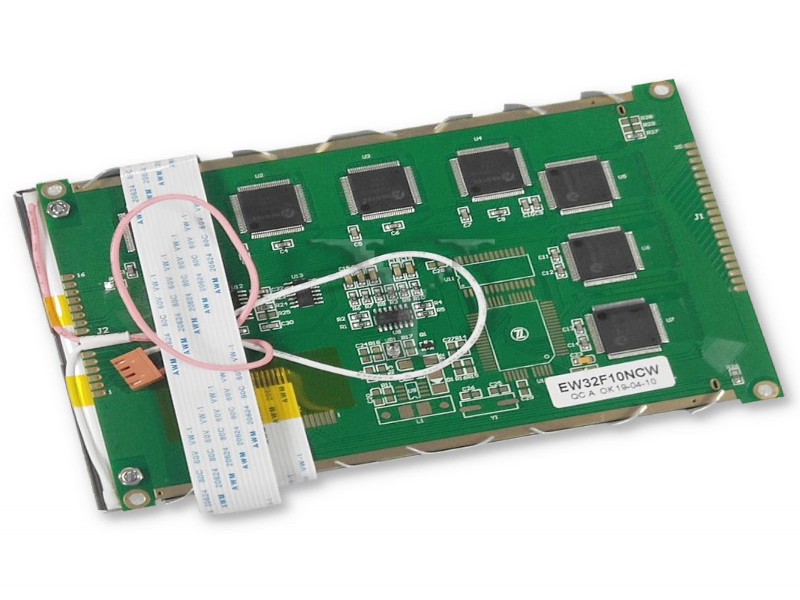
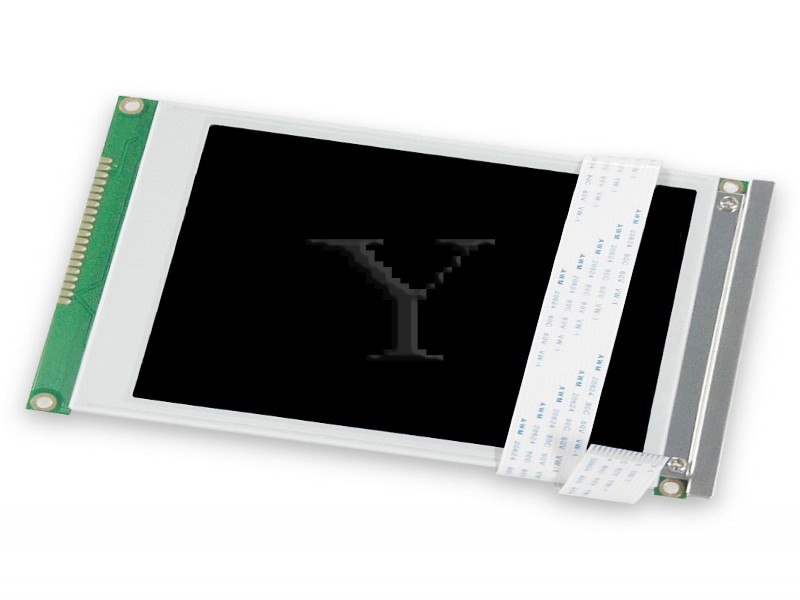
5.7 inch STN LCD Panel for EDT EW32F10NCW
In the intricate world of electronic displays, the selection of a specific panel can define the performance, cost, and user experience of an entire device. This article delves into the technical universe of the 5.7-inch STN LCD panel designed for the EDT EW32F10NCW controller. This particular combination represents a classic and enduring solution in applications where reliability, readability, and cost-effectiveness are paramount over high-speed video or full-color reproduction.
We will explore the fundamental characteristics of STN (Super Twisted Nematic) technology, unravel the significance of its pairing with the EW32F10NCW driver IC, and examine its core electrical and optical parameters. Moving beyond specifications, the discussion will highlight the ideal application landscapes for this panel, from industrial instrumentation to portable medical devices, and provide a balanced view of its advantages against its inherent limitations. Finally, we will address practical considerations for integration and look at its position in the contemporary display ecosystem. This deep dive aims to equip engineers, product designers, and procurement specialists with the nuanced understanding needed to evaluate this display solution effectively.
Understanding STN LCD Technology and Its Enduring Relevance
STN, or Super Twisted Nematic, is a pivotal evolution of the fundamental Twisted Nematic (TN) LCD. The key differentiator lies in the greater twist angle of the liquid crystal molecules—typically 180 to 270 degrees compared to TN's 90 degrees. This super-twisting creates a steeper electro-optical response curve. In practical terms, this means STN panels offer significantly higher contrast and better readability over a wider viewing angle than basic TN screens, especially as the number of displayed lines increases.
Monochrome STN displays, like the one in focus, often present a characteristic blue-on-silver or dark-gray-on-light-gray appearance. They are passive-matrix devices, meaning each pixel is addressed by the intersection of row and column electrodes without an active switching element at each pixel. This makes them simpler and more cost-effective to manufacture than active-matrix TFT displays. While limited in color depth and refresh rate compared to TFT, STN technology excels in applications requiring static or slowly changing information, exceptional sunlight readability, and very low power consumption. Its enduring relevance is a testament to its robustness and economic efficiency in specific market niches.
The Synergy with the EDT EW32F10NCW Controller
The specification of a panel for the EDT EW32F10NCW is not incidental; it denotes a critical hardware and protocol partnership. The EW32F10NCW is a dedicated LCD controller/driver IC from Elan Digital Systems. This chip is engineered to manage the precise timing, voltage levels, and signal sequencing required to drive a passive STN matrix reliably. The 5.7-inch diagonal size and the native resolution (commonly 320x240 pixels or QVGA for this class) are parameters the controller is optimized to handle efficiently.
This synergy offloads the intense computational burden of display refresh from the main system microcontroller. The host processor simply sends display data and high-level commands via a standard parallel or serial interface to the EW32F10NCW, which then handles all the complex, panel-specific waveform generation. This division of labor ensures stable performance, reduces flicker, and simplifies firmware development. Choosing a panel explicitly matched for this controller guarantees electrical compatibility and saves significant engineering time in low-level driver development, allowing designers to focus on application functionality.
Key Electrical and Optical Specifications Decoded
A technical evaluation hinges on understanding the panel's key parameters. Electrically, the operating voltage (Vcc and LCD drive voltage, Vop) is crucial for system power design. A typical panel for the EW32F10NCW might operate on a logic supply of 3.3V or 5.0V, with a higher Vop (e.g., 10-15V) generated by the controller's internal charge pump to achieve the necessary contrast. Current consumption is exceptionally low, often in the milliampere or even microampere range, making it ideal for battery-powered devices.
Optically, specifications define the user experience. Contrast Ratio is a primary measure of readability. Viewing Angle (e.g., 6 o'clock, 12 o'clock direction) indicates from which direction the screen content is clearest. Response Time for STN is slower (hundreds of milliseconds) than TFT, suitable for text and icons but not fast animation. The backlight type (usually LED-based) and its luminance are vital for operation in low-light conditions. These specs collectively paint a picture of a display optimized for clarity, efficiency, and stability in controlled or demanding environments.
Ideal Application Landscapes and Use Cases
The 5.7" STN panel with the EW32F10NCW controller finds its home in environments where its strengths are necessities, not compromises. Industrial Human-Machine Interfaces (HMIs) on factory floor equipment benefit from its readability under various lighting, wide operating temperature range, and resistance to electrical noise. In the medical field, portable diagnostic devices and bedside monitors leverage its low power draw and reliable, flicker-free presentation of critical data.
Other prime applications include point-of-sale (POS) terminals, telecommunications test equipment, embedded instrumentation, and automotive aftermarket displays. In these use cases, the information displayed is predominantly alphanumeric, symbolic, or in simple graphical form. The cost-effectiveness of the STN solution allows for its deployment in high-volume or cost-sensitive projects where a full-color TFT would be overkill and economically unviable. It is the workhorse display for specialized tools that prioritize function and durability over multimedia flair.
Advantages and Inherent Limitations: A Balanced Perspective
Choosing this display path comes with a clear set of trade-offs. Its advantages are compelling: extremely low power consumption, excellent sunlight readability due to its reflective nature, high contrast for monochrome content, wide operating temperature ranges, lower module cost, and proven long-term reliability with a simple digital interface.
Conversely, its limitations are inherent to the technology. It is primarily monochrome or limited to a few colors (like FSTN). The refresh rate and response time are too slow for video or fast-moving graphics. Viewing angles, while better than TN, are still narrower than modern TFT or IPS panels, and contrast can vary with temperature. The passive matrix can also introduce subtle "ghosting" effects during updates. A successful design acknowledges these constraints, positioning the display for tasks that align with its core competencies.
Integration Considerations and Modern Context
Integrating this panel requires attention to several practical aspects. Physically, designers must account for the mechanical footprint, mounting holes, and the connector type (typically a zebra strip or pin header). Electrically, ensuring clean power supplies, especially for the analog Vop, is essential to prevent display artifacts. Firmware integration involves initializing the EW32F10NCW controller with the correct timing parameters and potentially managing a look-up table for gray shades.
In today's market dominated by vibrant TFTs and OLEDs, the 5.7" STN panel occupies a specialized but stable segment. It is not a "legacy" technology being phased out, but rather a mature, optimized solution for a specific set of problems. For new designs, it competes not on pixel density or color gamut, but on total system cost, power budget, reliability, and suitability for harsh environments. Its value proposition remains strong in industrial, medical, and embedded sectors where these factors are the primary design drivers.
Frequently Asked Questions (FAQs)
Conclusion
The 5.7-inch STN LCD panel for the EDT EW32F10NCW controller exemplifies how specialized display technologies continue to thrive by solving specific engineering challenges with elegant efficiency. It is not a one-size-fits-all solution, but rather a precision instrument for contexts where power, cost, durability, and readability under stress are the defining criteria.
By understanding the principles of STN technology, the critical partnership with its dedicated controller, and its clear set of strengths and constraints, designers can make informed decisions. In an era of dazzling visual media, this display module remains an indispensable component in the backbone of industry, healthcare, and critical infrastructure—proving that for many essential applications, clarity and reliability are the most valuable features of all.