- Industrial LCD display
-
Industrial Products
- DC Servo Drive
- AC Servo Drive
- other
- Heidelberg
- FANUC
- IFM
- Meter
- CCD
- Membrane Keypad
- Film
- YOKOGAWA Module
- Card
- ABB
- MITSUBISHI
- FANUC
- KEYENCE
- BECKHOFF
- Honeywell
- HOLLYSYS
- FUJI servo drives
- HP
- solenoid valve
- thermostat
- Siemens adapter
- color oscilloscope
- Fujitsu connector
- CHELIC
- SMC
- CISCO Module
- INTEL
- Key board
- FAIRCHILD
- Motherboard
- Board
- Bearing
- other
- Control Panel
- Contactor
- Circuit
- OMRON
- Relay
- Controller
- Photoelectric Switch
- Photoelectric Sensor
- Original
- Fan
- Motor Driver
- Limit Switch
- Amplifier
- power supply
- LENZE
- Cable
- Encoder
- Sensor
- Transformer
- Fiber Optic Sensor
- Protection Relay
- Temperature Controller
- Proximity Switch
- Switch Sensor
- Siemens
- Industrial board
- HMI Touch Glass
-
HMI Full Machine Whole unit
- OMRON HMI Touch Panel
- Siemens HMI Touch Panel
- Mitsubishi HMI Touch Panel
- Allen-Bradley automation HMI Touch Panel
- DELTA HMI Touch Panel
- EVIEW DELTA HMI Touch Panel
- KINCO DELTA HMI Touch Panel
- HITECH HMI Touch Panel
- WEINTECK HMI Touch Panel
- TECVIEW HMI Touch Panel
- WEINVIEW HMI Touch Panel
- PRO-FACE HMI Touch Panel
- SIMATIC HMI Touch Panel
- AMPIRE HMI Touch Panel
- HEIDELBERG HMI Touch Panel
- PANASONIC HMI Touch Panel
- PATLITE HMI Touch Panel
- KYOCERA HMI Touch Panel
- KEYENCE HMI Touch Panel
- WEINVIEW HMI Touch Panel
- HITECH HMI Touch Panel
- FUJI HMI Touch Panel
- HAKKO HMI Touch Panel
- SCHNEIDER HMI Touch Panel
- SAMKOON touch panel
- other
- Module
- lcd inverter
- Membrane Keypad Switch
- Winni Touch Screens
- Frequency Inverter
- Servo Motor
- PLC


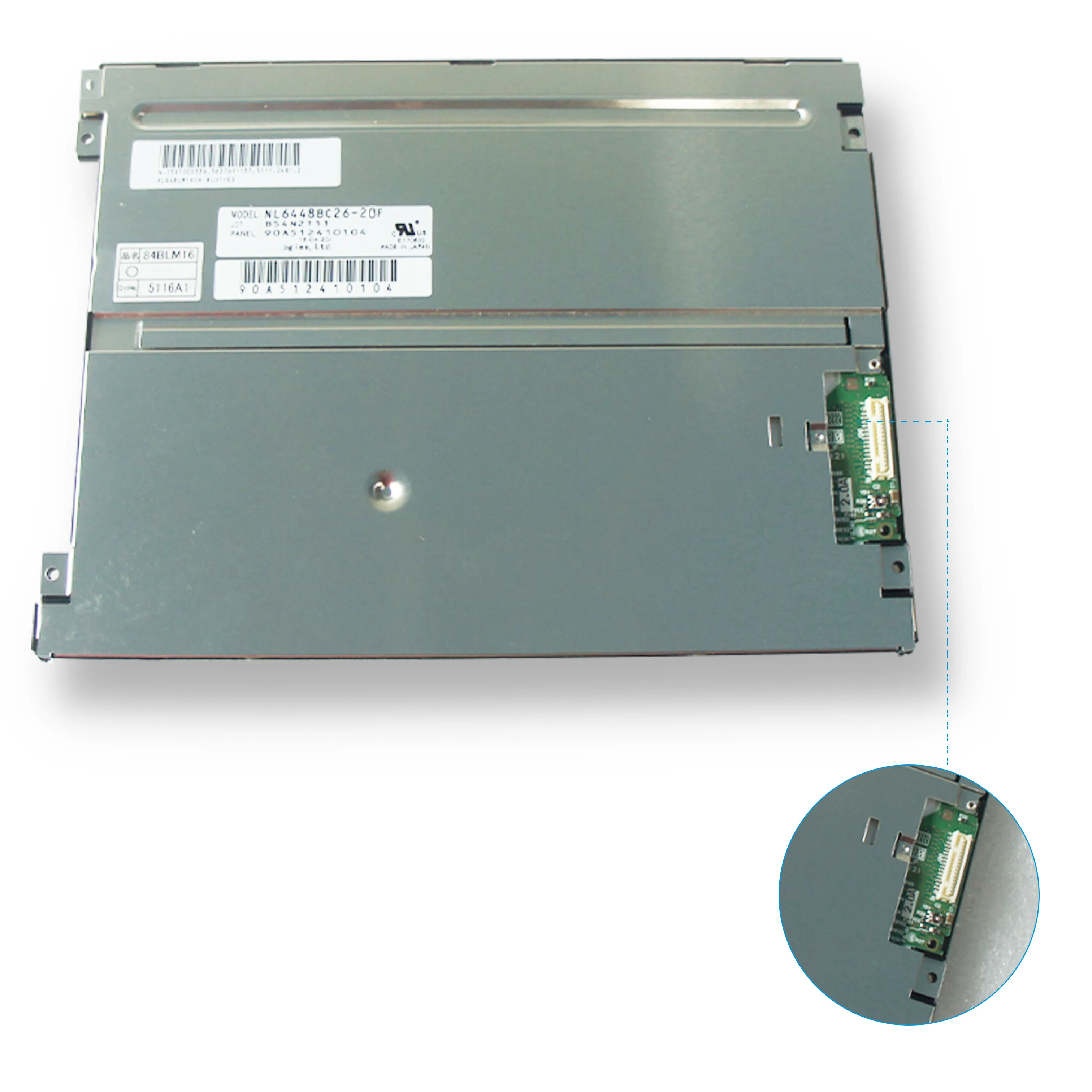

5.7"320*240 FSTN-LCD for Kyocera KCS057QV1AJ-G20
In the realm of industrial display technology, longevity, reliability, and readability under demanding conditions often outweigh the allure of high-resolution color screens. The Kyocera KCS057QV1AJ-G20, a 5.7-inch display module featuring a 320*240 resolution and Film Compensated Super Twisted Nematic (FSTN) technology, stands as a testament to this principle. While modern consumer gadgets chase vibrant AMOLEDs, the industrial and medical sectors require components that guarantee operational stability for over a decade. This article delves into the specific architecture of this module, exploring why the FSTN-LCD remains a staple for applications where optical clarity, low power consumption, and extreme durability are non-negotiable. We will dissect its pixel structure, viewing mechanics, and interface logic, moving beyond basic specifications to understand how this display manages contrast ratios in high-ambient-light environments and why it continues to be specified for equipment ranging from CNC machinery to patient monitors.
To appreciate the Kyocera KCS057QV1AJ-G20, one must first understand why standard TN (Twisted Nematic) LCDs are often inadequate for professional terminals. Traditional TN panels suffer from poor contrast when viewed off-axis and can appear washed out in bright daylight. The FSTN (Film Compensated STN) variant introduces a crucial optical layer: a retardation film that compensates for the birefringence inherent in the liquid crystal layer. This compensation layer dramatically improves the black-and-white contrast ratio, transforming a typical grey-on-green STN background into a crisp, dark-on-light or light-on-dark scheme. For the 320*240 QVGA resolution of this panel, this means that each of the 76,800 pixels delivers a distinct, stable state without the color shifting that plagues simpler displays. The FSTN film effectively neutralizes the residual retardation of the LC molecules, creating a true "paper-like" appearance. This makes the display highly readable under direct sunlight—a critical requirement for outdoor industrial kiosks or aviation cockpit instruments where glare is constant. Furthermore, the passive matrix driving nature of STN allows for a simpler construction, which inherently reduces the likelihood of failure compared to the thin-film transistors (TFT) used in active matrix displays.
The specific resolution of 320 x 240 pixels (QVGA) is not arbitrary; it is a carefully balanced standard for text and basic graphical user interfaces. In the context of a 5.7-inch diagonal, this yields a pixel density of approximately 70 PPI. While low by smartphone standards, this density is ideal for the human eye at typical arm's-length viewing distances (50-70cm). For character-based interfaces, this allows for a standard 40 characters by 16 lines of text using an 8x16 pixel font, providing a dense information display without requiring microscopic inspection. The rectangular aspect ratio of 4:3 also maps directly to many legacy SCADA (Supervisory Control and Data Acquisition) system designs, allowing for drop-in replacements without software modification. The passive matrix driving scheme of this panel (using X and Y electrodes) means that each pixel is not individually switched. Instead, the display controller addresses each row sequentially with a voltage, while the columns carry the data signal. This multiplexing inherently introduces a slower response time compared to TFTs, but for static or slowly updating data—like temperature readings, pressure gauges, or patient vital signs—this latency is negligible. The real advantage lies in the simplified manufacturing cost and the resistance to pixel "death," as a passive matrix cannot suffer from the individual transistor failures that create dead pixels in TFT displays.
The KCS057QV1AJ-G20 typically operates in a Negative-Transmissive or Positive-Transflective mode, depending on the backlight and film selection. The FSTN film provides a viewing cone that, while narrower than a modern IPS panel (typically 45° to 60° in the vertical axis with significant cone of around 60°-70° horizontal), is highly directional by design. This directionality is an asset in equipment panels where the user is positioned directly in front of the display. The true strength emerges in variable ambient light conditions. The transflective variant of this module incorporates a partial mirror behind the liquid crystal layer. This allows ambient light to be reflected back through the display when the backlight is off, maintaining readability even with zero power to the backlight. When the backlight is active, it transmits through the display, creating a high-contrast image. This dual-mode operation is invaluable for battery-powered medical devices (like infusion pumps) where the backlight can be dimmed or turned off during daylight hours, conserving significant power. The contrast ratio, typically rated at 8:1 to 12:1 for FSTN panels, is far superior to the 3:1 of standard STN, ensuring that characters do not blur together. Additionally, the wide operating temperature range (-20°C to +70°C) of STN LCDs, coupled with the optional heater circuits available on the KCS057QV1AJ-G20, makes it suitable for refrigerated storage or outdoor installations in temperate climates.
Integrating the KCS057QV1AJ-G20 into a system requires understanding its electrical interface, which is typically a parallel interface (often 18-bit or 24-bit RGB, depending on the specific configuration, though many STN panels use 4-bit or 8-bit digital or even analog interfaces). More commonly, this specific panel utilizes a standard 18-bit or 24-bit parallel RGB interface, requiring a dedicated LCD controller (like the SSD1963 or similar) embedded in the host processor. The key technical consideration here is timing. The panel requires specific horizontal and vertical sync pulses (HSYNC, VSYNC), a pixel clock (DOTCLK), and data enable signals (DE). The clock frequency for a 320x240 panel at 60Hz refresh is relatively low (around 6.5MHz to 10MHz), simplifying PCB layout and reducing electromagnetic interference (EMI). A critical aspect of the interface is the supply voltage. The module typically requires a single +3.3V logic supply, but the LCD drive voltage (VEE or V0) is a higher voltage (often 10V to 25V) generated by an internal DC-DC converter. Engineers must ensure the power supply can handle the inrush current of this converter when the display wakes from sleep mode. The interface also includes a contrast adjustment pin (V0), which allows software or hardware trimming of the LCD bias voltage, fine-tuning the display's appearance for different temperatures or viewing angles. Properly managing this voltage is crucial to avoid ghosting or washing out the image.
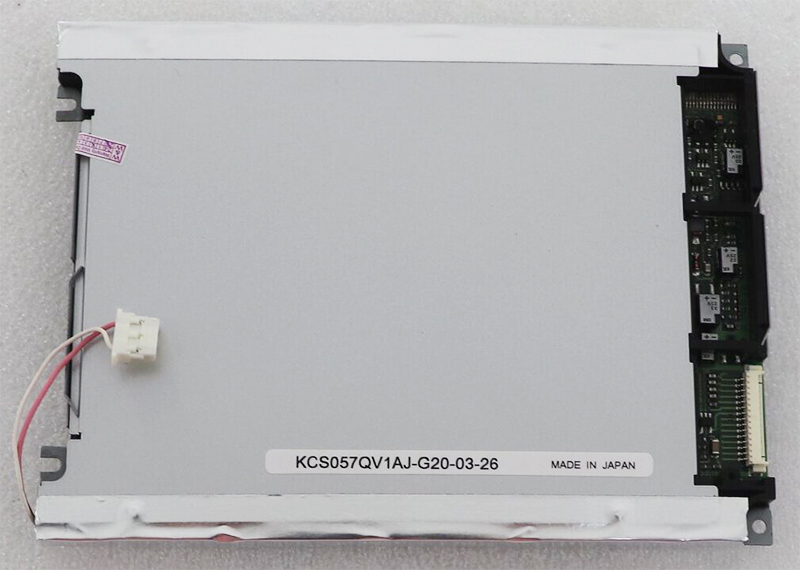
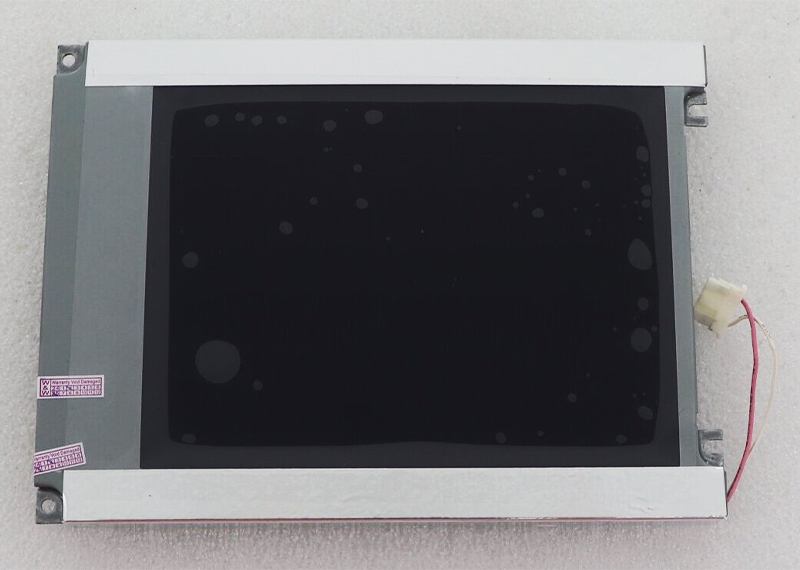
A defining characteristic of the Kyocera KCS057QV1AJ-G20 module is its backlight technology. While some older versions used CCFL (Cold Cathode Fluorescent Lamps), modern iterations or replacements for this panel utilize high-brightness LEDs. The backlight is often edge-lit, with LEDs mounted on a flexible PCB at one or two edges of the light guide. The standard configuration typically involves a string of 6 to 10 white LEDs in series, requiring a constant current driver. The forward voltage of the LED string is around 18V to 30V, necessitating a boost converter. The lifetime of the LED backlight is a major selling point—rated at 50,000 to 100,000 hours (MTBF), compared to the 10,000-20,000 hours of a CCFL. This directly impacts the total cost of ownership (TCO) for equipment like laboratory analyzers that run 24/7. Furthermore, the ability to drive the LEDs with Pulse Width Modulation (PWM) allows for precise brightness control without color shift, which is difficult to achieve with CCFL dimming. For outdoor applications, optional high-brightness versions of this module can achieve 800 cd/m² or more, ensuring the display remains readable even when the sun hits the screen directly. The absence of mercury in LEDs also makes the module RoHS compliant without special exemptions, a significant factor for medical and environmental equipment certification.
The most compelling argument for the Kyocera KCS057QV1AJ-G20 lies in its supply chain stability. In an industry where consumer display panels are redesigned every 18 months, Kyocera guarantees a lifecycle of 7 to 10 years or more for their industrial LCDs. For a manufacturer of a CT scanner or an elevator controller, stability is survival. If a display is discontinued, the entire product must be recertified, which can cost hundreds of thousands of dollars and months of delay. The KCS057QV1AJ-G20 is often specified with a firmware-locked interface, meaning the timing and initialization sequences are standardized and documented, preventing compatibility issues during long production runs. Furthermore, the mechanical design of the module—including the mounting holes, connector placement (typically a 20-pin or 30-pin FPC connector), and the bezel dimensions—remains unchanged across production revisions. This allows engineers to design the enclosure once and source the display for a decade without mechanical rework. The dominance of FSTN in this specific form factor also ensures a healthy surplus market, with components available from authorized distributors and secondary markets for legacy repairs. This is a strategic asset for any company building mission-critical equipment that cannot tolerate obsolescence.
What does FSTN stand for and how does it improve the display?
FSTN stands for Film Compensated Super Twisted Nematic. It adds a retardation film to the LCD cell, neutralizing color shifts and significantly improving the black-and-white contrast ratio compared to standard STN.
Is the Kyocera KCS057QV1AJ-G20 compatible with modern 3.3V microcontrollers?
Yes, the logic interface typically operates at 3.3V, making it directly compatible with most modern ARM, STM32, and FPGA controllers without level shifting.
What is the typical response time of this FSTN panel?
Response times range from 150ms to 300ms (Tr+Tf). This is adequate for static text and data, but unsuitable for fast video or dynamic animations.
Can I use this display without a backlight outdoors?
If the specific variant is transflective, yes. Ambient light reflects off the internal mirror, allowing readability without backlight. The transmissive variant requires the backlight on at all times.
How do I adjust the contrast on this LCD module?
Contrast is adjusted by varying the voltage on the V0 pin (typically via a potentiometer or a DAC output from the controller), which sets the LCD drive bias voltage.
What is the resolution and how many characters can it display?
The resolution is 320 x 240 pixels (QVGA). At 8x16 pixel character cells, it can display 40 columns by 16 rows of text perfectly.
What is the operating temperature range for this display?
The standard industrial operating temperature is -20°C to +70°C. Extended temperature variants can go down to -30°C or lower.
Why is the viewing angle so narrow compared to a smartphone screen?
FSTN-LCDs are optimized for direct, head-on viewing. The narrow vertical cone is a trade-off for high contrast and low power. The horizontal cone is wider (typically 60-70 degrees).
Is this a drop-in replacement for older Sharp or Toshiba 5.7" QVGA panels?
Often yes, but check the mechanical dimensions, connector pinout, and timing parameters. Many legacy designs share a 20-pin parallel interface standard, but verification of VCOM and backlight voltages is essential.
What is the typical power consumption of the module?
Logic power is under 50mW @ 3.3V. The backlight typically consumes 300-600mW at standard brightness. Total consumption is usually well under 1W.
Conclusion: The Unseen Reliability Standard
The Kyocera KCS057QV1AJ-G20 FSTN-LCD is far more than a legacy component; it is a specialized tool engineered for a specific purpose—to deliver reliable, readable information in environments where consumer displays fail. Its adoption of FSTN technology overcomes the basic contrast limitations of earlier LCDs, while its passive matrix architecture provides inherent robustness against pixel failures common in TFTs. The carefully balanced QVGA resolution offers a practical interface for dense text and control data, supported by an interface logic that is both simple to implement and electrically robust. The module's true value, however, lies in its long-term industrial viability. The long backlight lifetimes, standardized mechanics, and multi-year supply commitments from Kyocera make it a cornerstone for equipment manufacturers who prioritize Lifecycle Cost over initial purchase price. For the engineer tasked with designing a critical control system that must operate for a decade, this display offers a dependable foundation. It embodies the principle that in industrial design, the best technology is not the newest, but the one that works consistently, day in and day out, for years to come. This is the silent, enduring logic of the FSTN panel.