- Industrial LCD display
-
Industrial Products
- DC Servo Drive
- AC Servo Drive
- other
- Heidelberg
- FANUC
- IFM
- Meter
- CCD
- Membrane Keypad
- Film
- YOKOGAWA Module
- Card
- ABB
- MITSUBISHI
- FANUC
- KEYENCE
- BECKHOFF
- Honeywell
- HOLLYSYS
- FUJI servo drives
- HP
- solenoid valve
- thermostat
- Siemens adapter
- color oscilloscope
- Fujitsu connector
- CHELIC
- SMC
- CISCO Module
- INTEL
- Key board
- FAIRCHILD
- Motherboard
- Board
- Bearing
- other
- Control Panel
- Contactor
- Circuit
- OMRON
- Relay
- Controller
- Photoelectric Switch
- Photoelectric Sensor
- Original
- Fan
- Motor Driver
- Limit Switch
- Amplifier
- power supply
- LENZE
- Cable
- Encoder
- Sensor
- Transformer
- Fiber Optic Sensor
- Protection Relay
- Temperature Controller
- Proximity Switch
- Switch Sensor
- Siemens
- Industrial board
- HMI Touch Glass
-
HMI Full Machine Whole unit
- OMRON HMI Touch Panel
- Siemens HMI Touch Panel
- Mitsubishi HMI Touch Panel
- Allen-Bradley automation HMI Touch Panel
- DELTA HMI Touch Panel
- EVIEW DELTA HMI Touch Panel
- KINCO DELTA HMI Touch Panel
- HITECH HMI Touch Panel
- WEINTECK HMI Touch Panel
- TECVIEW HMI Touch Panel
- WEINVIEW HMI Touch Panel
- PRO-FACE HMI Touch Panel
- SIMATIC HMI Touch Panel
- AMPIRE HMI Touch Panel
- HEIDELBERG HMI Touch Panel
- PANASONIC HMI Touch Panel
- PATLITE HMI Touch Panel
- KYOCERA HMI Touch Panel
- KEYENCE HMI Touch Panel
- WEINVIEW HMI Touch Panel
- HITECH HMI Touch Panel
- FUJI HMI Touch Panel
- HAKKO HMI Touch Panel
- SCHNEIDER HMI Touch Panel
- SAMKOON touch panel
- other
- Module
- lcd inverter
- Membrane Keypad Switch
- Winni Touch Screens
- Frequency Inverter
- Servo Motor
- PLC


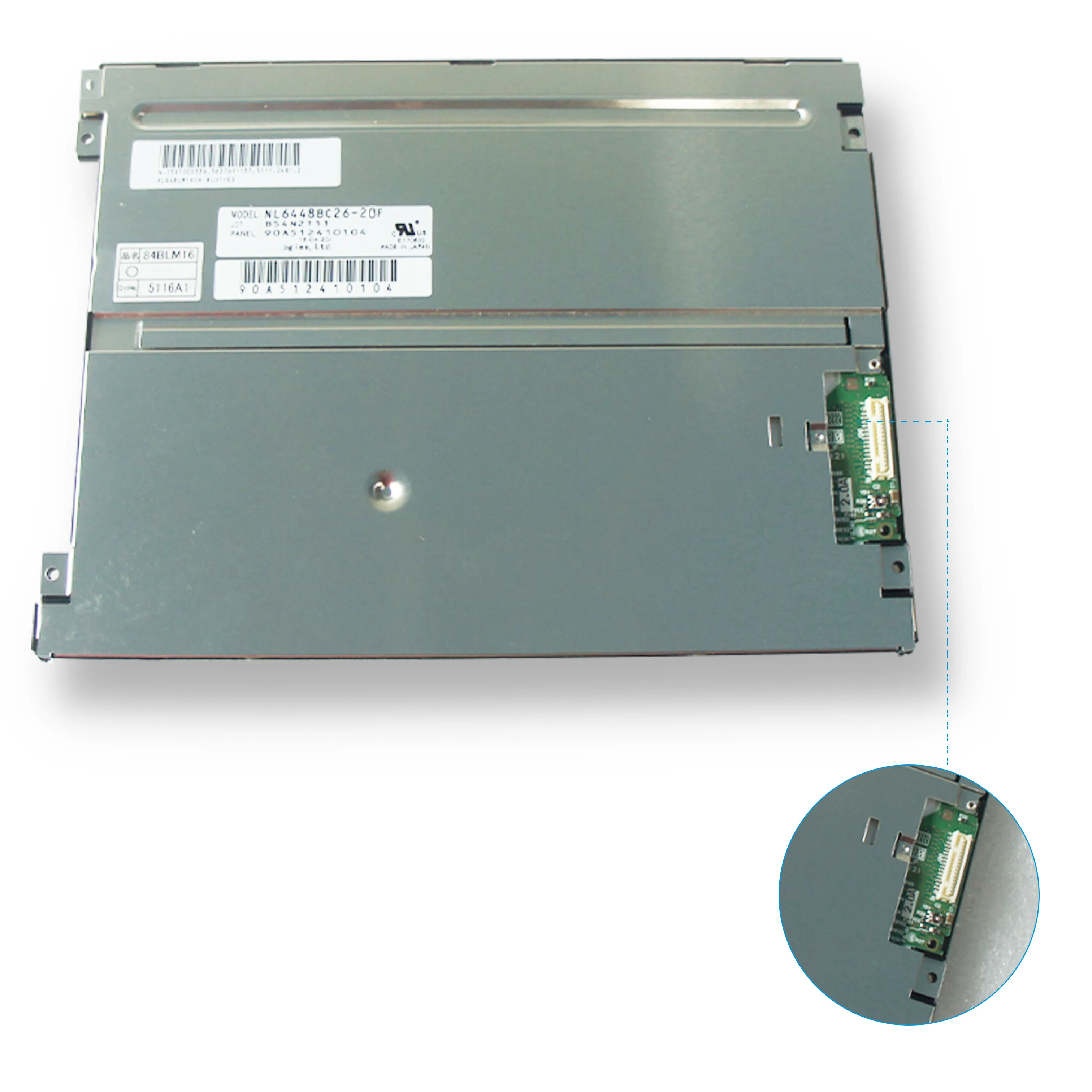


In the intricate world of industrial and embedded display solutions, certain components stand out not for flashy specifications, but for their unwavering reliability, specialized design, and critical role in legacy systems. The Mitsubishi AA104VJ02 10.4-inch LCD panel is precisely such a component. This display module, with its characteristic 640 x 480 pixel resolution, represents a specific era of digital interface design, yet continues to be a vital part of countless operational technologies today.
This article delves deep into the technical essence and practical applications of the AA104VJ02. We will move beyond a simple datasheet review to explore the engineering rationale behind its specifications, the unique advantages it offers in demanding environments, and the key considerations for integration and maintenance. For engineers, procurement specialists, and technical decision-makers, understanding this panel's full context is essential for ensuring system longevity, performance, and successful replacement strategies in an ever-evolving technological landscape.
Decoding the Core Specifications: A Legacy of VGA Standard
The AA104VJ02 is fundamentally defined by its 10.4-inch diagonal screen size and its 640 x 480 pixel resolution, universally known as VGA. This resolution, while considered low by modern consumer standards, was the bedrock of graphical user interfaces for decades. Its 4:3 aspect ratio is perfectly square, contrasting sharply with today's wide-screen formats. The panel typically employs a CCFL (Cold Cathode Fluorescent Lamp) backlighting system, offering bright, even illumination suited for various lighting conditions.
Understanding these specs is not about judging them against modern panels, but about recognizing their purpose. The VGA standard ensures broad compatibility with a vast array of legacy industrial PCs, single-board computers, and control systems. The 10.4-inch size was a sweet spot for embedding into machinery, medical devices, and point-of-sale terminals, providing ample viewing area without excessive bulk. This combination formed a reliable, predictable display foundation for mission-critical applications.
Engineering Rationale: Why 640x480 Endures in Industrial Settings
The persistence of this resolution in industrial and specialized markets is not due to technological stagnation, but to deliberate engineering and economic factors. First, lower resolution translates to lower computational overhead. The graphical controller driving the display requires less processing power and memory, allowing system resources to be dedicated to core application functions like machine control or data acquisition.
Secondly, reliability and predictability are paramount. The VGA signal interface is simple, robust, and well-understood, minimizing compatibility issues. For interfaces displaying primarily text, numerical data, schematic diagrams, or simple graphics, higher resolution offers diminishing returns. Furthermore, the physical size of pixels at this resolution on a 10.4" screen often makes individual elements easier to identify and interact with in high-stress or fast-paced operational environments.
Primary Applications and Niche Markets
The Mitsubishi AA104VJ02 finds its home in environments where durability and long-term availability trump the need for ultra-high definition. Its primary applications are a testament to its rugged dependability. These include: Industrial Human-Machine Interfaces (HMIs) for factory automation and process control; Medical Monitoring Equipment such as patient monitors and diagnostic devices, where clear, stable data presentation is critical; Transportation and Avionics displays for ground support equipment or in-cabin systems; and Specialized Point-of-Sale (POS) and Kiosk systems, particularly those requiring sunlight readability or 24/7 operation.
In these niches, the display is often a component within a larger, certified system. Replacing it with a non-identical part can require costly and time-consuming re-certification. This creates a sustained demand for authentic or perfectly compatible replacements like the AA104VJ02.
Critical Integration Considerations: Interface and Compatibility
Successfully integrating or replacing an AA104VJ02 panel requires careful attention to its physical and electrical interface. Technicians must confirm the exact connector type and pinout, which is typically a single or dual LVDS (Low-Voltage Differential Signaling) interface. The power requirements for the CCFL backlight, often requiring an inverter, are distinct from modern LED-backlit panels.
Compatibility extends beyond the socket. The mechanical footprint, including mounting hole positions, bezel dimensions, and overall thickness, must match the existing housing. Furthermore, the control board (controller) must be precisely matched to the panel's native timing and signal requirements. Using an incompatible controller can result in no display, image distortion, or permanent damage to the LCD.


Challenges in Sourcing and Authenticity Verification
As a product that has transitioned from active production to a legacy or "end-of-life" component, sourcing the genuine Mitsubishi AA104VJ02 presents significant challenges. The market contains refurbished panels, compatible equivalents from other manufacturers, and unfortunately, counterfeit or remarked units. The risks of procuring a non-authentic panel include premature failure, incorrect color/backlight performance, and physical fit issues.
Verification involves checking the label for authentic Mitsubishi branding, model number consistency, and date codes. Purchasing from authorized distributors of legacy components or highly reputable specialist suppliers is crucial. They often provide warranties and technical support, ensuring the panel is not only physically identical but also performs to the original electrical specifications.
The Future: Maintenance, Replacement, and LED Upgrades
For systems dependent on the AA104VJ02, long-term strategy is key. Maintenance often focuses on the CCFL backlight, which has a finite lifespan and can dim over time. Some specialists offer LED retrofit kits, which replace the CCFL tubes and inverter with modern LED light bars and drivers. This upgrade can significantly extend display life, reduce power consumption, and improve brightness uniformity.
When a direct replacement is unavoidable, the search must focus on "drop-in compatible" replacements that match the interface, resolution, form factor, and mounting. While newer panels with higher resolutions exist in similar sizes, they are rarely plug-and-play solutions and usually require a new controller and significant software/driver adjustments, representing a major system overhaul.
FAQs: Mitsubishi AA104VJ02 Display Panel
Q10: Where is the best place to source this panel?A10: From reputable, specialized distributors of legacy industrial display components who offer authenticity guarantees and technical support.
Conclusion
The Mitsubishi AA104VJ02 is far more than a simple 10.4-inch LCD; it is a dedicated component engineered for stability, longevity, and integration within critical systems. Its enduring value lies in its adherence to the robust VGA standard, a form factor perfected for industrial embedding, and a proven track record in demanding environments.
For those responsible for maintaining or sourcing this panel, success hinges on a deep understanding of its technical parameters, a strategic approach to sourcing authentic components, and a clear-eyed view of the integration challenges. In a world chasing higher pixels and thinner bezels, the AA104VJ02 stands as a reminder that in specialized technology, reliability and precise compatibility are the ultimate specifications. Its legacy is maintained not on retail shelves, but in the continuous, reliable operation of the machines that form the backbone of industry and specialized services.