- Industrial LCD display
-
Industrial Products
- DC Servo Drive
- AC Servo Drive
- other
- Heidelberg
- FANUC
- IFM
- Meter
- CCD
- Membrane Keypad
- Film
- YOKOGAWA Module
- Card
- ABB
- MITSUBISHI
- FANUC
- KEYENCE
- BECKHOFF
- Honeywell
- HOLLYSYS
- FUJI servo drives
- HP
- solenoid valve
- thermostat
- Siemens adapter
- color oscilloscope
- Fujitsu connector
- CHELIC
- SMC
- CISCO Module
- INTEL
- Key board
- FAIRCHILD
- Motherboard
- Board
- Bearing
- other
- Control Panel
- Contactor
- Circuit
- OMRON
- Relay
- Controller
- Photoelectric Switch
- Photoelectric Sensor
- Original
- Fan
- Motor Driver
- Limit Switch
- Amplifier
- power supply
- LENZE
- Cable
- Encoder
- Sensor
- Transformer
- Fiber Optic Sensor
- Protection Relay
- Temperature Controller
- Proximity Switch
- Switch Sensor
- Siemens
- Industrial board
- HMI Touch Glass
-
HMI Full Machine Whole unit
- OMRON HMI Touch Panel
- Siemens HMI Touch Panel
- Mitsubishi HMI Touch Panel
- Allen-Bradley automation HMI Touch Panel
- DELTA HMI Touch Panel
- EVIEW DELTA HMI Touch Panel
- KINCO DELTA HMI Touch Panel
- HITECH HMI Touch Panel
- WEINTECK HMI Touch Panel
- TECVIEW HMI Touch Panel
- WEINVIEW HMI Touch Panel
- PRO-FACE HMI Touch Panel
- SIMATIC HMI Touch Panel
- AMPIRE HMI Touch Panel
- HEIDELBERG HMI Touch Panel
- PANASONIC HMI Touch Panel
- PATLITE HMI Touch Panel
- KYOCERA HMI Touch Panel
- KEYENCE HMI Touch Panel
- WEINVIEW HMI Touch Panel
- HITECH HMI Touch Panel
- FUJI HMI Touch Panel
- HAKKO HMI Touch Panel
- SCHNEIDER HMI Touch Panel
- SAMKOON touch panel
- other
- Module
- lcd inverter
- Membrane Keypad Switch
- Winni Touch Screens
- Frequency Inverter
- Servo Motor
- PLC


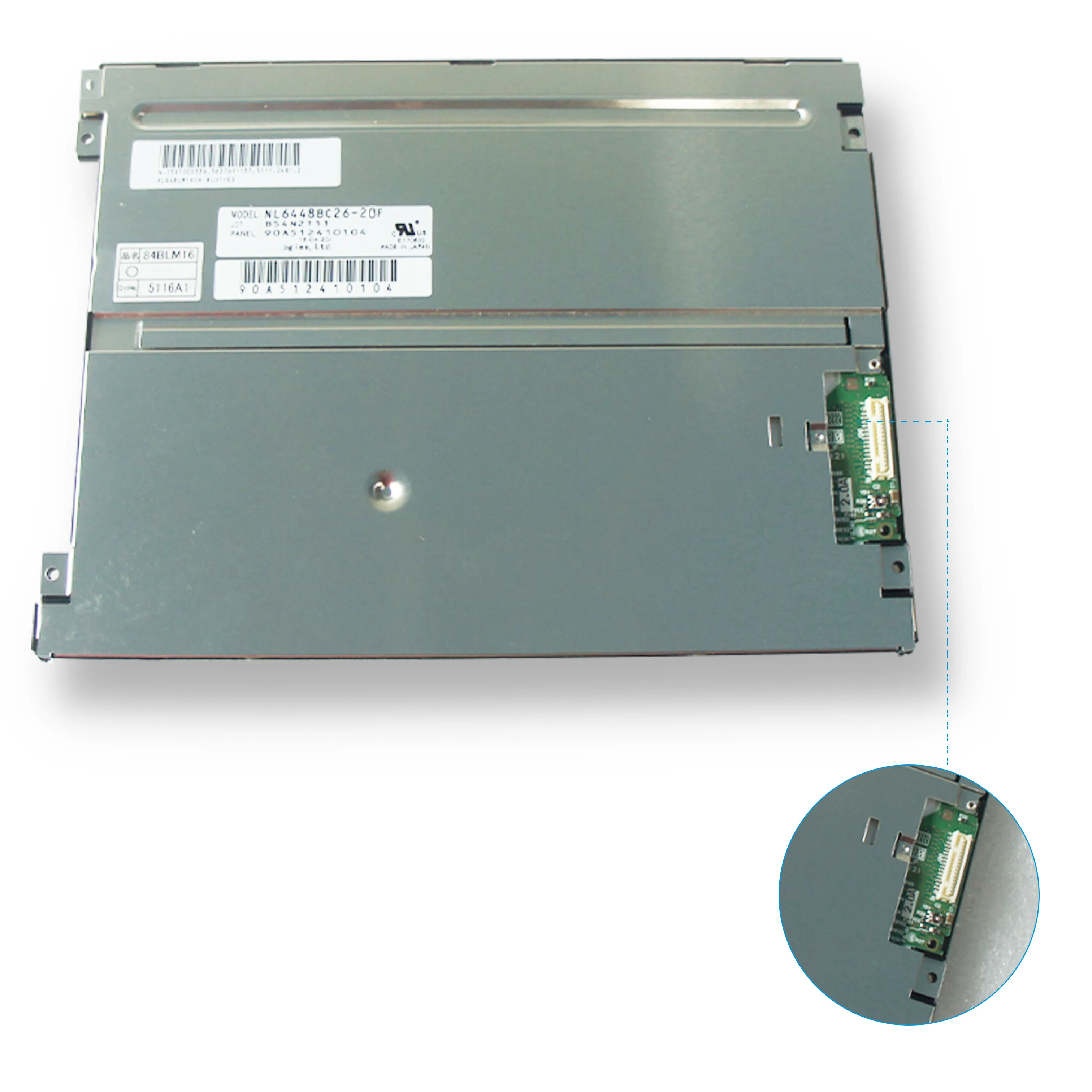


In the intricate world of electronic components, the display panel often serves as the critical interface between machine and user. Among the myriad of options available to designers and engineers, the G057QTN01.1 from AUO (AU Optronics) stands out as a specialized solution for applications where reliability, compactness, and specific performance are paramount. This 5.7-inch TFT LCD module, with its 320x240 QVGA resolution, represents a mature yet highly relevant technology in an era dominated by high-definition screens.
This article delves into a comprehensive technical and application-focused analysis of the G057QTN01.1 panel. We will move beyond basic datasheet specifications to explore its underlying technology, the rationale behind its key parameters, and its ideal use-case scenarios. By understanding its strengths and inherent design trade-offs, product developers, embedded systems engineers, and procurement specialists can make informed decisions on whether this panel is the optimal visual interface for their industrial, medical, or instrumentation projects.
Core Technology and Architecture of the G057QTN01.1
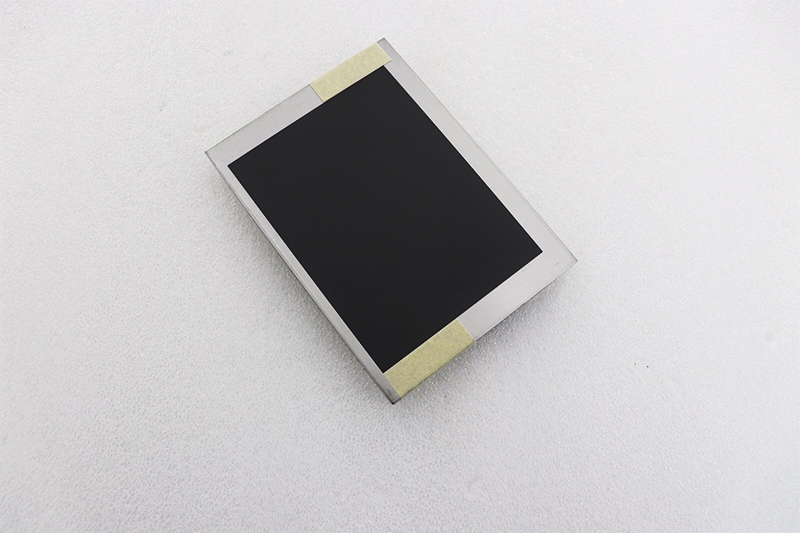
The G057QTN01.1 is built on a-Si (amorphous Silicon) Thin-Film Transistor (TFT) technology, a workhorse in the LCD industry known for its stability and cost-effectiveness at this size and resolution. The 320 (horizontal) x 240 (vertical) pixel array results in a QVGA (Quarter Video Graphics Array) format. With a diagonal of 5.7 inches, this yields a pixel pitch of approximately 0.18mm x 0.18mm and a relatively low PPI (Pixels Per Inch) of around 70. This is a deliberate design characteristic, favoring readability and lower system overhead over high-density imagery.
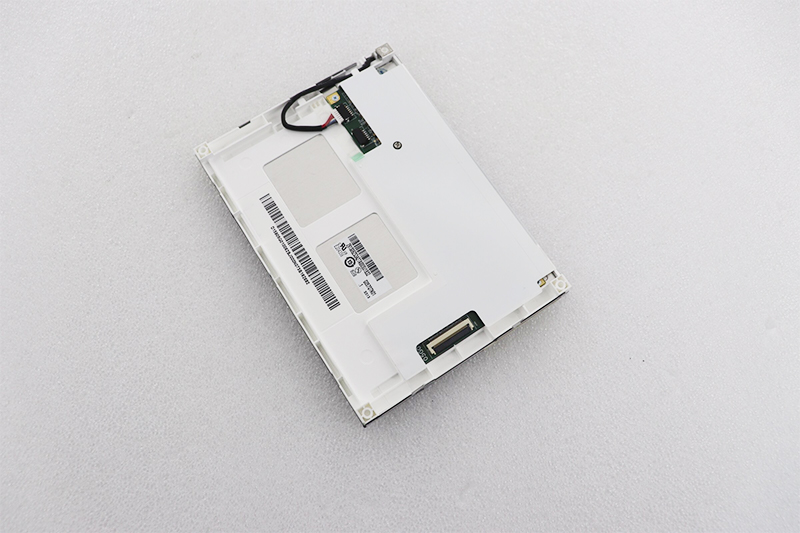
The module integrates a complete LCD matrix, driver ICs, and a CCFL (Cold Cathode Fluorescent Lamp) backlight unit. The use of CCFL, as opposed to modern LED backlighting, provides uniform, high-brightness illumination suitable for environments where consistent viewing is critical. The panel's architecture is designed for parallel RGB interface compatibility, making it straightforward to interface with many standard microcontrollers and display controllers without complex serialization protocols.
Deciphering Key Specifications and Performance Metrics
A deeper look at the panel's specifications reveals its intended application profile. The brightness, typically around 300 nits from its CCFL backlight, ensures visibility in moderately lit industrial settings. The contrast ratio (e.g., 500:1) defines the distinction between dark and light areas, crucial for displaying clear text and graphics. Perhaps most significant are the viewing angles: 70/70/50/60 degrees (Left/Right/Up/Down). These asymmetrical angles indicate the panel is optimized for a primary viewing position, common in fixed-installation equipment.
The color depth of 262K colors (6-bit + FRC) is sufficient for displaying detailed diagrams, basic user interface elements, and color-coded information without the system burden of true 24-bit color. Understanding these metrics in concert—not in isolation—is key. The combination of QVGA resolution, specific viewing angles, and CCFL brightness paints a picture of a panel built for functional clarity in controlled orientations, not for wide-angle consumer media consumption.
Interface and Integration Considerations
Integration is a critical phase, and the G057QTN01.1 is designed to simplify this process. It features a standard parallel RGB (TTL) interface, often with options for 6-bit or 8-bit per color channel data input. This parallel interface reduces latency and simplifies the timing controller design on the host side. Engineers must carefully manage the signal timing (VSYNC, HSYNC, DOTCLK, DE) as per the datasheet to ensure a stable image.
Power supply design is another crucial consideration. The module requires separate voltage rails for the logic (typically 3.3V) and the CCFL backlight inverter (a high-voltage AC source). The inclusion of the inverter circuit adds complexity compared to LED-backlit modules. Proper electromagnetic compatibility (EMC) shielding and grounding for the inverter are essential to prevent noise from interfering with sensitive analog circuits in the end product, a common challenge in medical or measurement devices.
Ideal Application Scenarios and Use Cases
The G057QTN01.1 finds its niche in markets where ruggedness, long-term availability, and functional performance outweigh the need for high resolution or sleek form factors. Its primary applications include:
Industrial Human-Machine Interfaces (HMIs): For factory automation controls, PLC operator panels, and test equipment where readability under ambient light and long operational life are vital.
Medical Instrumentation: In patient monitoring devices, diagnostic equipment, and laboratory analyzers that require consistent, reliable display of numerical data and waveforms.
Point-of-Sale (POS) and Kiosk Systems: For transactional interfaces that display menus, prices, and basic graphics without requiring multimedia capabilities.
Embedded Systems and Legacy Upgrades: As a direct replacement or new design choice in systems where the QVGA standard is entrenched, simplifying software and driver development.
Comparative Analysis with Modern Display Alternatives
Contrasting the G057QTN01.1 with contemporary displays highlights its specialized role. Modern consumer-grade TFTs of similar size often feature:
Higher Resolutions (HD, FHD): Offering sharper text and images but requiring more powerful processors and memory bandwidth.
LED Backlighting: Thinner, more energy-efficient, and with a wider dimming range, but sometimes with less uniformity than CCFL at maximum brightness.
Wider Viewing Angles (IPS/FFS technology): Providing near-180-degree viewing, essential for mobile devices but often unnecessary for fixed-view industrial panels.
LVDS or MIPI Interfaces: Enabling higher data rates for resolution but adding interface conversion complexity.
The G057QTN01.1's value proposition lies in its simplicity, proven reliability, and lower total system cost for applications that do not benefit from these modern advancements. It avoids the over-engineering that can inflate BOM cost and development time.
Supply Chain, Longevity, and Design-In Strategy
For industrial and medical products with long lifecycles (often 7-10 years or more), component longevity is as important as initial specifications. AUO, as a major manufacturer, typically provides longer lifecycle support for such industrial panels compared to consumer models. However, the CCFL backlight presents a specific consideration: the lamps have a finite lifespan (often rated at 30,000-50,000 hours) and may become a single-source component in the future.
Securing a reliable distributor or direct supplier channel for the long term.
Considering second-source or pin-compatible alternative panels as a risk mitigation strategy.
Evaluating the potential future need to redesign for LED backlighting, factoring in the optical and electrical redesign required.
Understanding these supply chain dynamics is essential for mitigating risk in products destined for sustained production.
FAQs: G057QTN01.1 TFT LCD Panel
Q10: How do I ensure stable display performance?A10: Follow the datasheet's timing parameters precisely, provide clean and stable power supplies, and implement proper EMC shielding for the CCFL inverter.
Conclusion
The AUO G057QTN01.1 5.7-inch TFT LCD panel exemplifies the principle of “the right tool for the job.” In a landscape constantly chasing higher pixels and slimmer profiles, this module remains a steadfast solution for a well-defined set of professional and industrial applications. Its value is not in cutting-edge specs, but in its proven reliability, straightforward integration, and optimized performance for functional human-machine interaction.
For engineers designing medical monitors, factory floor controls, or specialized instrumentation, choosing this panel is a strategic decision that prioritizes long-term stability, readability, and system simplicity over superfluous features. By thoroughly understanding its technology, interface requirements, and ideal use cases—as outlined in this analysis—developers can leverage the G057QTN01.1 to build robust and effective products that stand the test of time.