- Industrial LCD display
-
Industrial Products
- DC Servo Drive
- AC Servo Drive
- other
- Heidelberg
- FANUC
- IFM
- Meter
- CCD
- Membrane Keypad
- Film
- YOKOGAWA Module
- Card
- ABB
- MITSUBISHI
- FANUC
- KEYENCE
- BECKHOFF
- Honeywell
- HOLLYSYS
- FUJI servo drives
- HP
- solenoid valve
- thermostat
- Siemens adapter
- color oscilloscope
- Fujitsu connector
- CHELIC
- SMC
- CISCO Module
- INTEL
- Key board
- FAIRCHILD
- Motherboard
- Board
- Bearing
- other
- Control Panel
- Contactor
- Circuit
- OMRON
- Relay
- Controller
- Photoelectric Switch
- Photoelectric Sensor
- Original
- Fan
- Motor Driver
- Limit Switch
- Amplifier
- power supply
- LENZE
- Cable
- Encoder
- Sensor
- Transformer
- Fiber Optic Sensor
- Protection Relay
- Temperature Controller
- Proximity Switch
- Switch Sensor
- Siemens
- Industrial board
- HMI Touch Glass
-
HMI Full Machine Whole unit
- OMRON HMI Touch Panel
- Siemens HMI Touch Panel
- Mitsubishi HMI Touch Panel
- Allen-Bradley automation HMI Touch Panel
- DELTA HMI Touch Panel
- EVIEW DELTA HMI Touch Panel
- KINCO DELTA HMI Touch Panel
- HITECH HMI Touch Panel
- WEINTECK HMI Touch Panel
- TECVIEW HMI Touch Panel
- WEINVIEW HMI Touch Panel
- PRO-FACE HMI Touch Panel
- SIMATIC HMI Touch Panel
- AMPIRE HMI Touch Panel
- HEIDELBERG HMI Touch Panel
- PANASONIC HMI Touch Panel
- PATLITE HMI Touch Panel
- KYOCERA HMI Touch Panel
- KEYENCE HMI Touch Panel
- WEINVIEW HMI Touch Panel
- HITECH HMI Touch Panel
- FUJI HMI Touch Panel
- HAKKO HMI Touch Panel
- SCHNEIDER HMI Touch Panel
- SAMKOON touch panel
- other
- Module
- lcd inverter
- Membrane Keypad Switch
- Winni Touch Screens
- Frequency Inverter
- Servo Motor
- PLC


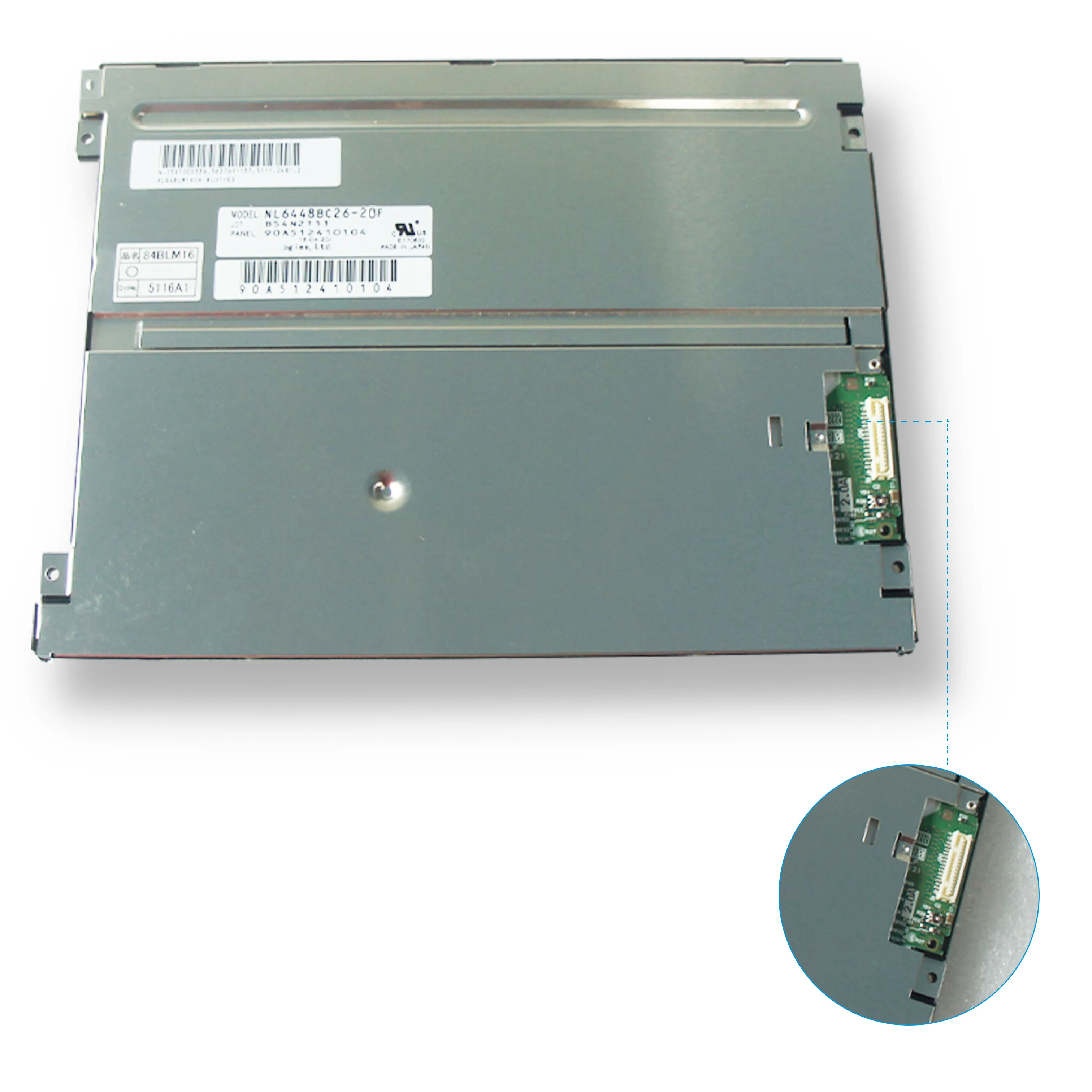


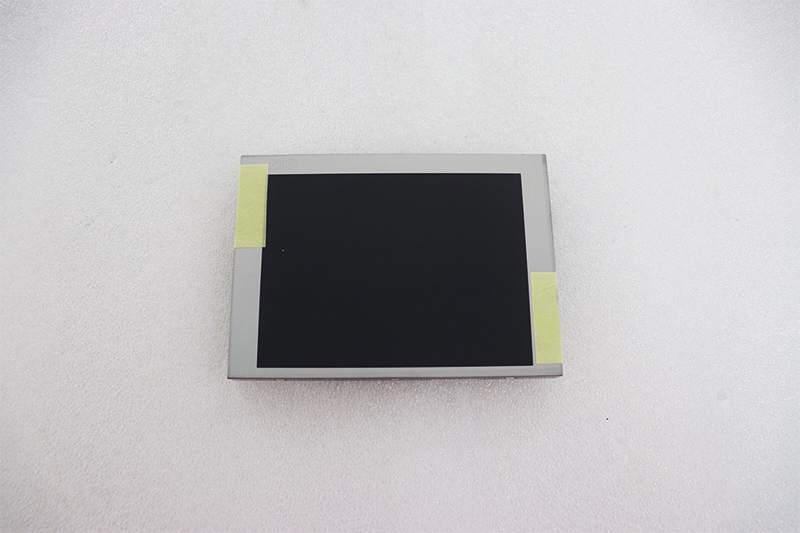
In the intricate world of electronic components, where specifications often blur into a sea of part numbers, certain modules stand out for their unique role in bridging the digital and physical realms. The G057VN01 V2, a 5.7-inch LCD display module manufactured by AUO (AU Optronics), is one such component. At first glance, its 640x480 pixel resolution might seem modest in an age of 4K screens. However, this specific combination of size, resolution, and industrial-grade construction carves out a critical niche that modern high-density displays cannot fill.
This article delves into the technical essence and practical applications of the AUO G057VN01 V2 display. We will move beyond the basic datasheet to explore why this "old-school" VGA format remains not just relevant, but often indispensable. From decoding its part number to understanding its electrical interface and enduring value in harsh environments, we will uncover the reasons this specific panel continues to be specified by engineers for medical, industrial, and embedded systems where reliability, readability, and longevity trump sheer pixel count.
Decoding the Identity: Anatomy of the G057VN01 V2 Part Number
Understanding AUO's part numbering scheme is the first step to appreciating this display's purpose. The code G057VN01 V2 is a concise technical summary. G057 clearly denotes a 5.7-inch diagonal screen size. The V typically references the series or a specific technology generation, while N01 often indicates a revision or sub-model within that series. The crucial suffix V2 signifies this is the second version, implying improvements over a prior iteration, potentially in brightness, contrast, or power consumption.
More defining than its name is its core specification: a native resolution of 640 x 480 pixels, universally known as VGA. This 4:3 aspect ratio format is a cornerstone of display history. In the context of a 5.7-inch diagonal, it results in a pixel pitch that creates sharp, legible characters and graphics without excessive miniaturization. This resolution directly informs the display's interface logic and target application, setting it apart from smaller, high-PPI screens designed for smartphones. It is a display built for clarity and direct human-machine interaction, not for multimedia immersion.
Core Specifications and Electrical Interface
The G057VN01 V2 is defined by a set of robust, industry-standard parameters. Its 640x480 resolution is typically driven by a parallel RGB interface, a common and reliable method for embedded systems. This interface uses separate data lines for red, green, and blue color components (often 6 bits per color, totaling 18 bits, or 8 bits per color for 24-bit depth), along with control signals like pixel clock, horizontal sync, and vertical sync. This direct control allows for precise timing and deterministic performance crucial in real-time systems.
Other key specifications include its active area (approximately 115.2mm x 86.4mm), brightness (often in the range of 300-400 nits, suitable for indoor use), and contrast ratio. It typically employs a CCFL (Cold Cathode Fluorescent Lamp) or LED backlight system, with the V2 version likely upgrading to LED for better longevity, lower power, and mercury-free design. The module includes an integrated LVDS (Low-Voltage Differential Signaling) receiver chip in many configurations, allowing the parallel RGB data to be transmitted to the panel via a noise-resistant LVDS cable, simplifying system design.
The Industrial-Grade Advantage: Built for Reliability
Unlike consumer displays, the G057VN01 V2 is engineered for an industrial product lifecycle. This encompasses several critical factors. First is extended availability. Industrial and medical equipment have long design and service lives, often exceeding a decade. AUO's commitment to manufacturing such panels for many years provides OEMs with supply chain stability, preventing costly redesigns due to display obsolescence.
Second is environmental robustness. The module is designed to operate reliably across a wide temperature range (e.g., -20°C to 70°C for operating temperature), withstand higher levels of vibration, and resist the accumulation of dust and moisture more effectively than a commercial panel. Its construction ensures consistent performance in factory floors, medical diagnostics carts, or outdoor kiosks where a standard monitor would fail. This reliability is non-negotiable in mission-critical applications.
Dominant Application Scenarios: Where This Display Excels
The specific attributes of the G057VN01 V2 make it the display of choice in several well-defined sectors. In medical devices, such as patient monitors, diagnostic ultrasound systems, and laboratory analyzers, its high contrast, excellent viewing angles, and stable performance are vital. The resolution is perfect for displaying waveforms, numerical readouts, and diagnostic images with clear detail without unnecessary graphical complexity.
In industrial automation, it serves as the primary HMI (Human-Machine Interface) on PLCs, CNC machine controls, and test equipment. The 4:3 screen offers ample space for control buttons, status indicators, and data logs. Its readability under various lighting conditions and resistance to electrical noise are paramount. Furthermore, it finds a home in transportation (e.g., rear-view camera displays), point-of-sale systems, and specialized embedded and hobbyist projects where a durable, medium-resolution display with a standard interface is required.
Integration Considerations and Design Challenges
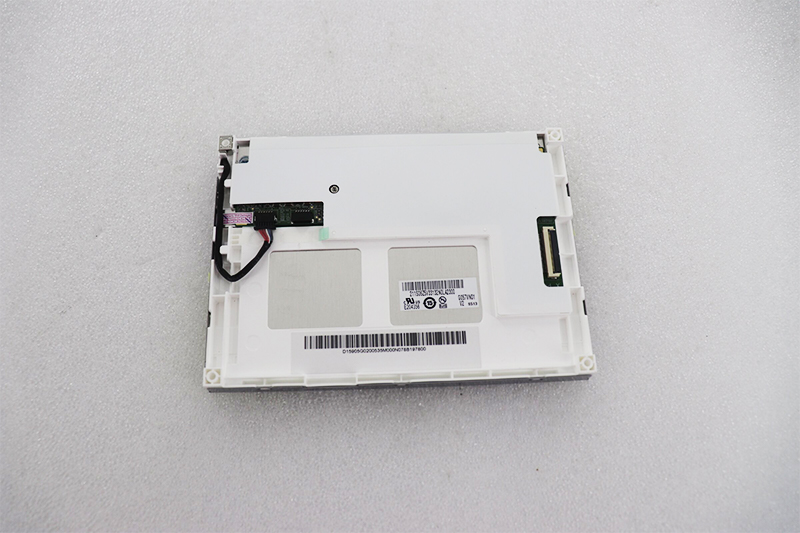
Successfully integrating the G057VN01 V2 into a product requires careful planning. Engineers must first ensure their host processor or graphics controller can output a compatible timing signal for 640x480 at the desired refresh rate (typically 60Hz). This signal must be converted to LVDS via a dedicated transmitter chip if the panel uses that interface. Power supply design is also critical, as the module requires clean, stable voltage rails for the logic board and the backlight (which may require a high-voltage AC drive for CCFL or a constant-current driver for LED).
Physical integration involves designing a bezel that properly secures the module, manages heat dissipation from the backlight, and provides electromagnetic shielding. The relatively deep form factor of these industrial modules, compared to modern slim displays, also impacts enclosure design. Furthermore, sourcing a compatible LCD controller board is often the first step for prototyping, allowing evaluation with standard inputs like HDMI or VGA before custom PCB design.
The Future in a High-DPI World: Niche Longevity
In an era dominated by ultra-high-definition OLED and IPS screens, the continued relevance of the G057VN01 V2 is a testament to the principle of "the right tool for the job." Its future is not one of competing on pixel density or color gamut, but of solidifying its position in specialized, durability-first markets. As long as there is demand for equipment that must perform flawlessly for 10+ years in challenging conditions, this class of display will persist.
Evolution will likely focus on incremental improvements: transitioning entirely to LED backlights for all models, further optimizing power efficiency, and potentially offering versions with enhanced sunlight readability or wider temperature tolerances. The core value proposition—proven reliability, standard interface, and excellent human-factor design for data-dense interfaces—ensures that this 5.7-inch VGA workhorse will remain a vital component in the engineer's toolbox for the foreseeable future.
FAQs: Quick Questions on the AUO G057VN01 V2 Display
10. Where can I buy it or find a datasheet?It is available through authorized electronic component distributors. The official datasheet should be sourced from AUO or a trusted distributor for accurate specifications.
Conclusion
The AUO G057VN01 V2 5.7-inch display is far more than a simple screen; it is a specialized component engineered for durability and clarity in demanding environments. Its enduring value lies not in cutting-edge pixel density, but in its proven performance, industrial-grade reliability, and perfect suitability for data-centric human-machine interfaces. The VGA resolution, often considered legacy, proves to be an asset for readability and system simplicity in its target markets.
For engineers and product designers in medical, industrial, and embedded fields, understanding this display's capabilities and integration requirements is key to building robust and long-lasting equipment. In a rapidly changing technological landscape, the G057VN01 V2 stands as a reminder that optimal design often involves selecting a component that precisely matches the functional, environmental, and lifecycle demands of the application, rather than merely pursuing the highest specifications.