- Industrial LCD display
-
Industrial Products
- DC Servo Drive
- AC Servo Drive
- other
- Heidelberg
- FANUC
- IFM
- Meter
- CCD
- Membrane Keypad
- Film
- YOKOGAWA Module
- Card
- ABB
- MITSUBISHI
- FANUC
- KEYENCE
- BECKHOFF
- Honeywell
- HOLLYSYS
- FUJI servo drives
- HP
- solenoid valve
- thermostat
- Siemens adapter
- color oscilloscope
- Fujitsu connector
- CHELIC
- SMC
- CISCO Module
- INTEL
- Key board
- FAIRCHILD
- Motherboard
- Board
- Bearing
- other
- Control Panel
- Contactor
- Circuit
- OMRON
- Relay
- Controller
- Photoelectric Switch
- Photoelectric Sensor
- Original
- Fan
- Motor Driver
- Limit Switch
- Amplifier
- power supply
- LENZE
- Cable
- Encoder
- Sensor
- Transformer
- Fiber Optic Sensor
- Protection Relay
- Temperature Controller
- Proximity Switch
- Switch Sensor
- Siemens
- Industrial board
- HMI Touch Glass
-
HMI Full Machine Whole unit
- OMRON HMI Touch Panel
- Siemens HMI Touch Panel
- Mitsubishi HMI Touch Panel
- Allen-Bradley automation HMI Touch Panel
- DELTA HMI Touch Panel
- EVIEW DELTA HMI Touch Panel
- KINCO DELTA HMI Touch Panel
- HITECH HMI Touch Panel
- WEINTECK HMI Touch Panel
- TECVIEW HMI Touch Panel
- WEINVIEW HMI Touch Panel
- PRO-FACE HMI Touch Panel
- SIMATIC HMI Touch Panel
- AMPIRE HMI Touch Panel
- HEIDELBERG HMI Touch Panel
- PANASONIC HMI Touch Panel
- PATLITE HMI Touch Panel
- KYOCERA HMI Touch Panel
- KEYENCE HMI Touch Panel
- WEINVIEW HMI Touch Panel
- HITECH HMI Touch Panel
- FUJI HMI Touch Panel
- HAKKO HMI Touch Panel
- SCHNEIDER HMI Touch Panel
- SAMKOON touch panel
- other
- Module
- lcd inverter
- Membrane Keypad Switch
- Winni Touch Screens
- Frequency Inverter
- Servo Motor
- PLC


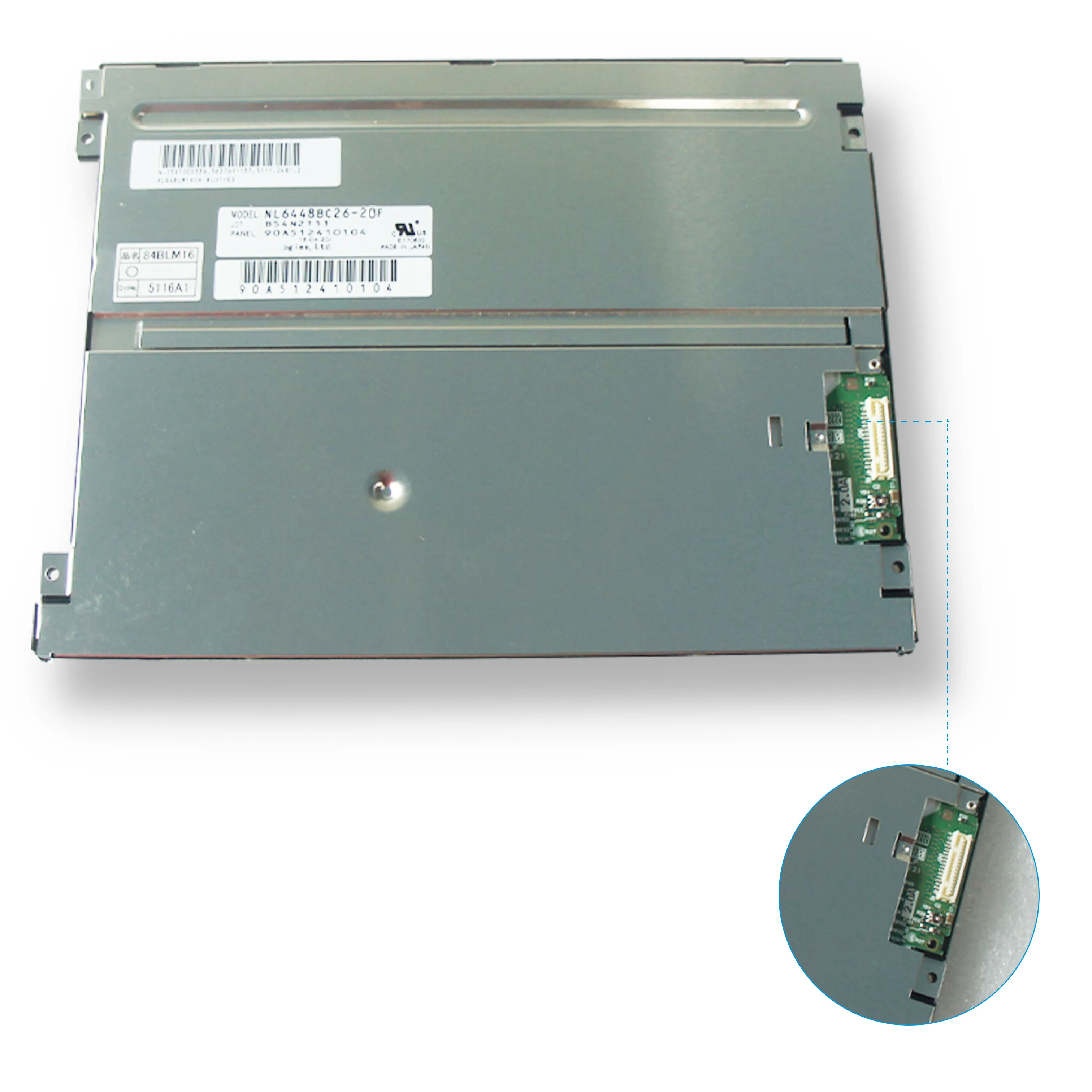


In the intricate world of electronic displays, the specifications of a panel often tell a compelling story about its intended purpose and capabilities. Our focus today is on a specific component that exemplifies precision in a compact form factor: the G057VTN01.1, a 5.7-inch TFT-LCD panel with a resolution of 640 x 480 pixels. This module is far more than just a simple screen; it represents a carefully engineered solution designed for applications where reliability, readability, and physical integration are paramount.
While consumer markets chase higher pixel densities and expansive sizes, panels like the G057VTN01.1 serve as the unsung heroes in industrial, medical, and embedded systems. This article will delve deep into this display, moving beyond basic datasheet parameters to explore its underlying technology, the rationale behind its seemingly "retro" resolution, its critical interface and performance characteristics, and the specific market niches it dominates. We will uncover why this particular combination of size and resolution remains not just relevant, but essential in today's technologically diverse landscape.
Decoding the G057VTN01.1: Core Specifications and Technology
The alphanumeric code G057VTN01.1 is a key to understanding the panel's identity. Typically, such codes indicate the diagonal size (5.7 inches), the technology type (VTN often refers to a Twisted Nematic TFT variant), and a revision number. At its heart, this is a Transmissive TFT-LCD, meaning it requires a backlight (usually LED-based) for illumination. The active area measures approximately 115.2mm x 86.4mm, resulting in a pixel pitch of about 0.18mm. This configuration offers a balance between detail and pixel visibility.
The 5.7-inch diagonal is a classic size in the embedded world, fitting neatly into control units, portable instruments, and human-machine interfaces (HMIs) without demanding excessive space. The TFT technology ensures faster response times and better image stability compared to older passive matrix displays, providing a crisp, flicker-free image suitable for dynamic content and user interaction. Understanding these foundational specs is crucial for engineers and designers assessing its fit for a project.


The Enduring Relevance of VGA Resolution (640x480)
In an era of 4K and beyond, the VGA (640 x 480) resolution of this panel might appear outdated. However, this perception overlooks its profound practical advantages. First, it represents a low-computational-load standard. Generating graphics for VGA requires significantly less processing power and memory bandwidth than higher resolutions, making it ideal for microcontroller-based systems or applications where power efficiency is critical.
Second, the pixel density at this size ensures excellent character legibility, even for small fonts and symbolic icons commonly used in industrial dashboards or medical device readouts. There is no unnecessary strain on rendering resources. Furthermore, VGA is a deeply entrenched standard with widespread driver support, simplifying the development process. This resolution provides a perfect sweet spot where functionality, cost, and system resource constraints converge.
Critical Interface: RGB and LVDS Signal Compatibility
The method by which a display receives data is as important as the image it produces. The G057VTN01.1 typically utilizes an LVDS (Low-Voltage Differential Signaling) interface. This is a critical differentiator from consumer panels that may use newer interfaces like MIPI. LVDS is renowned for its robustness, noise immunity, and ability to transmit high-speed data over longer cable lengths with low electromagnetic interference.
This makes it exceptionally suitable for industrial environments where electrical noise is prevalent. The interface carries standard RGB (Red, Green, Blue) data, aligning perfectly with the output of many embedded processors and FPGAs. Designers must pay close attention to the pinout, signal timing, and power sequencing requirements detailed in the panel's datasheet to ensure stable operation, as improper interfacing is a common source of display failure.
Optical Performance and Environmental Suitability
The performance of an LCD panel is defined by its optical characteristics. Key parameters for the G057VTN01.1 include its brightness (often in the range of 300-500 nits for standard models), contrast ratio (which affects depth and readability), and viewing angles (typically specified in degrees for left/right/up/down). A wide viewing angle is crucial for devices that may be viewed from off-axis positions.
Furthermore, many variants of such industrial panels offer enhanced features. These can include wide-temperature operation (from -20°C to 70°C or beyond), allowing functionality in harsh climates or non-climate-controlled settings. Some may also feature high-brightness options for sunlight readability or optical bonding, which laminates the glass to the touchscreen or cover lens to reduce reflections and improve durability against condensation and physical shock.
Primary Application Domains and Use Cases
The specific attributes of the G057VTN01.1 panel carve out its dominant applications. It is a staple in fields where durability and clarity trump sheer pixel count.
Industrial Automation: HMIs for PLCs, control panels for factory machinery, and portable diagnostic tools.
Medical Devices: Patient monitoring equipment, diagnostic instruments, and portable medical carts where reliable information display is non-negotiable.
Test and Measurement: Oscilloscopes, spectrum analyzers, and multimeters where precise data readout is essential.
Point-of-Sale (POS) and Kiosks: Retail terminals and self-service kiosks requiring robust, always-on operation.
Embedded Systems: Specialized equipment across aviation, transportation, and telecommunications.
Integration Considerations and Sourcing Strategy
Successfully integrating this display requires more than just electrical connection. Mechanical design is paramount: ensuring precise cutouts for the active area, securing the module firmly to withstand vibration, and managing heat dissipation from the backlight. The choice of a compatible controller board (if not driving the LVDS directly) is another key step.
From a sourcing perspective, the G057VTN01.1 is often available through specialized distributors of industrial electronic components. It's vital to verify the exact version (noting the ".1" revision), as minor changes can affect compatibility. For long-term projects, assessing the manufacturer's product lifecycle and securing a stable supply chain is crucial to avoid costly redesigns mid-production.
Frequently Asked Questions (FAQs)
Q10: How critical is the power sequencing during integration?A10: Very critical. Incorrect power-up/down sequencing (for logic, backlight, etc.) can permanently damage the panel. Always follow the datasheet's timing diagrams precisely.
Conclusion
The G057VTN01.1 5.7-inch TFT-LCD panel is a testament to the principle that optimal technology is defined by its application, not just its specifications. It masterfully serves a critical segment of the electronics industry where reliability, integration ease, and functional clarity are the primary currencies. Its VGA resolution and robust LVDS interface are not limitations but deliberate features that enable efficiency and durability.
For designers and engineers working on industrial, medical, or embedded systems, understanding the depth behind such a component is key to creating successful and enduring products. This panel reminds us that in a world chasing the cutting edge, there is immense value in proven, purpose-driven solutions that perform consistently where it matters most.