- Industrial LCD display
-
Industrial Products
- DC Servo Drive
- AC Servo Drive
- other
- Heidelberg
- FANUC
- IFM
- Meter
- CCD
- Membrane Keypad
- Film
- YOKOGAWA Module
- Card
- ABB
- MITSUBISHI
- FANUC
- KEYENCE
- BECKHOFF
- Honeywell
- HOLLYSYS
- FUJI servo drives
- HP
- solenoid valve
- thermostat
- Siemens adapter
- color oscilloscope
- Fujitsu connector
- CHELIC
- SMC
- CISCO Module
- INTEL
- Key board
- FAIRCHILD
- Motherboard
- Board
- Bearing
- other
- Control Panel
- Contactor
- Circuit
- OMRON
- Relay
- Controller
- Photoelectric Switch
- Photoelectric Sensor
- Original
- Fan
- Motor Driver
- Limit Switch
- Amplifier
- power supply
- LENZE
- Cable
- Encoder
- Sensor
- Transformer
- Fiber Optic Sensor
- Protection Relay
- Temperature Controller
- Proximity Switch
- Switch Sensor
- Siemens
- Industrial board
- HMI Touch Glass
-
HMI Full Machine Whole unit
- OMRON HMI Touch Panel
- Siemens HMI Touch Panel
- Mitsubishi HMI Touch Panel
- Allen-Bradley automation HMI Touch Panel
- DELTA HMI Touch Panel
- EVIEW DELTA HMI Touch Panel
- KINCO DELTA HMI Touch Panel
- HITECH HMI Touch Panel
- WEINTECK HMI Touch Panel
- TECVIEW HMI Touch Panel
- WEINVIEW HMI Touch Panel
- PRO-FACE HMI Touch Panel
- SIMATIC HMI Touch Panel
- AMPIRE HMI Touch Panel
- HEIDELBERG HMI Touch Panel
- PANASONIC HMI Touch Panel
- PATLITE HMI Touch Panel
- KYOCERA HMI Touch Panel
- KEYENCE HMI Touch Panel
- WEINVIEW HMI Touch Panel
- HITECH HMI Touch Panel
- FUJI HMI Touch Panel
- HAKKO HMI Touch Panel
- SCHNEIDER HMI Touch Panel
- SAMKOON touch panel
- other
- Module
- lcd inverter
- Membrane Keypad Switch
- Winni Touch Screens
- Frequency Inverter
- Servo Motor
- PLC


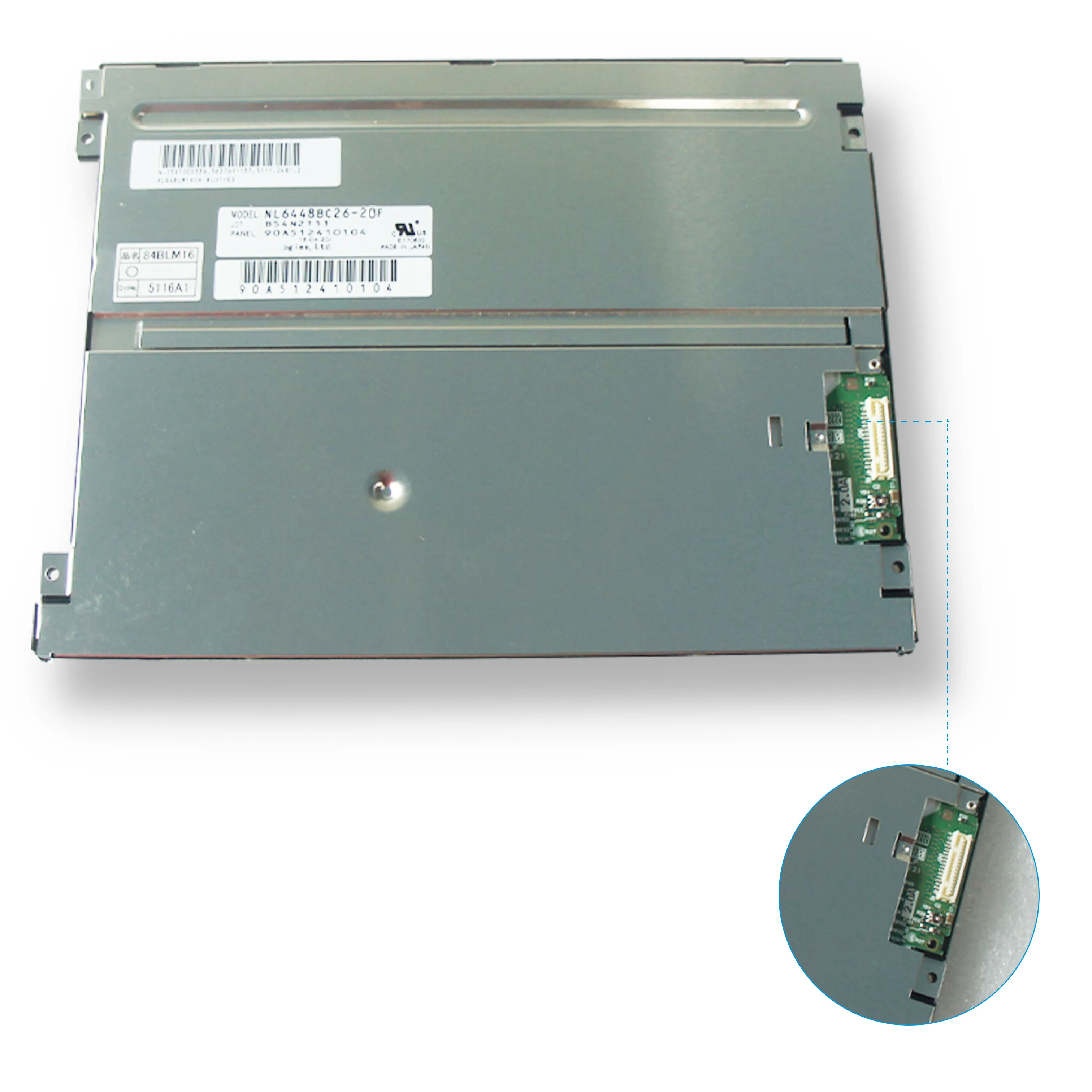

G101EAN02.0 AUO 10.1inch TFT-LCD screen 1280*800 Display
In the intricate ecosystem of electronic components, the display often serves as the critical interface between human and machine. For engineers, product designers, and procurement specialists, selecting the right TFT-LCD module is a decision that balances technical specifications, reliability, and total cost of ownership. One component that frequently emerges in this selection process for mid-sized applications is the G101EAN02.0, a 10.1-inch panel developed by AUO (AU Optronics).
This article delves into a comprehensive analysis of the G101EAN02.0 screen. We will move beyond basic datasheet parameters to explore its technological underpinnings, practical performance characteristics, and ideal application scenarios. By examining its interface compatibility, optical performance, and design considerations, we aim to provide a holistic understanding of where this specific display module excels and what factors must be weighed when integrating it into a product. This deep dive is essential for making an informed component choice that impacts product quality, user experience, and project viability.
Decoding the G101EAN02.0: Core Specifications and Significance
The G101EAN02.0 is a 10.1-inch diagonal TFT-LCD module with a native resolution of 1280 x 800 pixels, commonly referred to as WXGA. This 16:10 aspect ratio offers a balanced workspace, providing more vertical real estate compared to the ubiquitous 16:9 format, which is beneficial for productivity applications, industrial control panels, and portable medical devices. The pixel density of approximately 149 PPI results in clear and sharp imagery suitable for viewing at arm's length.
At its heart, the module utilizes a-Si (amorphous Silicon) TFT technology, a mature and cost-effective process that ensures stability and mass-production reliability. The 1280x800 resolution is a key differentiator; it sits comfortably between standard HD (720p) and Full HD, offering enhanced detail without imposing the extreme power and processing demands of higher-resolution panels. This specification sweet spot makes it a versatile choice for embedded systems where performance and power consumption must be carefully managed.
Optical Performance: Brightness, Contrast, and Viewing Angles
Beyond resolution, the optical characteristics define the user experience. The G101EAN02.0 typically offers a brightness ranging from 300 to 500 nits, making it readable in most indoor environments and some controlled outdoor settings. The contrast ratio, often around 700:1 to 1000:1, ensures that blacks are sufficiently deep and text appears crisp against backgrounds, reducing eye strain during prolonged use.
A critical factor for devices viewed from multiple angles—such as point-of-sale systems or shared control panels—is the viewing angle. This panel employs specific pixel and alignment technologies to provide wide viewing angles, typically around 80/80/80/80 (Left/Right/Up/Down) degrees. This ensures color and contrast shift are minimized when not viewed head-on, maintaining information integrity and visual consistency for multiple users or varying installation angles.
Interface and Signal Integration: LVDS as the Standard
The G101EAN02.0 primarily utilizes an LVDS (Low-Voltage Differential Signaling) interface. This parallel interface standard has been the workhorse of the display industry for years, prized for its robustness, noise immunity, and ability to reliably transmit high-speed data over relatively long traces on a PCB. Its widespread adoption means broad compatibility with a vast ecosystem of display controllers, system-on-chips (SoCs), and single-board computers.
Integrating this module requires a host controller with an LVDS transmitter that matches the panel's specific configuration (e.g., single-channel or dual-channel, color depth). Designers must carefully layout the LVDS differential pairs on their motherboard to maintain signal integrity. The prevalence of LVDS simplifies sourcing and design but points to a mature product lineage, as newer interfaces like eDP (Embedded DisplayPort) begin to dominate in newer designs for their higher bandwidth and lower power.
Power Architecture and Thermal Considerations
Power efficiency is paramount, especially for battery-operated or energy-conscious devices. The G101EAN02.0's power consumption is influenced by its backlight system, which is often the most power-hungry component. Designers can implement PWM (Pulse-Width Modulation) dimming to reduce average power and extend LED lifespan. Understanding the panel's typical operating and maximum power draw is essential for sizing power supplies, batteries, and thermal management systems.
Thermal management, though often overlooked, is crucial for longevity and performance stability. The heat generated by the backlight LEDs and the driving ICs must be dissipated effectively. Proper mechanical design should allow for heat to escape, potentially through metal chassis or thermal pads, preventing excessive heat buildup that can lead to color shift, reduced brightness, or accelerated aging of the liquid crystals and LEDs.
Mechanical Design and Durability for Embedded Use
The mechanical footprint, including outline dimensions, bezel width, and thickness, directly impacts product design. The G101EAN02.0's form factor must be accommodated within the host device's enclosure, with careful attention to mounting holes and connector placement. The module's weight and structural rigidity also affect the overall product's feel and durability.
For industrial, commercial, or transportation applications, durability under environmental stress is key. While not inherently ruggedized, the module can be specified with strengthened glass options or paired with protective cover lenses to enhance resistance to vibration, shock, and moisture. The operating and storage temperature ranges specified in the datasheet must be rigorously adhered to, ensuring reliable performance from factory floor to vehicle dashboard.

Application Landscapes: Where the G101EAN02.0 Excels
The specific combination of size, resolution, and reliability of the G101EAN02.0 carves out its ideal application niches. It is a strong contender for Human-Machine Interface (HMI) panels in industrial automation, where its clear display and wide viewing angles allow for effective machine monitoring and control. In the medical field, it finds use in portable diagnostic devices and bedside monitors, where accuracy and readability are non-negotiable.
Furthermore, it is well-suited for point-of-sale (POS) systems, kiosks, and infotainment displays in retail and hospitality. Its balance of cost and performance also makes it a viable option for specialized consumer electronics, embedded test equipment, and mid-range portable computing devices where the 16:10 aspect ratio is a productivity advantage.
FAQs: G101EAN02.0 AUO 10.1-inch Display
Q10: How does the 16:10 ratio compare to 16:9 for this size?A10: The 16:10 ratio provides more vertical space, which is advantageous for displaying documents, web pages, and software toolbars, reducing the need for scrolling.
Conclusion
The AUO G101EAN02.0 10.1-inch WXGA TFT-LCD module represents a robust and mature solution in the display component landscape. Its strength lies not in cutting-edge specifications, but in a well-balanced combination of adequate resolution (1280x800), reliable LVDS interface, solid optical performance, and proven a-Si TFT technology. This makes it a dependable workhorse for a wide array of embedded and industrial applications where consistency, readability, and cost-effectiveness are paramount.
Selecting this display requires a holistic view of the project's needs. Engineers must consider its power profile, thermal constraints, mechanical integration, and the gradual industry shift towards newer interfaces like eDP. For projects where these factors align, particularly in HMI, medical, and commercial kiosk segments, the G101EAN02.0 continues to offer a compelling blend of performance and practicality, ensuring a clear and reliable window into the digital world for countless devices.