- Industrial LCD display
-
Industrial Products
- DC Servo Drive
- AC Servo Drive
- other
- Heidelberg
- FANUC
- IFM
- Meter
- CCD
- Membrane Keypad
- Film
- YOKOGAWA Module
- Card
- ABB
- MITSUBISHI
- FANUC
- KEYENCE
- BECKHOFF
- Honeywell
- HOLLYSYS
- FUJI servo drives
- HP
- solenoid valve
- thermostat
- Siemens adapter
- color oscilloscope
- Fujitsu connector
- CHELIC
- SMC
- CISCO Module
- INTEL
- Key board
- FAIRCHILD
- Motherboard
- Board
- Bearing
- other
- Control Panel
- Contactor
- Circuit
- OMRON
- Relay
- Controller
- Photoelectric Switch
- Photoelectric Sensor
- Original
- Fan
- Motor Driver
- Limit Switch
- Amplifier
- power supply
- LENZE
- Cable
- Encoder
- Sensor
- Transformer
- Fiber Optic Sensor
- Protection Relay
- Temperature Controller
- Proximity Switch
- Switch Sensor
- Siemens
- Industrial board
- HMI Touch Glass
-
HMI Full Machine Whole unit
- OMRON HMI Touch Panel
- Siemens HMI Touch Panel
- Mitsubishi HMI Touch Panel
- Allen-Bradley automation HMI Touch Panel
- DELTA HMI Touch Panel
- EVIEW DELTA HMI Touch Panel
- KINCO DELTA HMI Touch Panel
- HITECH HMI Touch Panel
- WEINTECK HMI Touch Panel
- TECVIEW HMI Touch Panel
- WEINVIEW HMI Touch Panel
- PRO-FACE HMI Touch Panel
- SIMATIC HMI Touch Panel
- AMPIRE HMI Touch Panel
- HEIDELBERG HMI Touch Panel
- PANASONIC HMI Touch Panel
- PATLITE HMI Touch Panel
- KYOCERA HMI Touch Panel
- KEYENCE HMI Touch Panel
- WEINVIEW HMI Touch Panel
- HITECH HMI Touch Panel
- FUJI HMI Touch Panel
- HAKKO HMI Touch Panel
- SCHNEIDER HMI Touch Panel
- SAMKOON touch panel
- other
- Module
- lcd inverter
- Membrane Keypad Switch
- Winni Touch Screens
- Frequency Inverter
- Servo Motor
- PLC


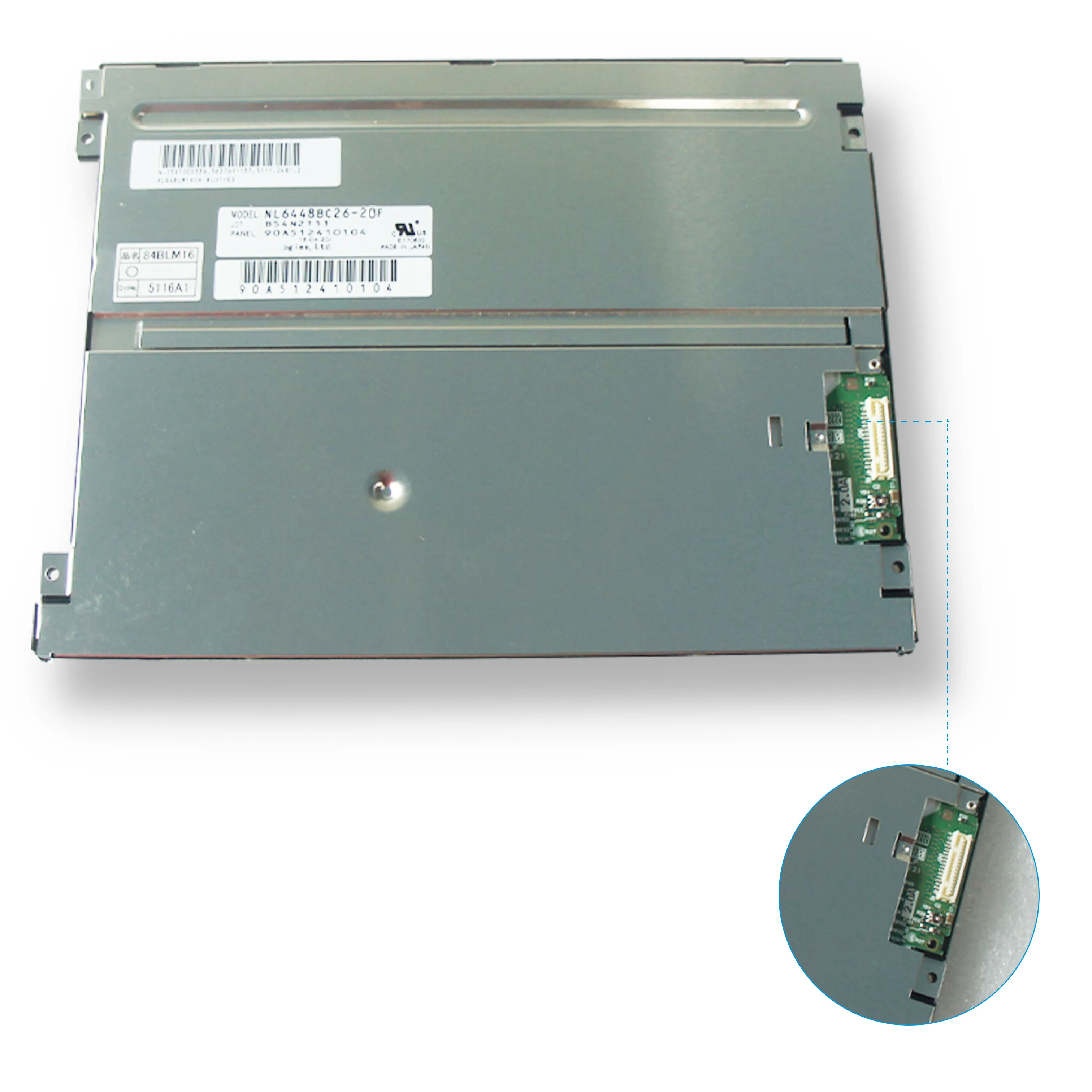

G101EVN01.0 10.1 inch New and Original AUO LCD display
In the intricate world of electronic components, the display often serves as the critical interface between a device and its user. For engineers, procurement specialists, and product developers, selecting the right LCD module is a decision that impacts performance, reliability, and ultimately, the success of a product. This article delves into a specific and significant component: the G101EVN01.0, a 10.1-inch LCD display manufactured by AU Optronics (AUO), a global leader in display technology.
Our exploration will move beyond basic specifications to provide a comprehensive analysis of this module. We will examine its core technological attributes, the tangible benefits of sourcing genuine AUO panels, and its ideal application landscapes. Furthermore, we will navigate the critical market distinction between new, original panels and their counterfeit or refurbished counterparts—a key concern for ensuring product integrity. This guide aims to equip you with the depth of knowledge necessary to make an informed decision about integrating the G101EVN01.0 into your next-generation designs.
Decoding the G101EVN01.0: Core Specifications and Technology
The AUO G101EVN01.0 is a 10.1-inch diagonal TFT-LCD module built on a-Si (Amorphous Silicon) technology, offering a mature and cost-effective solution for a wide range of applications. Its native resolution is 1024 x 600 pixels (WSVGA), providing a balanced blend of clarity and lower system processing requirements compared to higher-resolution panels. This makes it particularly suitable for industrial and embedded systems where graphical complexity is moderate but reliability is paramount.
The module typically features a standard RGB interface, ensuring broad compatibility with common display controllers and system-on-chip (SoC) solutions. Key performance parameters include its brightness level, which is tailored for adequate visibility in various indoor lighting conditions, and its contrast ratio, which defines the depth between blacks and whites. Understanding these foundational specs is the first step in evaluating its fit for a project, as they directly influence power consumption, driver complexity, and the overall visual outcome.
The AUO Advantage: Why Originality in Display Panels Matters
Specifications on paper only tell part of the story. The true value of the G101EVN01.0 is intrinsically linked to its origin as a genuine AUO product. AUO invests heavily in research, development, and stringent quality control throughout its manufacturing process. This translates to panels with consistent performance, precise color calibration, and stable gamma curves across the entire production batch.
Original AUO displays undergo rigorous testing for defects, backlight uniformity, and long-term reliability under thermal and operational stress. Using an original panel mitigates risks such as premature backlight failure, color shift over time, or dead pixels—issues that are notoriously common in lower-grade imitations. For product brands, this consistency is non-negotiable; it protects reputation, reduces warranty returns, and ensures every unit shipped delivers the same user experience.
Ideal Application Ecosystems for the 10.1-Inch Form Factor
The 10.1-inch size of the G101EVN01.0 occupies a strategic niche. It is substantially more immersive than 7-inch panels while remaining compact and power-efficient compared to 15-inch or larger displays. This makes it a premier choice for several vertical markets. In the industrial automation sector, it serves as the perfect human-machine interface (HMI) for control panels, PLC operator terminals, and test equipment.
Beyond the factory floor, this module is extensively used in point-of-sale (POS) systems, kiosks, and digital signage, where its size is ideal for customer interaction and information display. Additionally, it finds a home in transportation (in-vehicle infotainment or monitoring systems), medical devices (portable diagnostic equipment), and fitness machines. Its versatility stems from a balance of viewable area, integration feasibility, and the robust performance expected from an AUO panel.
Navigating the Supply Chain: New vs. Refurbished and Counterfeit Risks
One of the most critical challenges in component sourcing is verifying authenticity. The market for displays is rife with refurbished, reclaimed, or outright counterfeit panels being sold as "new original." Refurbished panels may have been repaired or have worn-out backlights, leading to unpredictable lifetimes. Counterfeits often use inferior glass, polarizers, and driver ICs, resulting in poor performance and potential compatibility issues.
Procuring the genuine G101EVN01.0 requires diligence. Authorized distributors and trusted suppliers with direct ties to AUO or its premier partners are the safest sources. Key indicators of authenticity include original AUO packaging, consistent lot codes, and precise labeling. While the upfront cost of a new, original panel may be higher, it eliminates the far greater hidden costs of field failures, redesigns, and brand damage.
Integration Considerations and Technical Compatibility
Successfully integrating the G101EVN01.0 into a product requires attention to several engineering details. Designers must account for its mechanical dimensions, including the active area, bezel size, and overall module thickness, to ensure proper chassis fit. The interface type (e.g., LVDS) must match the host controller's output.
Furthermore, the electrical requirements—such as voltage supply for the logic board and the LED backlight—must be meticulously designed into the power delivery network. Thermal management is also crucial; although LED backlights are efficient, proper heat dissipation ensures longevity. Consulting the official AUO datasheet for the G101EVN01.0 is essential, as it provides the definitive mechanical drawings, pinout definitions, timing diagrams, and recommended operating conditions.


The Long-Term Value Proposition: Reliability and Total Cost of Ownership
The final and most persuasive argument for choosing a new, original G101EVN01.0 is its long-term value. In commercial and industrial applications, display failure is not merely a component replacement issue; it can mean system downtime, costly service calls, and lost productivity or sales. The high reliability of an AUO panel directly reduces the Total Cost of Ownership (TCO) over the product's lifecycle.
This reliability extends to consistent availability of supply for future production runs from authorized channels, facilitating smoother manufacturing. When evaluating cost, it is imperative to look beyond the unit price per module and consider the holistic expenses of quality, support, and risk mitigation. Investing in a genuine, high-quality display like the G101EVN01.0 is an investment in product stability and customer satisfaction.
Frequently Asked Questions (FAQs)
Conclusion
The AUO G101EVN01.0 10.1-inch LCD display represents more than just a component; it is a reliable, high-quality visual interface engineered for demanding applications. Its value is derived from a combination of AUO's manufacturing excellence, its strategically sized form factor, and the performance consistency that only genuine, new panels can provide.
In a market saturated with alternatives of questionable origin, making an informed sourcing decision is critical. By prioritizing originality and understanding the module's technical integration needs, engineers and buyers can leverage this display to build robust, dependable products. Ultimately, selecting the G101EVN01.0 is a strategic choice that safeguards product quality, reduces long-term operational risk, and delivers a superior end-user experience.