- Industrie-LCD-Display
-
Industrial Products
- DC Servo Drive
- AC Servo Drive
- other
- Heidelberg
- FANUC
- IFM
- Meter
- CCD
- Membrane Keypad
- Film
- YOKOGAWA
- Card
- ABB
- MITSUBISHI
- FANUC
- KEYENCE
- BECKHOFF
- Honeywell
- HOLLYSYS
- FUJI servo drives
- HP
- solenoid valve
- thermostat
- Siemens adapter
- color oscilloscope
- Fujitsu connector
- CHELIC
- SMC
- CISCO
- INTEL
- Key board
- FAIRCHILD
- Der Aufsichtsrat
- Board
- Bearing
- other
- Control Panel
- Contactor
- Circuit
- Omron
- Relais.
- Der controller
- Optoelektronische schalter
- Optoelektronische sensoren
- Original
- Fan
- Motortreiber
- Endschalter
- Verstärker
- power supply
- LENZE
- Cable
- Encoder
- Sensor
- Transformator
- Fiber Optic Sensor
- Schutzrelais
- Temperaturregler
- Näherungsschalter
- Switch Sensor
- Siemens
- PCB
- HMI Touch-Glas
-
HMI-Vollautomat Ganze Einheit
- OMRON HMI Touch Panel
- Siemens HMI Touch Panel
- Mitsubishi HMI Touch Panel
- Allen-Bradley Automatisierung HMI Touch
- DELTA HMI Touch Panel
- EVIEW DELTA HMI Touch Panel
- KINCO DELTA HMI Touch Panel
- HITECH HMI Touch Panel
- WEINTECK HMI Touch Panel
- TECVIEW HMI Touch Panel
- WEINVIEW HMI Touch Panel
- PRO-FACE HMI Touch Panel
- SIMATIC HMI Touch Panel
- AMPIRE HMI Touch Panel
- HEIDELBERG HMI Touch Panel
- PANASONIC HMI Touch Panel
- PATLITE HMI Touch Panel
- KYOCERA HMI Touch Panel
- KEYENCE HMI Touch Panel
- WEINVIEW HMI Touch Panel
- HITECH HMI Touch Panel
- FUJI HMI Touch Panel
- HAKKO HMI Touch Panel
- SCHNEIDER HMI Touch Panel
- SAMKOON touch panel
- andere
- Module
- LCD Wechselrichter
- Membran Tastenfeld Schalter
- Winni Touch Screens
- Frequenzumrichter
- Servo Motor
- PLC



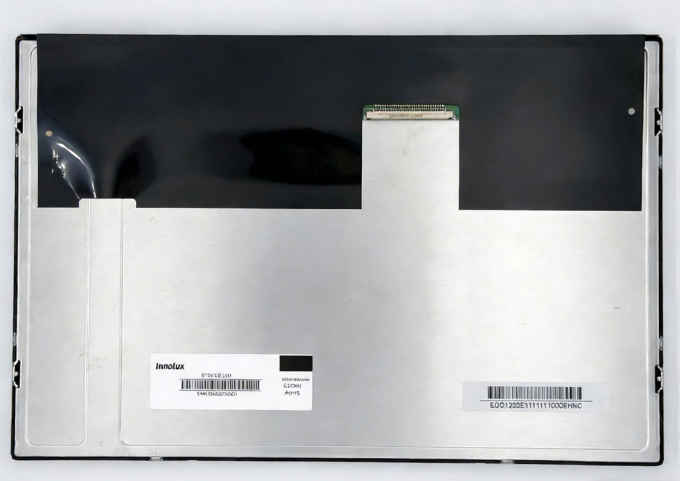
G121ICE-LH1 Innolux 12.1inch 1280*800 LCD DISPLAY
In the intricate ecosystem of industrial and embedded technology, the display panel is far more than a simple output window. It is the critical interface through which machines communicate with operators, data is visualized, and complex processes are monitored. Selecting the right display module is a pivotal engineering decision, balancing resolution, reliability, environmental robustness, and long-term supply chain stability. This article delves into a component that exemplifies these demanding criteria: the G121ICE-LH1, a 12.1-inch LCD display module from Innolux.
We will move beyond basic datasheet specifications to explore the technical DNA and practical applications of this panel. By examining its optical performance, mechanical and electrical integration, environmental endurance, and the strategic advantages offered by its manufacturer, Innolux, we aim to provide a comprehensive resource. This analysis is designed for engineers, procurement specialists, and product developers seeking to understand not just what the G121ICE-LH1 is, but how it performs in real-world scenarios and why it might be the optimal choice for challenging applications from factory floors to medical devices and beyond.
Decoding the Core Specifications: Resolution, Size, and Interface
The G121ICE-LH1 is built around a 12.1-inch diagonal TFT-LCD panel with a native resolution of 1280 x 800 pixels, commonly referred to as WXGA. This 16:10 aspect ratio offers a favorable balance between vertical screen real estate and widescreen viewing, making it suitable for displaying control software interfaces, diagnostic data with multiple parameters, and schematic diagrams without excessive letterboxing. The pixel density, while not matching high-end consumer tablets, provides sharp and legible imagery for typical viewing distances in industrial settings.
At the heart of its functionality is the LVDS (Low-Voltage Differential Signaling) interface. This mature and robust digital video standard is a cornerstone of industrial displays due to its noise immunity, which is crucial in electrically noisy environments near heavy machinery. The module typically supports a standard 1-channel LVDS input, compatible with a wide range of embedded system controllers and single-board computers. Understanding this interface is key for system integrators, as it dictates the choice of compatible graphic controllers and cabling requirements for a successful implementation.
Optical Performance and Viewing Experience
The utility of a display is fundamentally tied to its optical characteristics. The G121ICE-LH1 panel employs In-Plane Switching (IPS) or similar advanced wide-view technology, which delivers consistent color reproduction and exceptional viewing angles—often up to 85/85/85/85 degrees (Left/Right/Up/Down). This ensures that the on-screen information remains visible and color-stable even when viewed from sharp angles, a critical feature for multi-operator stations or displays mounted in confined spaces.
Brightness and contrast are equally vital. With a typical brightness rating of 500 nits or higher, this module can combat ambient glare in brightly lit factories or outdoor kiosks. A high contrast ratio ensures that text and graphics appear crisp and well-defined. Furthermore, the surface treatment of the panel, often involving anti-glare coatings, works in tandem with high brightness to enhance readability under direct lighting, reducing operator eye strain and minimizing costly misinterpretation of data.
Mechanical Design and Integration Considerations
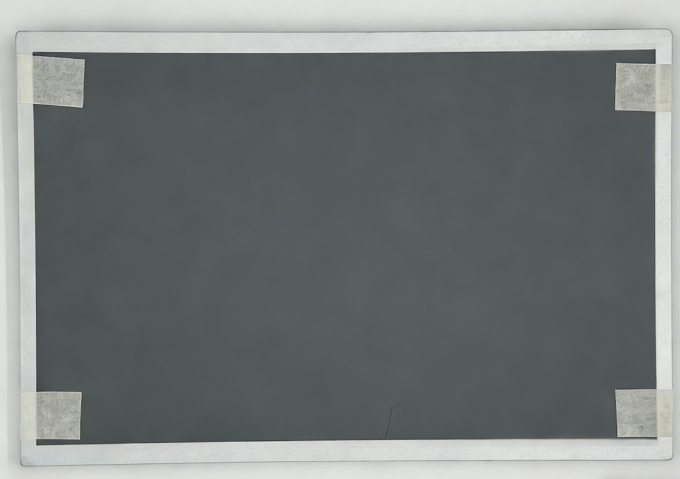
Integration is where specifications meet reality. The G121ICE-LH1 is not just a glass panel; it is a complete module that includes the LCD, backlight unit, driver electronics, and a metal frame. This frame provides structural rigidity and standardized mounting points, allowing it to be securely fastened into an enclosure. The overall module dimensions and the precise location of the active display area (the "bezel" size) are crucial for mechanical designers to ensure a proper fit within the end product's housing.
The module's profile, including thickness and weight, impacts the final product's form factor. Additionally, the thermal design must account for heat dissipation from the LED backlight and driving circuitry to ensure long-term reliability. Connector placement and orientation are also key integration details, influencing the routing of the LVDS cable and power supply within the device. A well-planned mechanical integration mitigates stress on the panel and prevents future failures.
Ruggedness and Environmental Durability
Industrial and medical environments subject components to conditions far beyond a typical office. The G121ICE-LH1 is engineered to withstand these challenges. Its operating temperature range is broad, often from -30°C to 80°C, allowing functionality in unheated warehouses or sun-exposed outdoor installations. Storage temperature ranges are even wider, safeguarding the module during shipping and non-operational periods.
Resistance to vibration and shock is paramount for equipment installed on moving vehicles or production lines. The module's construction, with secure internal bonding and a sturdy frame, is designed to endure such mechanical stress. Furthermore, the display is often specified with a high reliability rating for the backlight, ensuring tens of thousands of hours of operation without significant luminance decay. This durability translates directly into lower total cost of ownership and reduced maintenance downtime for the end-user.
The Innolux Advantage: Supply Chain and Quality Assurance
The choice of a display module is also a choice of its manufacturer. Innolux, as one of the world's leading TFT-LCD panel makers, brings significant advantages to the G121ICE-LH1. Their vertical integration, from glass substrate production to final module assembly, allows for stringent quality control and cost management. For OEMs, this means a stable, long-term supply of a critical component, mitigating the risk of production halts due to display shortages.
Innolux's commitment to the industrial and specialized display market means the G121ICE-LH1 is not a repurposed consumer panel but is designed from the ground up for professional applications. This is reflected in its specifications, reliability testing, and longevity in the product catalog. Partnering with a tier-1 manufacturer like Innolux provides assurance of consistent performance, comprehensive technical documentation, and access to engineering support, which are invaluable during product development and throughout its lifecycle.
Application Scenarios and Industry Use Cases
The technical profile of the G121ICE-LH1 makes it a versatile solution across numerous sectors. In industrial automation, it serves as the primary HMI (Human-Machine Interface) on PLC-controlled machinery, CNC machines, and robotic workcells, where its readability and durability are essential. The medical device field utilizes it in diagnostic equipment, patient monitors, and surgical consoles, where color accuracy, reliability, and cleanability of the front surface are critical.
In transportation and logistics, it finds a home in vehicle-mounted terminals, forklift dashboards, and airport baggage handling systems, enduring constant vibration. Point-of-Sale (POS) and self-service kiosks benefit from its wide viewing angle and high brightness for customer interaction. Finally, it is a solid choice for specialized test and measurement equipment, where precise data visualization over long periods is required. Each application leverages a specific combination of the module's ruggedness, optical performance, and stable supply chain.
FAQs: G121ICE-LH1 Innolux 12.1-inch Display
Q10: Is the backlight user-replaceable?A10: No, the LED backlight is integrated into the module. The entire module is replaced if the backlight fails, though its long lifespan makes this rare.
Conclusion
The Innolux G121ICE-LH1 12.1-inch display module stands as a testament to engineering tailored for demanding environments. Its combination of WXGA resolution, robust LVDS interface, superior optical performance, and mechanical ruggedness makes it more than just a component—it is a reliable partner for mission-critical interfaces. As we have explored, its value is amplified by the manufacturing prowess and supply chain security offered by Innolux, a key consideration for any serious OEM.
In a landscape where device reliability directly impacts productivity, safety, and operational costs, selecting a display cannot be an afterthought. The G121ICE-LH1 represents a balanced and proven solution that bridges the gap between technical specification and real-world performance. For engineers and designers building the next generation of industrial, medical, and commercial equipment, understanding and leveraging the capabilities of such a module is a strategic step toward creating durable, effective, and successful end products.