- Industrie-LCD-Display
-
Industrial Products
- DC Servo Drive
- AC Servo Drive
- other
- Heidelberg
- FANUC
- IFM
- Meter
- CCD
- Membrane Keypad
- Film
- YOKOGAWA
- Card
- ABB
- MITSUBISHI
- FANUC
- KEYENCE
- BECKHOFF
- Honeywell
- HOLLYSYS
- FUJI servo drives
- HP
- solenoid valve
- thermostat
- Siemens adapter
- color oscilloscope
- Fujitsu connector
- CHELIC
- SMC
- CISCO
- INTEL
- Key board
- FAIRCHILD
- Der Aufsichtsrat
- Board
- Bearing
- other
- Control Panel
- Contactor
- Circuit
- Omron
- Relais.
- Der controller
- Optoelektronische schalter
- Optoelektronische sensoren
- Original
- Fan
- Motortreiber
- Endschalter
- Verstärker
- power supply
- LENZE
- Cable
- Encoder
- Sensor
- Transformator
- Fiber Optic Sensor
- Schutzrelais
- Temperaturregler
- Näherungsschalter
- Switch Sensor
- Siemens
- PCB
- HMI Touch-Glas
-
HMI-Vollautomat Ganze Einheit
- OMRON HMI Touch Panel
- Siemens HMI Touch Panel
- Mitsubishi HMI Touch Panel
- Allen-Bradley Automatisierung HMI Touch
- DELTA HMI Touch Panel
- EVIEW DELTA HMI Touch Panel
- KINCO DELTA HMI Touch Panel
- HITECH HMI Touch Panel
- WEINTECK HMI Touch Panel
- TECVIEW HMI Touch Panel
- WEINVIEW HMI Touch Panel
- PRO-FACE HMI Touch Panel
- SIMATIC HMI Touch Panel
- AMPIRE HMI Touch Panel
- HEIDELBERG HMI Touch Panel
- PANASONIC HMI Touch Panel
- PATLITE HMI Touch Panel
- KYOCERA HMI Touch Panel
- KEYENCE HMI Touch Panel
- WEINVIEW HMI Touch Panel
- HITECH HMI Touch Panel
- FUJI HMI Touch Panel
- HAKKO HMI Touch Panel
- SCHNEIDER HMI Touch Panel
- SAMKOON touch panel
- andere
- Module
- LCD Wechselrichter
- Membran Tastenfeld Schalter
- Winni Touch Screens
- Frequenzumrichter
- Servo Motor
- PLC


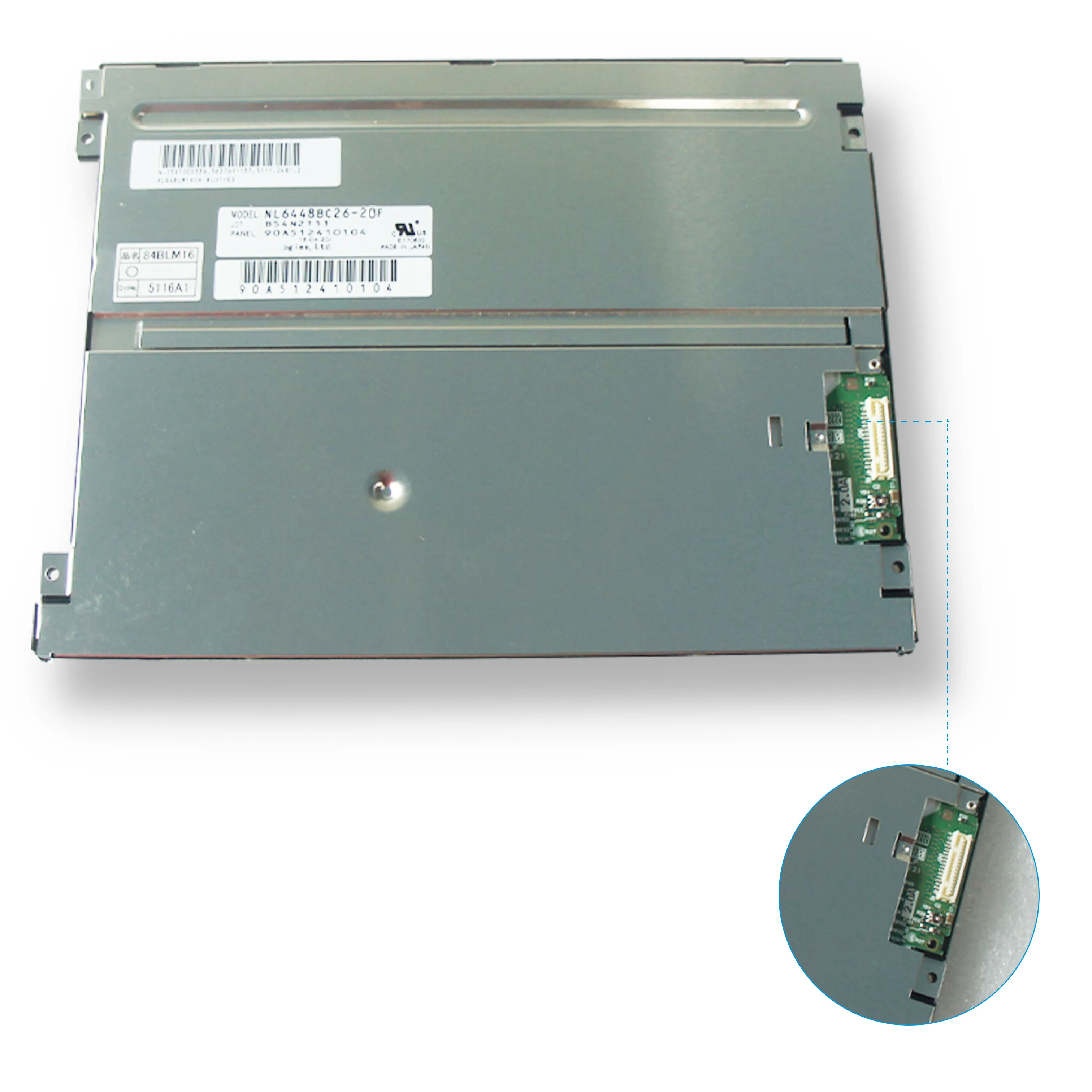

G121SN01 V4 LCD Display Screen Panel AUO 12.1 inch 800*600
In the intricate world of electronic components, the display panel often serves as the critical interface between machine and user. Among the myriad of options, the G121SN01 V4 LCD panel from AU Optronics (AUO) stands out as a specialized solution with a distinct set of characteristics. This 12.1-inch display, with its 800 x 600 pixel resolution (SVGA), represents a specific engineering choice tailored for applications where reliability, longevity, and specific performance parameters outweigh the need for ultra-high pixel density.
This article delves into a comprehensive analysis of the AUO G121SN01 V4 panel. We will move beyond basic specifications to explore its underlying technology, ideal use cases, and the tangible benefits it offers in industrial and embedded environments. Understanding this panel's role is key for engineers, procurement specialists, and developers working on systems where the display is not just for viewing content, but a vital component for control, monitoring, and human-machine interaction in demanding conditions.
Decoding the Core Specifications and Technology
The G121SN01 V4 is built on a Twisted Nematic (TN) liquid crystal technology. TN panels are known for their fast response times, which is a crucial advantage in applications involving dynamic data or simple graphical user interfaces (GUIs). Its 800 x 600 SVGA resolution on a 12.1-inch diagonal translates to a pixel pitch of approximately 0.3075mm x 0.3075mm. While not "retina" level, this provides clear, legible character and graphic display, perfectly adequate for its target markets.
It typically features a standard RGB interface (e.g., LVDS) for signal input, a brightness level suitable for indoor industrial use (often around 300 nits), and a contrast ratio that ensures readability. The panel is designed with a landscape orientation and a 4:3 aspect ratio, a format still prevalent in many industrial control systems, medical devices, and point-of-sale terminals, offering more vertical screen real estate compared to wide-screen formats.


The Niche: Target Applications and Industries
The G121SN01 V4 is unequivocally an industrial-grade component. Its design philosophy prioritizes durability and long-term availability over consumer-grade aesthetics. Its primary applications are found in environments where displays are integral to operational technology.
This includes Human-Machine Interfaces (HMIs) for factory automation and process control, medical diagnostic equipment (like ultrasound or patient monitors where specific resolution standards apply), transportation systems (in-vehicle displays for logistics or public transit), and specialized test and measurement instruments. In these fields, the display's role is to present data, menus, and controls reliably for years, often in 24/7 operation cycles, making the G121SN01 V4 a strategic choice.
Advantages in Demanding Operational Environments
Choosing this panel brings several concrete advantages. First is exceptional reliability and longevity. AUO, as a tier-one manufacturer, ensures high-quality production standards, leading to lower failure rates—a non-negotiable in industrial settings where downtime is costly. Second, its wide operating temperature range allows it to function consistently in non-climate-controlled environments, from cold warehouses to hot factory floors.
Furthermore, the mature TN technology and SVGA resolution contribute to lower system costs. They reduce the processing power required from the connected controller or single-board computer, simplifying system design and lowering overall bill-of-materials costs. Finally, the standard 4:3 format is often a direct fit for legacy system upgrades or specific equipment form factors without requiring costly mechanical redesigns.
Critical Interface and Compatibility Considerations
Successful integration of the G121SN01 V4 hinges on understanding its interface. It commonly uses an LVDS (Low-Voltage Differential Signaling) interface, a robust standard for noise-resistant data transmission in industrial applications. Designers must ensure their controller board provides a compatible LVDS output with the correct pinout, voltage, and timing (often defined in a detailed datasheet).
Additionally, the panel requires a backlight driver circuit, typically for a CCFL (Cold Cathode Fluorescent Lamp) or LED array. Modern versions likely use LED backlighting for better longevity and lower power consumption. Matching the driver to the backlight's specifications is essential for achieving rated brightness and ensuring even illumination across the screen's surface.
Sourcing, Lifecycle, and Replacement Strategies
Procuring industrial panels like the G121SN01 V4 differs from buying consumer screens. It is primarily sourced through authorized distributors or specialized component suppliers who cater to the B2B and engineering markets. A key consideration is the product lifecycle. While consumer displays turn over in months, industrial panels have extended production and availability periods, often spanning many years to support long-term product manufacturing.
For maintenance and repair, identifying the exact version (V4 is crucial) and sourcing from reputable channels is vital to avoid compatibility issues. When planning new projects, it's wise to consult with suppliers on lifecycle status and potential future-proofing or alternative panel options for long-term supply chain resilience.
Comparative Analysis: SVGA in a High-Definition World
In an era dominated by Full HD and 4K displays, the SVGA resolution of the G121SN01 V4 requires justification. The comparison is not about "better" or "worse," but about appropriateness for the task. High-resolution panels demand more powerful processors, higher bandwidth interfaces, and increased cost, which are often unnecessary overhead for displaying text-based data, schematic diagrams, or simple control GUIs.
The SVGA resolution provides sufficient clarity for its intended use while minimizing system complexity and power draw. For industrial and embedded applications, this translates to increased reliability, lower total cost of ownership, and optimized system performance—factors far more critical than pixel count alone. It exemplifies the principle of using the right tool for the job.
FAQs: G121SN01 V4 LCD Panel
Q10: Where can I source this panel reliably?A10: Source from authorized AUO distributors or established industrial electronic component suppliers to ensure authenticity and lifecycle support.
Conclusion
The AUO G121SN01 V4 LCD panel exemplifies the principle that in specialized engineering, optimal performance is defined by context, not by consumer benchmarks. Its value proposition lies not in competing with high-resolution consumer screens, but in delivering unwavering reliability, environmental robustness, and system-level efficiency for mission-critical industrial and embedded applications.
For designers and engineers, selecting this panel is a strategic decision that prioritizes long-term operational stability, supply chain predictability, and total cost of ownership. It serves as a reminder that in the world of technology, the most advanced solution is often the one that is perfectly, and reliably, matched to its specific task.