- Industrial LCD display
-
Industrial Products
- DC Servo Drive
- AC Servo Drive
- other
- Heidelberg
- FANUC
- IFM
- Meter
- CCD
- Membrane Keypad
- Film
- YOKOGAWA Module
- Card
- ABB
- MITSUBISHI
- FANUC
- KEYENCE
- BECKHOFF
- Honeywell
- HOLLYSYS
- FUJI servo drives
- HP
- solenoid valve
- thermostat
- Siemens adapter
- color oscilloscope
- Fujitsu connector
- CHELIC
- SMC
- CISCO Module
- INTEL
- Key board
- FAIRCHILD
- Motherboard
- Board
- Bearing
- other
- Control Panel
- Contactor
- Circuit
- OMRON
- Relay
- Controller
- Photoelectric Switch
- Photoelectric Sensor
- Original
- Fan
- Motor Driver
- Limit Switch
- Amplifier
- power supply
- LENZE
- Cable
- Encoder
- Sensor
- Transformer
- Fiber Optic Sensor
- Protection Relay
- Temperature Controller
- Proximity Switch
- Switch Sensor
- Siemens
- Industrial board
- HMI Touch Glass
-
HMI Full Machine Whole unit
- OMRON HMI Touch Panel
- Siemens HMI Touch Panel
- Mitsubishi HMI Touch Panel
- Allen-Bradley automation HMI Touch Panel
- DELTA HMI Touch Panel
- EVIEW DELTA HMI Touch Panel
- KINCO DELTA HMI Touch Panel
- HITECH HMI Touch Panel
- WEINTECK HMI Touch Panel
- TECVIEW HMI Touch Panel
- WEINVIEW HMI Touch Panel
- PRO-FACE HMI Touch Panel
- SIMATIC HMI Touch Panel
- AMPIRE HMI Touch Panel
- HEIDELBERG HMI Touch Panel
- PANASONIC HMI Touch Panel
- PATLITE HMI Touch Panel
- KYOCERA HMI Touch Panel
- KEYENCE HMI Touch Panel
- WEINVIEW HMI Touch Panel
- HITECH HMI Touch Panel
- FUJI HMI Touch Panel
- HAKKO HMI Touch Panel
- SCHNEIDER HMI Touch Panel
- SAMKOON touch panel
- other
- Module
- lcd inverter
- Membrane Keypad Switch
- Winni Touch Screens
- Frequency Inverter
- Servo Motor
- PLC




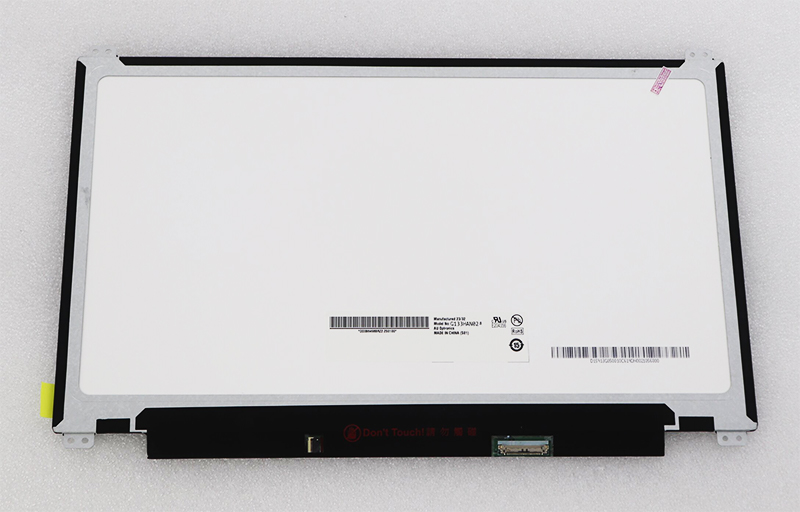
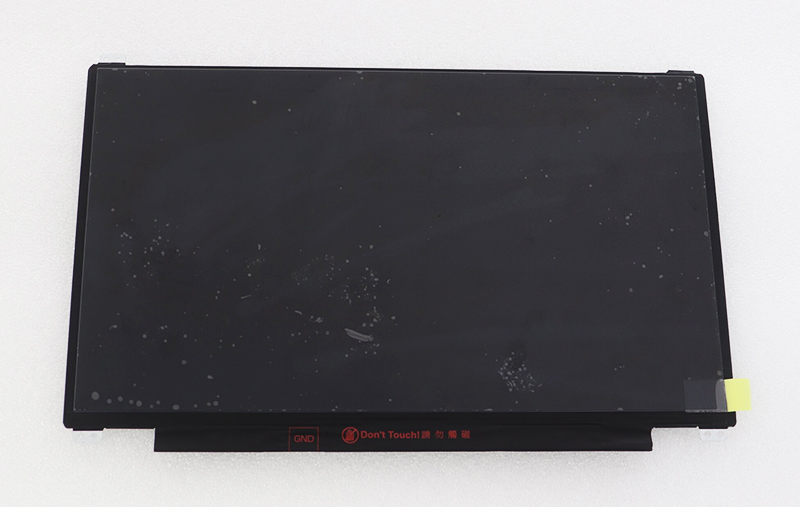
G133HAN02.0 AUO 13.3 inch TFT-LCD screen 1920*1080 Display
In the intricate world of display technology, where every pixel and refresh rate is scrutinized, specific panel models become the unsung heroes powering our digital experiences. One such component is the G133HAN02.0, a 13.3-inch TFT-LCD screen developed by AUO (AU Optronics). This panel, with its 1920x1080 Full HD resolution, represents a critical intersection of compact form factor, high-density clarity, and reliable performance. It is not merely a generic screen but a precision-engineered module found in a range of applications from premium ultrabooks to specialized industrial and medical equipment.
This article delves deep into the G133HAN02.0, moving beyond basic specifications to explore its technological underpinnings, performance characteristics, and practical implications. We will dissect its role in the display ecosystem, analyze its key features against user needs, and provide a comprehensive understanding of its strengths and ideal use cases. For IT procurement specialists, device designers, and tech enthusiasts, understanding the nuances of such a component is key to making informed decisions and appreciating the engineering inside the devices we use daily.
Decoding the G133HAN02.0: A Technical Profile
The G133HAN02.0 is a 13.3-inch diagonal TFT-LCD (Thin-Film Transistor Liquid Crystal Display) module. The "TFT" designation is crucial, indicating an active-matrix technology where each pixel is controlled by its own transistor, enabling faster response times and better image stability compared to older passive-matrix screens. Its native resolution of 1920x1080 (Full HD) on a 13.3-inch canvas results in a pixel density of approximately 166 PPI (Pixels Per Inch). This density strikes a significant balance, offering sharp text and detailed imagery without the scaling issues sometimes associated with higher-resolution panels on smaller screens.
Fundamentally, it is an LCD panel, typically utilizing an IPS (In-Plane Switching) or similar wide-viewing angle technology from AUO, which ensures consistent color and contrast when viewed from off-angles. As a module, it includes the LCD glass, driver electronics, and backlight unit (usually LED), designed to be integrated into a final product by an OEM. This distinction is important; the G133HAN02.0 is a component for manufacturers, not a standalone consumer monitor.
The Core Performance Characteristics and Specifications
Delving into its specifications reveals the panel's capabilities and target applications. Key parameters include its brightness, typically ranging around 300 nits, making it suitable for indoor office and home environments. The color gamut coverage is a critical differentiator; while standard versions may cover around 45% NTSC, higher-grade variants or those with specific tuning can target 72% NTSC or 100% sRGB, catering to users with color-accurate needs.
The contrast ratio, often listed as 700:1 or 1000:1, defines the depth between blacks and whites. Response time, crucial for moving images, is typically in the range of 25ms or lower. The interface is almost universally LVDS (Low-Voltage Differential Signaling), a stable and common standard for such panels. Understanding these specs in aggregate is essential. For instance, its combination of Full HD resolution, moderate brightness, and standard color gamut positions it as a reliable workhorse panel for business laptops, not necessarily a top-tier choice for hardcore gaming or professional color grading.
AUO's Manufacturing Excellence and Panel Quality
AU Optronics is a leading global manufacturer of display panels, and its reputation is embedded in products like the G133HAN02.0. AUO's strength lies in its vertical integration and rigorous quality control processes. The company controls key aspects of the manufacturing supply chain, from array processing to cell assembly and module assembly, ensuring consistency and reliability. For an OEM integrating this panel, this means predictable performance and reduced risk of supply chain defects.
The quality of an LCD panel is also defined by uniformity—the consistency of brightness and color across the entire screen surface. AUO's manufacturing processes aim to minimize issues like backlight bleed, clouding, or dead pixels. Furthermore, the longevity and stability of the LED backlight are engineered to maintain consistent brightness (luminance) over thousands of hours of operation. This behind-the-scenes engineering excellence is what makes a panel model like the G133HAN02.0 a trusted and widely adopted component in the industry.
Ideal Applications and Integration Scenarios
The specific attributes of the G133HAN02.0 make it ideally suited for several key application areas. Its primary domain is the premium ultrabook and business laptop market. The 13.3-inch size is the sweet spot for portability and productivity, and the Full HD resolution provides ample screen real estate for multitasking without straining the system's GPU or battery excessively compared to 4K panels.
Beyond consumer electronics, this panel finds a home in specialized industrial and medical equipment. Here, reliability, long-term availability, and consistent performance are paramount. Its standard LVDS interface simplifies integration into custom systems. It may also be used in high-end portable monitors and certain embedded systems where a compact, high-resolution display is required. The panel's balance of performance, size, and power efficiency creates a versatile solution for OEMs across sectors.
Comparative Analysis in the 13.3-inch Display Landscape
To fully appreciate the G133HAN02.0, it must be contextualized within the competitive landscape. It competes with similar panels from other manufacturers like LG Display (LP133WF4-SPA1) and Sharp. Comparisons often hinge on subtle differences in color gamut, power consumption, thickness, and brightness. Some competing panels may offer wider color gamut (e.g., 72% NTSC vs. 45%), while others might boast lower power draw.
Furthermore, the market trend is evolving. While Full HD remains a strong standard, there is growing demand for higher resolutions like QHD (2560x1440) on 13.3-inch screens, offering even greater pixel density. However, these panels often come with trade-offs in cost, power consumption, and required GPU performance. The G133HAN02.0's enduring relevance lies in its optimal cost-to-performance ratio and its maturity as a stable, well-understood technology that meets the core needs of a vast majority of users and applications.
Considerations for Sourcing, Replacement, and Compatibility
For individuals or technicians seeking a replacement panel or for small-scale integrators sourcing components, several critical factors must be considered. First is exact compatibility. The G133HAN02.0 has specific physical dimensions, mounting hole positions, connector type (typically 30-pin or 40-pin), and interface protocol. A mismatch in any of these will render the panel unusable.
Second is the issue of revisions and variants. AUO may release minor revisions (e.g., G133HAN02.1) with slight improvements or adjustments. Sourcing a compatible variant is essential. Third, one must verify the compatibility of the cable and motherboard controller. The existing LVDS cable in a device must match the pinout of the new panel. Due to these complexities, it is highly recommended to source panels from reputable distributors and to cross-reference the exact model number from the original panel's barcode sticker, not just the device model.
FAQs: G133HAN02.0 AUO 13.3" FHD Screen
Q10: Where can I buy this panel?A: It is available through electronic component distributors, specialized screen wholesalers, and online marketplaces. Always buy from reputable sources.
Conclusion
The AUO G133HAN02.0 is far more than a simple set of numbers on a spec sheet. It embodies a mature, optimized, and highly reliable display solution that has powered a generation of compact computing devices. Its value proposition lies in its balanced combination of sharp Full HD resolution, manageable power consumption, robust manufacturing quality from a tier-one supplier, and proven integration ease for OEMs.
While display technology continues to advance toward higher resolutions, faster refresh rates, and wider color spaces, panels like the G133HAN02.0 serve as a reminder that optimal engineering is often about achieving the right balance for the intended application. For countless users in business, development, and specialized fields, this panel delivers a consistent and high-quality visual experience, forming a critical yet often overlooked foundation of their daily digital interaction. Understanding its details empowers better procurement, integration, and replacement decisions in the professional world.