- Industrie-LCD-Display
-
Industrial Products
- DC Servo Drive
- AC Servo Drive
- other
- Heidelberg
- FANUC
- IFM
- Meter
- CCD
- Membrane Keypad
- Film
- YOKOGAWA
- Card
- ABB
- MITSUBISHI
- FANUC
- KEYENCE
- BECKHOFF
- Honeywell
- HOLLYSYS
- FUJI servo drives
- HP
- solenoid valve
- thermostat
- Siemens adapter
- color oscilloscope
- Fujitsu connector
- CHELIC
- SMC
- CISCO
- INTEL
- Key board
- FAIRCHILD
- Der Aufsichtsrat
- Board
- Bearing
- other
- Control Panel
- Contactor
- Circuit
- Omron
- Relais.
- Der controller
- Optoelektronische schalter
- Optoelektronische sensoren
- Original
- Fan
- Motortreiber
- Endschalter
- Verstärker
- power supply
- LENZE
- Cable
- Encoder
- Sensor
- Transformator
- Fiber Optic Sensor
- Schutzrelais
- Temperaturregler
- Näherungsschalter
- Switch Sensor
- Siemens
- PCB
- HMI Touch-Glas
-
HMI-Vollautomat Ganze Einheit
- OMRON HMI Touch Panel
- Siemens HMI Touch Panel
- Mitsubishi HMI Touch Panel
- Allen-Bradley Automatisierung HMI Touch
- DELTA HMI Touch Panel
- EVIEW DELTA HMI Touch Panel
- KINCO DELTA HMI Touch Panel
- HITECH HMI Touch Panel
- WEINTECK HMI Touch Panel
- TECVIEW HMI Touch Panel
- WEINVIEW HMI Touch Panel
- PRO-FACE HMI Touch Panel
- SIMATIC HMI Touch Panel
- AMPIRE HMI Touch Panel
- HEIDELBERG HMI Touch Panel
- PANASONIC HMI Touch Panel
- PATLITE HMI Touch Panel
- KYOCERA HMI Touch Panel
- KEYENCE HMI Touch Panel
- WEINVIEW HMI Touch Panel
- HITECH HMI Touch Panel
- FUJI HMI Touch Panel
- HAKKO HMI Touch Panel
- SCHNEIDER HMI Touch Panel
- SAMKOON touch panel
- andere
- Module
- LCD Wechselrichter
- Membran Tastenfeld Schalter
- Winni Touch Screens
- Frequenzumrichter
- Servo Motor
- PLC



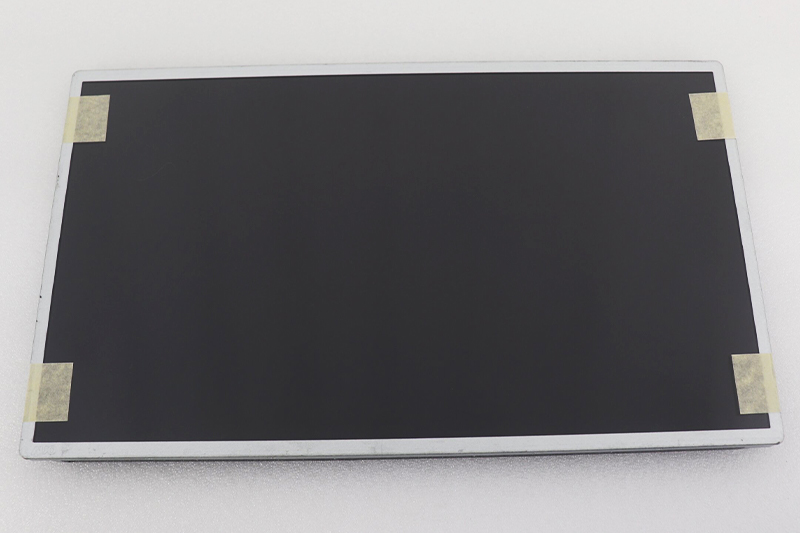
G215HAN01.0 AUO 21.5" TFT-LCD screen 1920*1080 Display
In the rapidly evolving landscape of industrial and commercial display solutions, the G215HAN01.0 AUO 21.5-inch TFT-LCD panel stands as a paragon of engineering precision and visual reliability. This model, manufactured by AU Optronics (AUO), one of the world's leading display suppliers, is not merely a screen; it is a carefully calibrated component designed for environments where clarity, durability, and consistent performance are non-negotiable. With a native resolution of 1920x1080 (Full HD), this display bridges the gap between high-definition consumer experience and the rigorous demands of professional applications, ranging from medical imaging to digital signage and industrial automation.
This article delves deep into the specific architecture and performance metrics of the G215HAN01.0. We will dissect its optical characteristics, mechanical design, and the technological choices that distinguish it from generic 21.5-inch panels. By examining its interface specifications, power management, and longevity factors, we aim to provide a comprehensive understanding of why this specific model is a preferred choice for system integrators and OEMs. Whether you are evaluating a replacement display or designing a new kiosk system, this analysis will equip you with the granular details necessary for informed decision-making.
At the heart of the G215HAN01.0 lies a commitment to high luminance and wide viewing angles. This panel utilizes AHVA (Advanced Hyper-Viewing Angle) technology, an AUO proprietary innovation that delivers performance comparable to IPS (In-Plane Switching). This ensures that color shift and contrast degradation are minimized even when the display is viewed from extreme angles—a critical feature for public information displays or multi-monitor command centers where users are not seated directly in front of the screen.
The specified brightness level for this model is typically rated at 250 cd/m² (nits), which is considered the standard threshold for indoor commercial applications. However, the contrast ratio of 1000:1 provides deep blacks and vibrant whites, allowing for clear differentiation of text and fine details. The panel supports 16.7 million colors via 8-bit color depth, ensuring smooth gradients without visible banding. For applications requiring consistent color accuracy, such as medical review stations, the G215HAN01.0 offers a reliable baseline that can be calibrated to specific gamma curves. Furthermore, the anti-glare surface treatment with a haze value of 25% is a deliberate design choice, reducing reflections from ambient lighting while maintaining sharpness.
The physical construction of the G215HAN01.0 reveals a focus on integration ease and structural stability. The panel employs a standard outline dimension optimized for 21.5-inch cutouts, with a bezel width that balances sleek aesthetics with adequate housing for mounting hardware. Its LVDS (Low-Voltage Differential Signaling) interface is the cornerstone of its connectivity, specifically a 2-channel, 30-pin connector. This is a mature and highly reliable standard that simplifies cabling and reduces electromagnetic interference compared to older parallel interfaces.
An often overlooked yet critical specification is the electrical interface voltage, which operates at 3.3V for logic and typically 12V for backlight driving. The panel incorporates a built-in LED driver, eliminating the need for a separate inverter board, which simplifies system design and reduces overall bill of materials (BOM) costs. From a mechanical perspective, the panel is designed with mounting features that comply with VESA standards, although integrators should verify specific bracket compatibility. The operating temperature range, typically 0°C to 50°C, ensures reliable performance in standard controlled environments, while the storage range extends further, safeguarding the panel during logistics and warehousing.
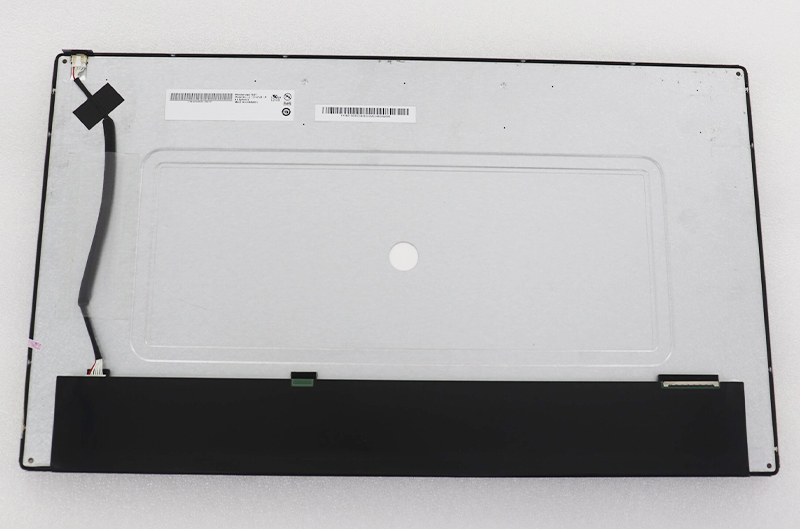
Modern computing and display systems demand energy efficiency without compromising performance. The G215HAN01.0 utilizes an LED edge-lit backlight system, specifically using White LED arrays positioned along the bottom edge of the panel. This design choice offers multiple advantages over older CCFL (Cold Cathode Fluorescent Lamp) technology. First, it significantly reduces the power consumption of the display, typically drawing less than 15W under normal operation, including the backlight. Second, it eliminates the use of mercury, making the panel RoHS compliant and easier to recycle at end-of-life.
The lifespan of the backlight is rated at 50,000 hours to half-brightness, ensuring years of reliable service in continuous operation applications like digital signage. The driver circuit is integrated onto the panel's PCB, providing a PWM (Pulse Width Modulation) dimming interface for smooth brightness control. This allows system designers to implement dynamic backlight control or adjust luminance based on ambient light sensors without additional hardware complexity. The low heat generation of the LED system also contributes to reduced thermal stress on the LCD cell, thereby improving long-term stability and preventing image retention over extended use.
While the G215HAN01.0 is not designed for high-frame-rate gaming, its response characteristics are optimized for static and moderately dynamic content. The panel’s response time (Tr+Tf) is typically quoted at 12ms (milliseconds) or less. This is sufficient to eliminate motion blur in typical GUI navigation, video playback, and scrolling text for industrial terminals. The horizontal and vertical scanning frequencies are fixed to the standard 60Hz refresh rate, which is the optimal setting for a 1920x1080 resolution via a single LVDS link.
Understanding the timing specifications is crucial for compatibility. The pixel clock frequency and back porch/front porch parameters are defined in the panel's datasheet, and the display controller must match these precisely. The panel supports a de facto standard DE (Data Enable) mode rather than sync mode, which simplifies timing matching in modern SoCs (System on Chip). For integrators, this means that as long as the source device outputs a standard 1080p 60Hz signal over LVDS, synchronization will be automatic, reducing the risk of flickering or display artifacts caused by timing misalignment.
A common decision point for engineers is choosing between a branded panel like the G215HAN01.0 and a generic, unbranded replacement. The primary differentiator lies in quality assurance and consistency. AUO panels are manufactured under strict process controls, ensuring that luminance uniformity across the screen remains within a tight tolerance, typically less than 25% variance. Generic panels often exhibit hot spots near the LED edges or clouding due to less precise diffuser assembly.
Furthermore, the LVDS pin mapping on generic panels can be non-standard, leading to inverted colors or incorrect resolution detection unless special cables are used. The G215HAN01.0 follows the JEIDA standard pinout, which is widely supported by major motherboard manufacturers and embedded systems. Another critical factor is gamma curve accuracy. Generic panels often have a gamma of 2.5 or higher, making images appear too dark, while the AUO panel targets a standard gamma of 2.2 (native) for accurate image reproduction. For mission-critical applications, the reliability of a known bill of materials (BOM) from AUO provides traceability and guaranteed support that generic alternatives cannot match.
Selecting the G215HAN01.0 requires evaluating its fit within the intended environment. In medical applications (e.g., patient monitors or diagnostic displays), the high contrast and wide viewing angle are essential for accurate reading by multiple clinicians simultaneously. The anti-glare coating reduces eye strain during extended shifts. For industrial HMI (Human-Machine Interface), the panel’s resistance to vibration (owing to its rigid construction) and wide temperature tolerance allow it to function in factory floor conditions where consumer monitors would fail.
For kiosks and ATMs, the surface hardness of the polarizer (typically 3H) provides acceptable scratch resistance, though many integrators add a protective glass overlay. Compatibility with touchscreen overlays is excellent, as the panel’s optical clarity does not interfere with capacitive or resistive touch sensing. However, integrators must note that the mounting holes are located on the side and bottom tabs, requiring specific bracket designs. Proper handling of the LVDS cable (especially strain relief) is crucial, as the connector is delicate. Finally, the panel's color temperature defaults to 6500K, suitable for most applications, but can be adjusted via software for specialized environments like broadcast preview monitors.
Q: What is the exact resolution of the G215HAN01.0?
A: The native resolution is 1920 x 1080 pixels (Full HD, 1080p).
Q: What type of backlight does it use?
A: It uses a White LED edge-lit backlight with an integrated driver circuit.
Q: What is the interface type for this panel?
A: It uses a 30-pin, 2-channel LVDS interface (typically JEIDA standard).
Q: Can I use this panel for outdoor digital signage?
A: Not directly. At 250 cd/m² brightness, it is designed for indoor use. Direct sunlight will wash out the image.
Q: What is the typical power consumption?
A: Typically less than 15 Watts, depending on backlight brightness setting.
Q: Does this panel support touch functionality?
A: No, it is a bare TFT-LCD panel. A touch overlay (capacitive or resistive) must be added by the integrator.
Q: What is the operating temperature range?
A: Standard range is 0°C to 50°C (32°F to 122°F).
Q: Is the G215HAN01.0 a genuine AUO panel or a replacement?
A: It is a genuine, original AU Optronics (AUO) manufactured panel, with full traceability.
Q: What is the difference between this and a DM (Direct Monitor) model?
A: This is an open-frame panel; it lacks a housing, stand, and video input board (HDMI/VGA). It requires a controller board for operation.
Q: How long is the backlight rated to last?
A: 50,000 hours to half-brightness under normal operating conditions.
Conclusion
The G215HAN01.0 AUO 21.5-inch TFT-LCD display is a meticulously engineered component that prioritizes reliability, visual accuracy, and ease of integration. It is not a one-size-fits-all consumer screen but a professional-grade instrument designed to perform consistently in demanding industrial, medical, and commercial environments. Its adoption of AHVA technology, efficient LED backlighting, and standardized LVDS interface makes it a predictable and low-risk choice for system designers.
When selecting a display for a critical application, the cost difference between a certified AUO panel and a generic alternative is often justified by the reduction in field failures and calibration headaches. For engineers and buyers who value documented specifications and predictable long-term performance, the G215HAN01.0 represents a sound investment. As display technology continues to advance, the maturity and proven track record of this specific model ensure it remains a relevant and viable solution for the high-volume deployment of Full HD visual interfaces.