- Industrial LCD display
-
Industrial Products
- DC Servo Drive
- AC Servo Drive
- other
- Heidelberg
- FANUC
- IFM
- Meter
- CCD
- Membrane Keypad
- Film
- YOKOGAWA Module
- Card
- ABB
- MITSUBISHI
- FANUC
- KEYENCE
- BECKHOFF
- Honeywell
- HOLLYSYS
- FUJI servo drives
- HP
- solenoid valve
- thermostat
- Siemens adapter
- color oscilloscope
- Fujitsu connector
- CHELIC
- SMC
- CISCO Module
- INTEL
- Key board
- FAIRCHILD
- Motherboard
- Board
- Bearing
- other
- Control Panel
- Contactor
- Circuit
- OMRON
- Relay
- Controller
- Photoelectric Switch
- Photoelectric Sensor
- Original
- Fan
- Motor Driver
- Limit Switch
- Amplifier
- power supply
- LENZE
- Cable
- Encoder
- Sensor
- Transformer
- Fiber Optic Sensor
- Protection Relay
- Temperature Controller
- Proximity Switch
- Switch Sensor
- Siemens
- Industrial board
- HMI Touch Glass
-
HMI Full Machine Whole unit
- OMRON HMI Touch Panel
- Siemens HMI Touch Panel
- Mitsubishi HMI Touch Panel
- Allen-Bradley automation HMI Touch Panel
- DELTA HMI Touch Panel
- EVIEW DELTA HMI Touch Panel
- KINCO DELTA HMI Touch Panel
- HITECH HMI Touch Panel
- WEINTECK HMI Touch Panel
- TECVIEW HMI Touch Panel
- WEINVIEW HMI Touch Panel
- PRO-FACE HMI Touch Panel
- SIMATIC HMI Touch Panel
- AMPIRE HMI Touch Panel
- HEIDELBERG HMI Touch Panel
- PANASONIC HMI Touch Panel
- PATLITE HMI Touch Panel
- KYOCERA HMI Touch Panel
- KEYENCE HMI Touch Panel
- WEINVIEW HMI Touch Panel
- HITECH HMI Touch Panel
- FUJI HMI Touch Panel
- HAKKO HMI Touch Panel
- SCHNEIDER HMI Touch Panel
- SAMKOON touch panel
- other
- Module
- lcd inverter
- Membrane Keypad Switch
- Winni Touch Screens
- Frequency Inverter
- Servo Motor
- PLC


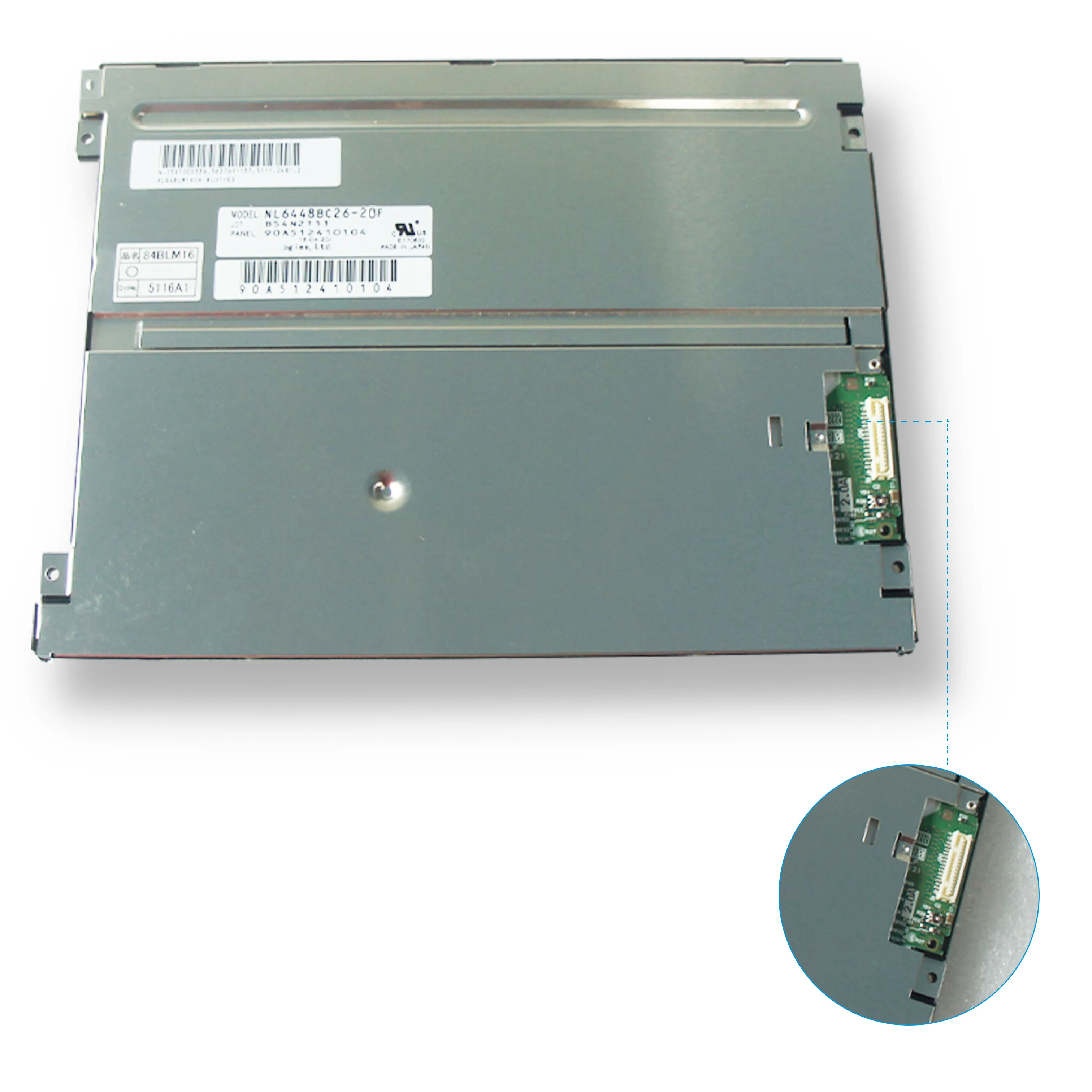

G230HAN01.1 AUO 23" TFT-LCD screen 1920*1080 Display
In an era dominated by bezel-less displays and 4K resolutions, the 23-inch industrial-grade LCD panel might appear to be a relic of a bygone age. Yet, within the specific demands of medical imaging, industrial automation, and commercial kiosks, the AUO G230HAN01.1 remains a cornerstone of reliable visual performance. This 23.0-inch TFT-LCD screen, boasting a standard 1920x1080 Full HD resolution, is far from a simple commodity part. It represents a careful engineering balance between brightness, color accuracy, longevity, and thermal management. This article provides a deep, technical examination of this specific panel, moving beyond basic specifications to explore its optical characteristics, mechanical design, interface protocols, and ideal deployment scenarios. We will dissect why the G230HAN01.1 has become a preferred choice for systems integrators and OEMs who cannot compromise on image quality or operational stability. Furthermore, we will address its place in a market increasingly shifting toward higher resolutions, demonstrating why this AUO model continues to command a significant presence in mission-critical applications where failure is not an option.
The core value proposition of the G230HAN01.1 lies not in its pixel count, but in the quality of those pixels. Rated at a typical 350 cd/m² brightness, this panel belongs to the high-brightness segment, making it suitable for environments with moderate ambient light, such as hospital hallways or factory floors. However, the true hallmark of its optical engineering is its contrast ratio. While standard TN panels struggle to reach 1000:1, the G230HAN01.1 frequently achieves a static contrast ratio of 3000:1 or higher. This is a direct result of its Vertical Alignment (VA) technology. In a VA panel, liquid crystals align vertically when no voltage is applied, blocking light almost completely to produce deep, true blacks. This high native contrast is critical for medical grayscale imaging, where distinguishing subtle density differences in an X-ray or MRI is paramount.
Furthermore, the panel utilizes MVA (Multi-domain Vertical Alignment) or a similar wide-viewing-angle VA variant. This provides superior off-axis color and contrast retention compared to TN panels. While IPS is known for color consistency, VA offers a superior black level at the expense of slight gamma shift at extreme angles. For a 23-inch screen, this translates to a very usable viewing cone of 178 degrees horizontal and vertical, ensuring that a surgeon or a control room operator can view the screen from a side angle without catastrophic contrast inversion. The anti-glare, hard-coating (3H) surface treatment further enhances usability by diffusing ambient light reflections, reducing eye strain during prolonged monitoring sessions.


While the optical performance is compelling, the mechanical construction of the G230HAN01.1 reveals its industrial-grade pedigree. The panel employs a robust metal frame, rather than the plastic bezels common in consumer monitors. This is not a cosmetic choice; it is for heat dissipation and structural rigidity. In a sealed medical cart or a machine vision kiosk, heat buildup is the primary enemy of LCD longevity. The metal chassis acts as a passive heatsink, drawing heat away from the CCFL or LED backlight driver board.
Speaking of backlighting, this specific model historically utilized an WLED (White Light Emitting Diode) edge-lit system. This design choice is critical for two reasons. First, it enables a slimmer module depth compared to older CCFL systems, facilitating integration into space-constrained equipment. Second, the LED backlight boasts a significantly longer rated lifetime—typically 50,000 hours to half-brightness—which translates to over five years of continuous 24/7 operation. The electrical interface is equally robust. It utilizes a standard LVDS (Low-Voltage Differential Signaling) 2-channel, 8-bit interface. This is a mature, noise-immune protocol that is well-understood by industrial controller manufacturers, ensuring reliable signal transmission over moderate distances. The physical connector is a standard 30-pin or similar, making drop-in replacements straightforward for field service technicians.
A defining characteristic of the AUO G230HAN01.1 is its adherence to the DICOM Part 14 Grayscale Standard Display Function (GSDF). While the panel itself does not "certify" its compliance, its native VA architecture provides the necessary foundation. DICOM calibration is not merely about color temperature; it is about ensuring that a change in pixel value (e.g., from 100 to 101 in a 10-bit scale) produces a perceptually uniform change in luminance across the entire brightness range.
The VA panel's high contrast ratio and stable gamma curve make it an ideal candidate for this calibration. In medical imaging, a non-uniform display can lead to missed diagnoses—where subtle pathologies are invisible in dark or bright regions. Systems integrators pair this panel with specialized graphics cards and calibration software to lock the luminance to a specific level (e.g., 400 cd/m² max) and apply a DICOM Look-Up Table (LUT). The panel's low black level (below 0.1 cd/m²) is instrumental in achieving the high contrast ratios required for primary diagnostic reading. While not an IPS panel, its VA technology is often preferred in grayscale medical applications precisely because the high black level contributes more to perceived diagnostic quality than the perfect color consistency of an IPS panel at wide angles. The G230HAN01.1 thus finds a natural home in PACS workstations, ultrasound machines, and patient monitoring displays.
Unlike modern consumer monitors that rely on eDP (embedded DisplayPort) or HDMI, the AUO G230HAN01.1 communicates via the time-tested LVDS protocol. This is a deliberate engineering decision driven by the demands of industrial reliability. LVDS is a differential signaling standard, meaning it transmits data over two wires (a twisted pair) for each channel. This provides exceptional immunity to electromagnetic interference (EMI), which is crucial in environments with high electrical noise, such as near large motors in a factory or magnetic resonance imaging (MRI) suites.
The panel typically operates with a 2-channel, 8-bit LVDS configuration. This allows for data rates sufficient to drive a 1920x1080 resolution at 60 Hz without compression. The interface also carries the clock signal, eliminating synchronization issues. For the system designer, this means a simplified cable harness and a lower pin count on the controller connector. The use of LVDS also dictates a specific timing controller (TCON) embedded on the panel's circuit board. This TCON manages the pixel addressing and timing. Understanding the exact pinout of the panel's connector is critical for successful integration. A common mistake is assuming a generic "30-pin LVDS" cable will work. The specific pin assignments for power, ground, and data pairs (even channel, odd channel) must match the controller board. This mature interface, while requiring careful design, offers a level of deterministic performance that modern packetized interfaces (like HDMI) cannot always guarantee in real-time control systems.
When selecting a 23-inch panel for a professional application, the primary competition comes from IPS and TN technologies. The G230HAN01.1 (VA) occupies a specific strategic niche. Against TN panels, it offers vastly superior contrast and viewing angles. TN is the cheapest option but suffers from poor off-axis color shift and low contrast, making it unsuitable for medical or high-end commercial use. Against IPS panels, VA typically loses in terms of color consistency across the entire screen at extreme angles (IPS panels show minimal gamma shift), but VA wins decisively in native contrast ratio.
Where does this leave the AUO G230HAN01.1? It is the superior choice for grayscale-dominant applications. For a medical ultrasound, an X-ray review station, or a security surveillance monitor where you need to see details in the shadows, the VA panel's deeper blacks provide a perceptual advantage. Furthermore, VA technology often exhibits less backlight bleed than IPS, as the liquid crystals are more effective at blocking light in the "off" state. This makes it the preferred panel for any application requiring dark room viewing, such as a night-time control center. In contrast, an IPS panel would be the correct choice for a graphic design workstation demanding color accuracy across the entire screen. The G230HAN01.1 is not a commodity screen; it is a specialized tool for visual professionals who prioritize dynamic range above all else. Its continued availability is a testament to the fact that for many mission-critical systems, perfect deep blacks are still the most important visual metric.
What is the native resolution of the AUO G230HAN01.1?
It is 1920 x 1080 pixels (Full HD) with a 16:9 aspect ratio.
What type of LCD technology does it use?
It uses a Vertical Alignment (VA) technology, specifically MVA (Multi-domain Vertical Alignment), providing high contrast.
What is the typical brightness of this panel?
The typical brightness is 350 cd/m², with a minimum of 300 cd/m².
What is the interface type for this display? It uses a 2-channel, 8-bit LVDS (Low-Voltage Differential Signaling) interface.
Is this panel suitable for medical diagnostic use?
Yes, its high native contrast (3000:1) and stable gamma make it an excellent candidate for DICOM-calibrated grayscale imaging.
What is the backlight lifetime?
It typically has a 50,000-hour rated lifetime for its WLED backlight to half brightness.
Does it have a touch screen?
No, this is a raw TFT-LCD glass panel. A touch sensor is typically added by the system integrator.
What is the operating temperature range?
It typically operates from 0°C to 50°C, but industrial versions may support a wider range.
Is the anti-glare coating standard? Yes, it includes a 3H hard coating surface treatment for glare reduction.
Can it be used in portrait orientation?
Yes, VA panels generally work well in both landscape and portrait orientations, though specific mounting arrangements are required.
Conclusion: The Uncompromising Choice for Image Integrity
The AUO G230HAN01.1 is a testament to the principle that a display's value is defined not by its resolution, but by the integrity of the image it can reproduce. In a landscape saturated with 4K and 8K panels, this 23-inch Full HD industrial workhorse has carved out an enduring legacy. Its combination of a robust metal chassis, efficient WLED backlighting, mature LVDS interface, and, most importantly, the superior native contrast of its VA technology, makes it an irreplaceable component for specific, high-stakes applications. For the medical professional viewing a radiograph, the control room operator monitoring a critical system, or the industrial inspector checking for micro-defects, the deep blacks and stable gray levels of this panel are not a luxury—they are an operational necessity. It is a reminder that display technology is not a linear race toward higher pixel counts; it is a carefully balanced ecosystem where a 23-inch screen with a 1920x1080 resolution can still be the gold standard for visual precision. Choosing the G230HAN01.1 is choosing reliability and image fidelity over superficial pixel density.