- Industrial LCD display
-
Industrial Products
- DC Servo Drive
- AC Servo Drive
- other
- Heidelberg
- FANUC
- IFM
- Meter
- CCD
- Membrane Keypad
- Film
- YOKOGAWA Module
- Card
- ABB
- MITSUBISHI
- FANUC
- KEYENCE
- BECKHOFF
- Honeywell
- HOLLYSYS
- FUJI servo drives
- HP
- solenoid valve
- thermostat
- Siemens adapter
- color oscilloscope
- Fujitsu connector
- CHELIC
- SMC
- CISCO Module
- INTEL
- Key board
- FAIRCHILD
- Motherboard
- Board
- Bearing
- other
- Control Panel
- Contactor
- Circuit
- OMRON
- Relay
- Controller
- Photoelectric Switch
- Photoelectric Sensor
- Original
- Fan
- Motor Driver
- Limit Switch
- Amplifier
- power supply
- LENZE
- Cable
- Encoder
- Sensor
- Transformer
- Fiber Optic Sensor
- Protection Relay
- Temperature Controller
- Proximity Switch
- Switch Sensor
- Siemens
- Industrial board
- HMI Touch Glass
-
HMI Full Machine Whole unit
- OMRON HMI Touch Panel
- Siemens HMI Touch Panel
- Mitsubishi HMI Touch Panel
- Allen-Bradley automation HMI Touch Panel
- DELTA HMI Touch Panel
- EVIEW DELTA HMI Touch Panel
- KINCO DELTA HMI Touch Panel
- HITECH HMI Touch Panel
- WEINTECK HMI Touch Panel
- TECVIEW HMI Touch Panel
- WEINVIEW HMI Touch Panel
- PRO-FACE HMI Touch Panel
- SIMATIC HMI Touch Panel
- AMPIRE HMI Touch Panel
- HEIDELBERG HMI Touch Panel
- PANASONIC HMI Touch Panel
- PATLITE HMI Touch Panel
- KYOCERA HMI Touch Panel
- KEYENCE HMI Touch Panel
- WEINVIEW HMI Touch Panel
- HITECH HMI Touch Panel
- FUJI HMI Touch Panel
- HAKKO HMI Touch Panel
- SCHNEIDER HMI Touch Panel
- SAMKOON touch panel
- other
- Module
- lcd inverter
- Membrane Keypad Switch
- Winni Touch Screens
- Frequency Inverter
- Servo Motor
- PLC


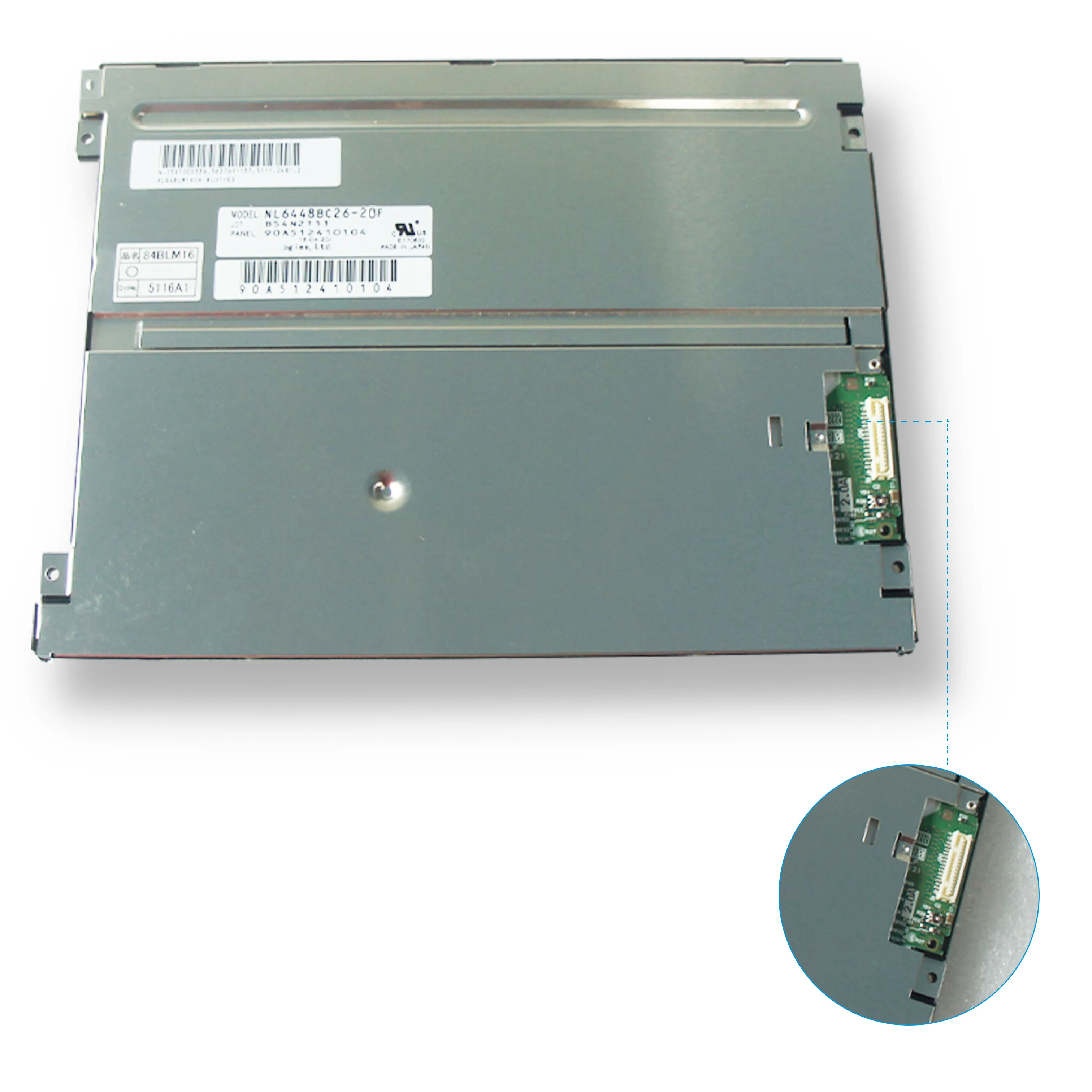

G238HAN01.0 AUO 23.8" TFT-LCD screen 1920*1080 Display
The modern digital ecosystem demands displays that transcend mere visual output; they require reliability, precision, and resilience. The AUO G238HAN01.0, a 23.8-inch TFT-LCD panel with a native resolution of 1920x1080 (Full HD), stands as a compelling solution for a wide array of professional applications. While the consumer market often focuses on high refresh rates and OLED contrast, the industrial and commercial sectors value consistent performance under variable conditions. This display, engineered by AU Optronics (AUO), a titan in the display manufacturing space, is designed to meet those stringent demands. This article delves into the technical architecture, material science, and functional advantages of the G238HAN01.0. We will explore the specific AHVA (Advanced Hyper-Viewing Angle) technology that provides wide viewing angles, the critical role of its high brightness output, and why a resolution of 1920x1080 remains a standard for ergonomic workflow. From digital signage to medical imaging, this panel represents a convergence of durability and clarity. Our goal is to move beyond superficial specifications and understand how the panel’s engineering directly translates to tangible operational benefits for professionals.
To understand the G238HAN01.0, one must first look at its core technology: AHVA (Advanced Hyper-Viewing Angle). While often confused with IPS (In-Plane Switching), AHVA is a distinct AUO innovation that operates on a similar principle of liquid crystal alignment. The key advantage is its ability to maintain consistent color and contrast across extreme viewing angles—typically up to 178 degrees in all directions. For a 23.8-inch panel, this is not a luxury but a necessity. In multi-monitor setups, often found in control rooms or financial trading floors, color shift is a critical flaw. If the color temperature changes when the viewer shifts slightly, the data visualization becomes unreliable. The G238HAN01.0 mitigates this entirely. The technology ensures that a deep blue remains a deep blue, and a warning red remains vivid, regardless of the operator’s position relative to the screen. This is achieved through a precise electrode structure that generates a horizontal electric field, keeping the liquid crystals parallel to the glass substrate. This design eliminates the "dragging" effect seen in older TN panels which causes gamma shift. For professionals in graphic design or medical diagnostics, where even a 5% color drift can cause errors, this optical stability is the difference between effective and flawed performance.
The G238HAN01.0 is frequently specified for its high luminance, typically rated in the range of 250 to 350 cd/m², depending on the specific variant. While this might seem modest compared to HDR consumer monitors, the backlight architecture is engineered for longevity and stability, not peak brightness. This panel typically utilizes a WLED (White LED) array positioned at the edge of the screen. The true value here is the synergy between brightness and contrast ratio (typically 1000:1). In an industrial environment, ambient lighting is unpredictable. A panel in a factory may be installed near a window or under harsh overhead lights. The high brightness of this AUO panel overcomes "washed-out" visuals caused by glare. Furthermore, the backlight is controlled by a high-quality inverter that minimizes flicker at lower brightness settings, reducing operator eye fatigue during long shifts. It’s important to distinguish this from "peak brightness" marketing. This panel’s performance is about sustained output; it is designed to perform consistently for 50,000 hours or more without significant degradation. The precise voltage regulation ensures that the white point remains stable, preventing the yellowish tint common in aging backlights. For security surveillance or medical patient monitoring, where a screen must be legible 24/7, this engineered reliability is paramount.
In an era of 4K and 8K panels, the choice of 1920x1080 (Full HD) resolution on a 23.8-inch screen is a deliberate one. This results in a pixel density of approximately 92 PPI (Pixels Per Inch). While this is lower than a smartphone or a high-end laptop, it is the ergonomic sweet spot for desktop interaction. The Windows operating system, which dominates the industrial and commercial sector, has historically struggled with scaling on higher-resolution displays at this screen size. Native 1080p on a 24-inch screen allows for 100% scaling, meaning icons, text, and UI elements appear at their intended size without blurring or tiny, unreadable fonts. This is critical for point-of-sale systems, medical charting software, or legacy industrial control interfaces (SCADA). The user can see the entire application without needing to zoom or scroll excessively. Furthermore, from a hardware perspective, driving a 1080p panel requires significantly less graphical horsepower and bandwidth than a 4K display. This reduces system cost, heat generation, and power consumption—vital factors for embedded systems and fanless computers used in industrial automation. The G238HAN01.0 leverages this resolution to ensure that data density does not compromise legibility or system stability.
The physical construction of the G238HAN01.0 separates it from fragile consumer-grade monitors. Designed for industrial and embedded applications, this panel features a robust metal frame and specific mounting holes (typically VESA compliant) that allow for secure integration into kiosks, panel PCs, and rack-mount systems. One of the most critical aspects of its design is thermal management. The user manual specifications for this panel detail a wide operating temperature range, often from 0°C to 50°C or higher. This is not a coincidence. In a factory or outdoor kiosk, internal cabinet temperatures can soar. The panel’s liquid crystal material is formulated to remain in a stable nematic state even at elevated temperatures, preventing the "blackout" effect common with cheap panels. Additionally, the bezel design is often wider and more rigid, providing support against vibration and physical shock, which are common in transportation and heavy machinery environments. The interface connector is also typically a standard 30-pin eDP (Embedded DisplayPort) connector, which provides a locking mechanism to prevent disconnection due to vibration. This mechanical integrity ensures that the screen maintains its optical alignment and structural integrity over a product lifecycle that often exceeds five to seven years, a requirement rarely considered in the consumer electronics market.


A display panel is only as good as the signal it receives, and the G238HAN01.0 is engineered for high fidelity signal transmission. The primary interface is eDP (Embedded DisplayPort) 1.2, which is the standard for industrial laptop and embedded displays. This interface offers significant advantages over older LVDS standards: it allows for higher data rates, enabling the 1920x1080 @ 60Hz signal with 8-bit color depth (16.7M colors) without compression. More importantly, eDP is designed for panel self-refresh (PSR) and dynamic backlight control. This allows an embedded controller to hold the video frame in the panel’s own memory, turning off the GPU when a static image is displayed. For a digital signage player or a factory HMI (Human-Machine Interface) that shows a static chart for minutes at a time, this drastically reduces power draw below the already low consumption of the backlight. The integration process requires careful consideration of the LED controller board. The G238HAN01.0 is a "raw" panel, meaning it requires a separate driver board to convert HDMI or VGA signals. Professionals must select a board that correctly drives the specific resolution and supplies the correct voltage (typically 12V or 5V) for the backlight. The panel’s datasheet provides strict timing parameters (H-sync, V-sync, pixel clock) that must be matched to avoid artifacts like screen tearing or distortion.
Q: Is the AUO G238HAN01.0 compatible with standard HDMI monitors?
A: No. This is a raw TFT-LCD panel, not a finished monitor. It requires a compatible LCD controller board to accept HDMI, VGA, or DVI input signals.
Q: What is the typical lifespan of the backlight for this screen?
A: The WLED backlight is typically rated for 50,000 hours of operation (half brightness) under standard conditions, making it suitable for continuous industrial use.
Q: Can this panel be used in direct sunlight?
A: It can be readable under indirect sunlight due to its high brightness (300 cd/m²), but for direct sunlight, a much higher brightness panel (1000+ cd/m²) or a bonded anti-reflective cover glass would be required.
Q: What is the difference between AHVA and standard IPS?
A: AHVA is an AUO-specific technology that achieves high performance similar to IPS. It is not identical to LG's IPS or Samsung's PLS but offers comparable wide viewing angles and color consistency.
Q: Does this panel support 10-bit color depth?
A: The standard G238HAN01.0 is an 8-bit panel (16.7 million colors). It does not support native 10-bit color without specialized hardware and is generally not designed for high-end HDR grading.
Q: What is the exact pixel pitch of this 23.8-inch 1080p screen?
A: The pixel pitch (distance between pixels) is approximately 0.2745 mm x 0.2745 mm, contributing to its sharp yet easily scalable image.
Q: Is this a touch screen panel?
A: No. This is a standard TFT-LCD panel without a touch sensor layer. To create a touch display, you would need to add a separate touch overlay (capacitive or resistive).
Q: What environments is this panel best suited for?
A: It is ideal for medical monitors, industrial automation (HMI), point-of-sale kiosks, crowded surveillance rooms, and digital thin clients where reliability is key.
Q: How is the screen brightness controlled on a raw panel?
A: Brightness is controlled by the voltage applied to the WLED backlight via the controller board, often through a PWM (Pulse Width Modulation) signal or an analog potentiometer on the board.
Q: Can I replace a broken screen in my laptop with this panel?
A: It is possible if your laptop uses a standard 30-pin eDP connector and a 23.8-inch screen form factor, but size, mounting brackets, and cable routing are significant challenges. It is intended for embedded systems, not direct laptop replacements.
Conclusion: The Unseen Foundation of Critical Displays
The AUO G238HAN01.0 is a testament to the principle that the best technology is often the one you never notice failing. It does not chase the marketing hype of extreme refresh rates or ultra-high resolutions. Instead, it provides a deliberate and robust foundation for applications where failure is not an option. By combining the excellent off-axis clarity of AHVA technology with the ergonomic clarity of 1080p at 24 inches and a thermally durable backlight, this panel solves the real-world problems of eye strain, signal reliability, and mechanical wear that plague generic displays. For the integrator or engineer, choosing this panel is a commitment to longevity. It acknowledges that a screen in a hospital ICU or a factory floor must be legible, consistent, and repairable over years of service. As we digitize our physical infrastructure, the quiet reliability of components like the G238HAN01.0 becomes the unsung hero of operational efficiency. It is not a flashy feature; it is a calculable asset that reduces total cost of ownership and ensures that the information professionals rely on is always visible, always accurate, and always trustworthy.