- Industrial LCD display
-
Industrial Products
- DC Servo Drive
- AC Servo Drive
- other
- Heidelberg
- FANUC
- IFM
- Meter
- CCD
- Membrane Keypad
- Film
- YOKOGAWA Module
- Card
- ABB
- MITSUBISHI
- FANUC
- KEYENCE
- BECKHOFF
- Honeywell
- HOLLYSYS
- FUJI servo drives
- HP
- solenoid valve
- thermostat
- Siemens adapter
- color oscilloscope
- Fujitsu connector
- CHELIC
- SMC
- CISCO Module
- INTEL
- Key board
- FAIRCHILD
- Motherboard
- Board
- Bearing
- other
- Control Panel
- Contactor
- Circuit
- OMRON
- Relay
- Controller
- Photoelectric Switch
- Photoelectric Sensor
- Original
- Fan
- Motor Driver
- Limit Switch
- Amplifier
- power supply
- LENZE
- Cable
- Encoder
- Sensor
- Transformer
- Fiber Optic Sensor
- Protection Relay
- Temperature Controller
- Proximity Switch
- Switch Sensor
- Siemens
- Industrial board
- HMI Touch Glass
-
HMI Full Machine Whole unit
- OMRON HMI Touch Panel
- Siemens HMI Touch Panel
- Mitsubishi HMI Touch Panel
- Allen-Bradley automation HMI Touch Panel
- DELTA HMI Touch Panel
- EVIEW DELTA HMI Touch Panel
- KINCO DELTA HMI Touch Panel
- HITECH HMI Touch Panel
- WEINTECK HMI Touch Panel
- TECVIEW HMI Touch Panel
- WEINVIEW HMI Touch Panel
- PRO-FACE HMI Touch Panel
- SIMATIC HMI Touch Panel
- AMPIRE HMI Touch Panel
- HEIDELBERG HMI Touch Panel
- PANASONIC HMI Touch Panel
- PATLITE HMI Touch Panel
- KYOCERA HMI Touch Panel
- KEYENCE HMI Touch Panel
- WEINVIEW HMI Touch Panel
- HITECH HMI Touch Panel
- FUJI HMI Touch Panel
- HAKKO HMI Touch Panel
- SCHNEIDER HMI Touch Panel
- SAMKOON touch panel
- other
- Module
- lcd inverter
- Membrane Keypad Switch
- Winni Touch Screens
- Frequency Inverter
- Servo Motor
- PLC



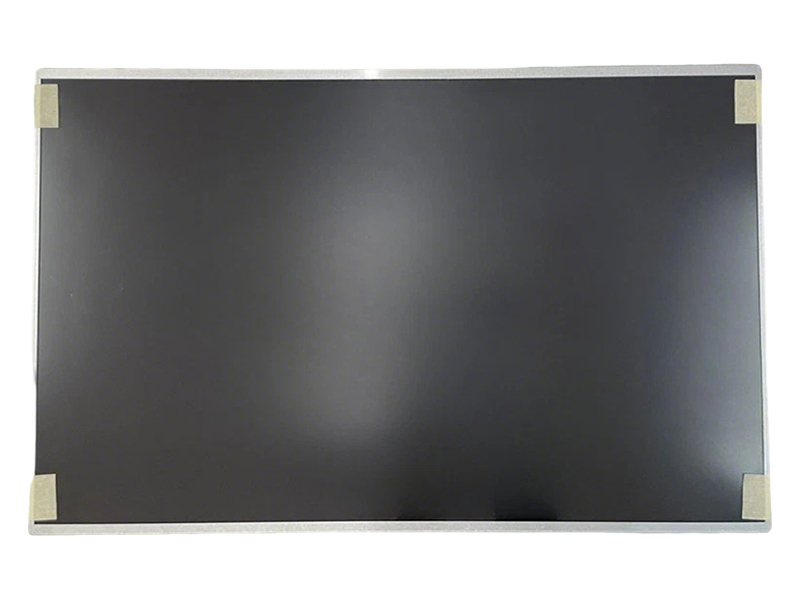
G320ZAN02.2 AUO 32.0" 3840*2160 LCD panel in stock
In the rapidly evolving landscape of professional display technology, the 32-inch UHD segment has established itself as a critical junction between high-performance computing and visual accuracy. At the heart of this intersection sits the G320ZAN02.2, an AU Optronics (AUO) panel that is currently available in stock, offering a robust solution for industries demanding uncompromised clarity. This 32.0" LCD panel, boasting a native resolution of 3840 x 2160 pixels (4K UHD), is not merely a consumer monitor component; it is a precision instrument designed for medical imaging, graphic design, and industrial control systems. With the supply chain for high-end panels often volatile, having a reliable stock of a specific model like the G320ZAN02.2 signals stability for integrators and OEMs. This article delves deep into the technical architecture, application-specific advantages, market positioning, and procurement strategies surrounding this specific AUO panel. We will explore why this particular model remains a benchmark in its class, moving beyond superficial specs to analyze its real-world performance, compatibility nuances, and the long-term value it brings to critical visual workflows.
The G320ZAN02.2 is a technical showcase of AUO’s mature a-Si TFT-LCD technology, utilizing an AHVA (Advanced Hyper-Viewing Angle) alignment layer. This is crucial because AHVA is AUO’s proprietary answer to IPS (In-Plane Switching), delivering superior color consistency and wide viewing angles—typically 178° both horizontally and vertically—without the characteristic glow associated with older IPS types. The panel's active area is precisely 698.4 x 392.85 mm, fitting standard 32-inch bezel designs. What sets this revision apart is its optimized backlight unit. It employs a WLED (White LED) system, enabling a luminance of 300 cd/m² (typical) and a contrast ratio of 1000:1, which is standard for high-end desktop panels. However, the optical film stack is where the engineering depth lies. The panel supports an 8-bit + FRC (Frame Rate Control) color depth, allowing it to represent up to 1.07 billion colors. This is achieved through a 10-bit driver IC, minimizing the visible color banding that plagues lower-cost 8-bit displays. For professionals dealing with gradients in medical DICOM images or photographic edits, this subtlety is non-negotiable. Furthermore, the panel is designed for an eDP (Embedded DisplayPort) interface, typically running with 4 lanes, supporting high data throughput needed for 4K at 60Hz without compression artifacts.

When discussing the G320ZAN02.2, it is critical to move beyond the "gaming monitor" narrative. This panel is optimized for static and high-precision visual tasks, not transient fast-paced action. Its response time is typically around 14ms (Gray-to-Gray), which is perfectly acceptable for medical imaging, financial trading platforms, and avionics displays, but not for competitive esports. In the medical sector, the panel's ability to maintain consistent brightness and color across the entire screen is vital for PACS (Picture Archiving and Communication System) workstations. Radiologists require a display where the luminance uniformity stays within tight tolerances (often Delta L < 5%) to avoid misdiagnosing subtle anomalies. The G320ZAN02.2’s backlight control and voltage regulation architecture support this requirement. Additionally, the panel's 4K UHD resolution provides enough real estate for surgeons to view multiple imaging modalities—MRI, CT, and X-Ray—simultaneously in full resolution, enhancing workflow efficiency. For industrial control rooms, the wide viewing angle ensures that operators on either side of a console see consistent colors and brightness, which is essential for identifying alarm states on SCADA systems. The panel’s robust construction also allows for integration into 24/7 operation environments, often with a rated lifetime exceeding 50,000 hours of backlight usage.
Integrating the G320ZAN02.2 into a finished product requires careful consideration of its mechanical and electrical specifications. The panel uses a standard 30-pin eDP connector, but the pin assignment is specific to AUO’s design. Engineers must validate the timing controller (TCON) compatibility, as the panel operates at a standard refresh rate of 60 Hz with a pixel clock typically around 533 MHz. The interface supports VESA DisplayHDR standards, but achieving full HDR performance often requires a local dimming backlight driver, which is not built into the panel itself; it requires an external controller board. Power consumption is a critical factor for embedded systems. The G320ZAN02.2 has a typical power draw of approximately 22W (for the panel alone, excluding backlight driver) and a maximum of 30W under full white load. This makes it suitable for fanless cooling designs if the thermal envelope is managed properly. The mechanical dimensions are precise: a thickness of 1.3 mm (typ) for the glass cell, with a total module thickness (including backlight) of approximately 15.0 mm. Mounting holes follow the standard VESA 100x100mm pattern, though integrators should note the component side height constraints. The recommended operating temperature range is 0°C to 50°C, with a storage range of -20°C to 60°C, making it viable for controlled indoor environments but unsuitable for outdoor or semi-outdoor kiosks without active climate control.
In the ecosystem of 32-inch 4K panels, the G320ZAN02.2 occupies a specific and resilient niche. Compared to consumer-oriented models like the LG LM315WR1 (which often targets high-end gaming), the AUO panel prioritizes color accuracy and stability over high refresh rates and G-Sync/Freesync compatibility. The AUO panel also generally offers superior viewing angle consistency due to its AHVA technology, which is less prone to the "glow" seen on IPS panels when viewed from an extreme angle. Against Samsung’s LTM315QL01, which uses PLS (Plane to Line Switching), the G320ZAN02.2 often has a more stable gamma curve across the brightness range, making it a preferred choice for color-critical pre-press work. However, the Samsung panel may offer slightly higher peak brightness (350 cd/m² vs 300 cd/m²). For medical integrators, the G320ZAN02.2 is often seen as a cost-effective alternative to certified medical monitors from EIZO or Barco, which can cost 3x-5x more. While those certified monitors include hardware calibration and DICOM Part 14 compliance built into the controller board, the AUO panel itself provides a sufficient hardware base. The key differentiator for the G320ZAN02.2 in stock is its long-term availability. Many newer models face revision cycles every 18-24 months, causing supply chain headaches. AUO has maintained production on this revision, ensuring that OEMs can qualify a design once and use it for years—a critical advantage in regulated industries like medical devices.
When procuring the G320ZAN02.2, especially from stock, understanding quality assurance parameters is essential. AUO typically specifies this panel with a Class A quality grade, allowing for a limited number of pixel defects (usually up to 3 bright dots and 5 dark dots per million pixels). However, integrators for medical or aviation applications often negotiate for Class 0 or Class 1 defect tolerances, requiring zero stuck-on pixels. It is critical to verify the defect tolerance policy with the distributor holding stock. The panel’s lifespan is rated for 30,000 hours to half-brightness (L50) under normal operating conditions (25°C, 80% duty cycle). This is a standard figure for industrial panels but less than specialized outdoor-rated units. To extend lifespan, thermal management is paramount; operating the panel consistently above 45°C can significantly accelerate backlight degradation. Furthermore, the aging process of the polarizer film on this model is relatively slow, provided it is not exposed to UV light or high humidity. For long-term projects, we recommend sourcing panels from a known good batch date (usually within the last 12 months) to minimize storage-induced mechanical stress on the optical films. Distributors holding stock should provide the Manufacturing Date Code (MDC) and the Lot Number to allow for traceability. Additionally, the panel supports panel self-test (BIST) functionality, which can be triggered via the eDP interface to verify basic functionality before system integration.
The primary value of the "in stock" status for the G320ZAN02.2 cannot be overstated in the current global electronics landscape. Lead times for new production of non-commodity panels like this can range from 8 to 16 weeks. Having immediate stock eliminates production delays for system integrators facing tight contractual deadlines. The pricing of this panel has shown relative stability compared to other 32-inch 4K variants. While a consumer-grade panel might fluctuate with commodity pricing, the G320ZAN02.2 holds a premium (typically $200–$350 USD per unit for blank panels in bulk) due to its specific industrial application profile. Buying from reputable stock distributors who offer traceability to the original AUO packing—typically a vacuum-sealed anti-static bag with a desiccant pack—is vital. Counterfeit or "reclaimed" panels (pulled from scrapped monitors) are a real risk in the secondary market. These reclaimed panels may have mismatched backlight drivers, latent damage to the T-con board, or degraded optical films. When sourcing, always request photographs of the actual panel sticker (showing the model number G320ZAN02.2, version number such as Rev.C, and serial number) and a copy of the AUO specification sheet (spec) to confirm the exact interface pinout and mechanical drawing. A high-quality stock should also be accompanied by a warranty (typically 90–180 days for storage, 12–24 months for integrated systems). This is a high-value component; strategic sourcing with a focus on authenticity yields long-term reliability.
Q: Is the G320ZAN02.2 suitable for gaming?
A: Not ideally. Its 14ms response time and 60Hz refresh rate are designed for static precision (medical, graphic design), not fast-paced gaming.
Q: What is the exact resolution and pixel pitch of this panel?
A: It is 3840 x 2160 (UHD) with a pixel pitch of approximately 0.1815 mm x 0.1815 mm, offering high pixel density for detailed work.
Q: Does this panel support HDR10 or Dolby Vision?
A: The panel itself supports HDR signal input (via the eDP interface), but achieving full HDR requires an external controller with local dimming.
Q: What type of backlight does the G320ZAN02.2 use?
A: It uses a WLED (White Light Emitting Diode) edge-lit backlight system, providing a standard luminance of 300 cd/m².
Q: Can this panel be used for touchscreen applications?
A: Yes, it is typically integrated with a projected capacitive (PCAP) touch overlay, though the bare panel does not include touch functionality.
Q: What is the typical power consumption of this panel?
A: The panel itself draws about 22-25W typical, with a maximum of 30W under full white display. Total system power depends on the controller board.
Q: What is the operating temperature range for this LCD?
A: The recommended operating temperature is 0°C to 50°C (32°F to 122°F). It is not suitable for outdoor use without active cooling.
Q: How does this panel compare to a certified medical monitor from Barco?
A: The panel provides the hardware base, but certified monitors include proprietary controllers for DICOM calibration and luminance uniformity correction.
Q: What is the typical lifespan of the backlight in the G320ZAN02.2?
A: The backlight is rated for 30,000 hours to half-brightness under standard conditions (25°C).
Q: Is the G320ZAN02.2 an AHVA or IPS panel?
A: It uses AUO's proprietary AHVA (Advanced Hyper-Viewing Angle) technology, which is functionally equivalent to IPS but with superior viewing angle stability.
Conclusion: The Enduring Value of a Proven Display Platform
The G320ZAN02.2 is more than a specific product model; it is a testament to the enduring value of a well-engineered, application-focused display platform. In an era of rapid obsolescence and constant feature churn, this AUO panel stands out for its reliability, optical consistency, and availability. For systems integrators and OEMs operating in sectors where visual accuracy is paramount—medical diagnostics, industrial control, and critical design—the combination of 4K UHD resolution, wide viewing angles, and 10-bit color depth provides a proven foundation that minimizes risk. The “in stock” availability is not just a logistical convenience; it is a strategic asset, enabling predictable production schedules and reducing supply chain volatility. While it may not boast the highest refresh rates or peak brightness found in consumer products, its performance in the critical metrics of color uniformity, gray scale accuracy, and long-term stability makes it an intelligent choice for those who understand that a display is a tool, not a toy. For your next professional imaging project, this panel offers a reliable, high-uptime solution that respects both your budget and your application’s demanding requirements. It is a decision grounded in performance, not hype.