- Industrial LCD display
-
Industrial Products
- DC Servo Drive
- AC Servo Drive
- other
- Heidelberg
- FANUC
- IFM
- Meter
- CCD
- Membrane Keypad
- Film
- YOKOGAWA Module
- Card
- ABB
- MITSUBISHI
- FANUC
- KEYENCE
- BECKHOFF
- Honeywell
- HOLLYSYS
- FUJI servo drives
- HP
- solenoid valve
- thermostat
- Siemens adapter
- color oscilloscope
- Fujitsu connector
- CHELIC
- SMC
- CISCO Module
- INTEL
- Key board
- FAIRCHILD
- Motherboard
- Board
- Bearing
- other
- Control Panel
- Contactor
- Circuit
- OMRON
- Relay
- Controller
- Photoelectric Switch
- Photoelectric Sensor
- Original
- Fan
- Motor Driver
- Limit Switch
- Amplifier
- power supply
- LENZE
- Cable
- Encoder
- Sensor
- Transformer
- Fiber Optic Sensor
- Protection Relay
- Temperature Controller
- Proximity Switch
- Switch Sensor
- Siemens
- Industrial board
- HMI Touch Glass
-
HMI Full Machine Whole unit
- OMRON HMI Touch Panel
- Siemens HMI Touch Panel
- Mitsubishi HMI Touch Panel
- Allen-Bradley automation HMI Touch Panel
- DELTA HMI Touch Panel
- EVIEW DELTA HMI Touch Panel
- KINCO DELTA HMI Touch Panel
- HITECH HMI Touch Panel
- WEINTECK HMI Touch Panel
- TECVIEW HMI Touch Panel
- WEINVIEW HMI Touch Panel
- PRO-FACE HMI Touch Panel
- SIMATIC HMI Touch Panel
- AMPIRE HMI Touch Panel
- HEIDELBERG HMI Touch Panel
- PANASONIC HMI Touch Panel
- PATLITE HMI Touch Panel
- KYOCERA HMI Touch Panel
- KEYENCE HMI Touch Panel
- WEINVIEW HMI Touch Panel
- HITECH HMI Touch Panel
- FUJI HMI Touch Panel
- HAKKO HMI Touch Panel
- SCHNEIDER HMI Touch Panel
- SAMKOON touch panel
- other
- Module
- lcd inverter
- Membrane Keypad Switch
- Winni Touch Screens
- Frequency Inverter
- Servo Motor
- PLC


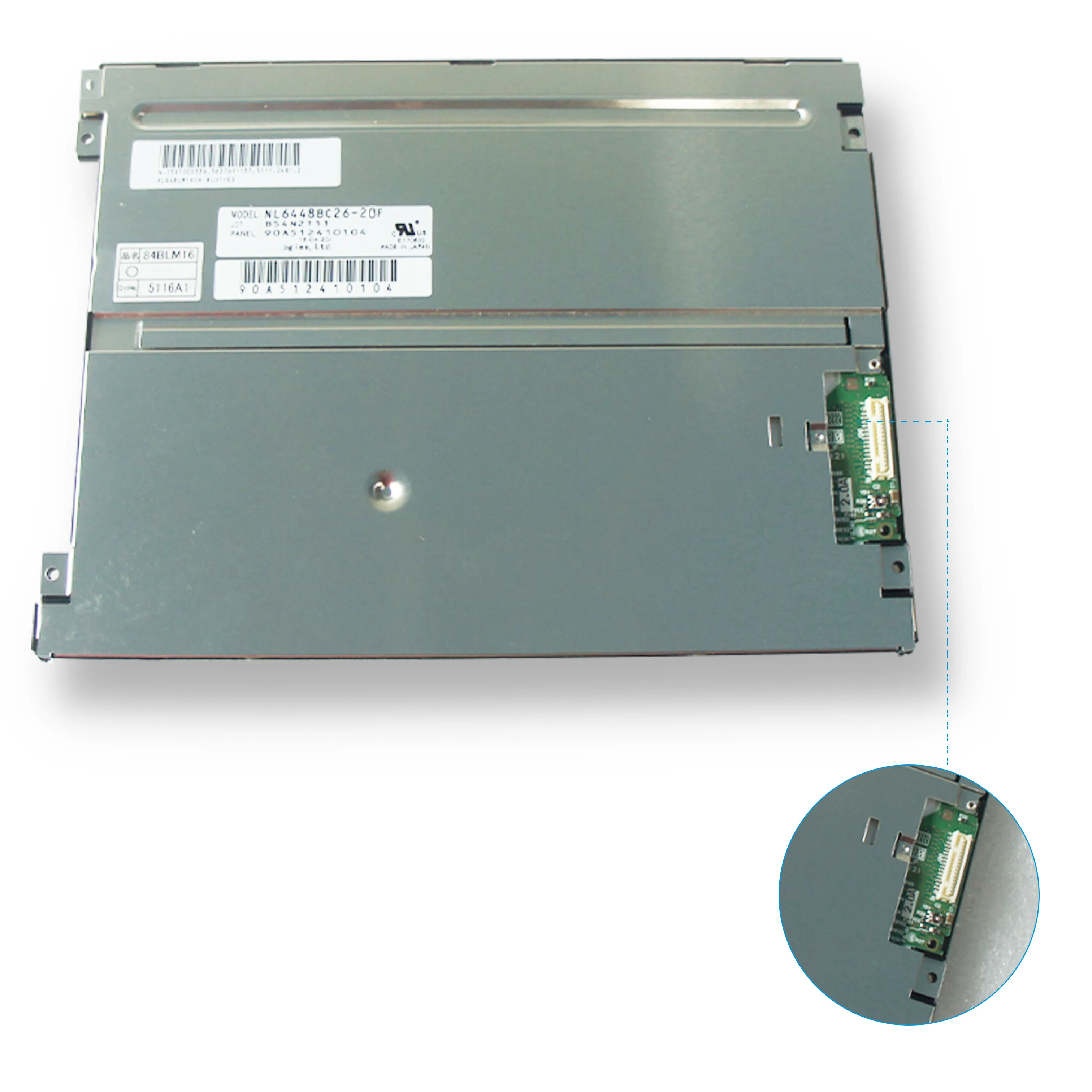


NEW G170HAN01.0 17.0-inch 1920*1920 a-Si TFT-LCD display PANEL
In the ever-evolving landscape of visual technology, display panels serve as the critical interface between digital data and human perception. Professionals across industries—from medical imaging and graphic design to industrial control and high-end computing—constantly seek displays that offer not just clarity, but precision, reliability, and specialized performance. Enter the NEW G170HAN01.0, a 17.0-inch a-Si TFT-LCD panel that presents a compelling proposition in the niche market of square-format displays.
This article delves into a comprehensive analysis of this specific panel model, moving beyond basic specifications to explore its technological significance and practical applications. We will dissect the implications of its unique 1920x1920 resolution, examine the enduring role of a-Si TFT technology in industrial contexts, and evaluate its performance characteristics. Our goal is to provide engineers, procurement specialists, and tech integrators with a deep, actionable understanding of where the G170HAN01.0 excels, the challenges it addresses, and its ideal placement within the broader ecosystem of display solutions.
The Significance of a Square Canvas: 1920x1920 Resolution Demystified
At first glance, the 1920x1920 pixel resolution of the G170HAN01.0 is its most distinctive feature, departing radically from the widescreen 16:9 aspect ratio that dominates consumer markets. This 1:1, or square, format is not an arbitrary choice but a targeted design decision with profound implications. It provides vertical and horizontal parity, offering a workspace that is equally expansive in both dimensions.
This is invaluable for applications where data is naturally organized in grids or squares. In medical diagnostics, for instance, it can display a full mammography image or a detailed square scan without wasteful black bars or awkward scaling. In industrial automation, it allows for the simultaneous, un-compromised view of multiple machine status panels or code editors. The resolution ensures a high pixel density of approximately 133 PPI, delivering sharp text and fine line detail crucial for prolonged technical work, effectively creating a digital "sheet of paper" optimized for specialized professional workflows.
a-Si TFT Technology: The Bedrock of Reliability and Cost-Effectiveness
The panel utilizes Amorphous Silicon (a-Si) Thin-Film Transistor technology, a mature and highly refined manufacturing process. While newer technologies like IGZO or LTPS offer higher electron mobility for potential power savings or higher refresh rates, a-Si remains the undisputed champion for many industrial and professional applications due to its robustness and economic viability.
Its primary strengths lie in its excellent long-term stability and lower production costs for larger panels. For equipment designed to operate continuously for years in control rooms, medical devices, or point-of-sale systems, reliability is paramount. a-Si TFTs are less susceptible to performance degradation over time under constant operation compared to some newer, more complex technologies. Furthermore, the established manufacturing infrastructure for a-Si allows for competitive pricing, making it a sensible choice for B2B integrations where performance consistency and total cost of ownership are more critical than chasing the absolute latest consumer-grade specs.
Performance Characteristics: Brightness, Contrast, and Color Fidelity
Beyond form factor and technology, the usable quality of a display is defined by its core performance metrics. The G170HAN01.0 is engineered for environments where ambient light control may be variable. Its typical brightness specification is suited for indoor use under controlled or office lighting, ensuring the image remains clear and legible without causing undue eye strain.
The contrast ratio defines the panel's ability to differentiate between dark and light areas, crucial for discerning subtle details in X-rays, technical drawings, or graphical data. While it may not match the deep blacks of high-end OLEDs, its contrast is optimized for its intended professional tasks. In terms of color performance, it typically covers a standard gamut like sRGB, ensuring accurate and consistent color representation. This is essential for tasks where color coding is informational (e.g., mapping software, system status UIs) or for basic graphic design previews, though it is not targeted at wide-gamut, color-critical proofing work.


Interface and Signal Compatibility: Ensuring Seamless Integration
A display panel is not an island; its value is realized only when successfully integrated into a larger system. The G170HAN01.0 commonly features standard LVDS (Low-Voltage Differential Signaling) interfaces. LVDS has been the backbone of industrial and automotive display connectivity for years due to its robustness, noise resistance, and ability to transmit high-speed data over longer cables with lower power.
This choice signals the panel's target market: embedded systems and professional equipment. Integrators will need an LVDS transmitter on their mainboard or controller. Understanding this interface requirement is crucial for system designers, as it dictates the choice of supporting hardware and ensures signal integrity from the source to the panel itself. Compatibility with common timing controllers (T-CON) and driver boards simplifies the design-in process for OEMs.
Target Applications and Market Positioning
The unique combination of features of the G170HAN01.0 carves out a clear niche. Its primary applications are in sectors where information density and a square workflow are paramount.
Medical Imaging Displays: For ultrasound, digital mammography workstations, and other diagnostic equipment where square sensor images are common.
Industrial Human-Machine Interfaces (HMIs): In factory automation, process control panels, and test equipment, where multiple data points and control buttons are arranged in grids.
Specialized Computing: For legacy or custom systems in aviation, security monitoring (for multiple square-feed views), and scientific instrumentation.
Point-of-Sale & Kiosks: In vertical-oriented POS systems or informational kiosks where menu and transaction data fits a square layout.
It is positioned as a reliable, purpose-driven component, not a consumer-grade monitor. Its value is in solving specific layout challenges effectively and durably.
Comparative Analysis: Strengths and Considerations
When evaluating the G170HAN01.0, a balanced view is essential. Its key strength is its unique square aspect ratio, solving a specific geometry problem that widescreen panels cannot. Coupled with the proven reliability of a-Si TFT and standard industrial interfaces, it offers a low-risk, predictable solution for OEMs.
Potential considerations include its niche nature. Being a specialized panel, availability and price may differ from mass-market widescreen displays. Furthermore, while reliable, its performance metrics (refresh rate, color gamut) are tailored for professional readability and longevity, not for high-end gaming or video editing. The choice, therefore, hinges entirely on the project requirements. For a general-purpose monitor, it is not optimal. For a system requiring a durable, square viewing area, it is a precisely targeted solution.
FAQs
Q1: What is the main advantage of the 1920x1920 resolution?
A: It provides a perfect square workspace, ideal for displaying grid-based data, medical images, or multiple control panels without unused screen space.
Q2: Is this panel suitable for gaming or watching movies?
A: No. Its square format and standard refresh rate are not designed for multimedia entertainment. Black bars would be massive on widescreen content.
Q3: What does a-Si TFT mean, and why is it used?
A: Amorphous Silicon Thin-Film Transistor. It's used for its proven reliability, long-term stability, and cost-effectiveness in industrial/professional applications.
Q4: What interface does this panel use?
A: It typically uses LVDS (Low-Voltage Differential Signaling), a common, robust standard for embedded and industrial display systems.
Q5: Can I buy this panel and use it as a standalone computer monitor?
A: Not directly. You would need a compatible controller board to convert standard video outputs (like HDMI) to the panel's LVDS signal and power it.
Q6: What is the typical brightness of this display?
A: While specifications can vary, it is typically designed for indoor, controlled lighting environments common in offices, labs, and control rooms.
Q7: Is the color gamut wide on this panel?
A: It typically covers a standard gamut like sRGB, suitable for accurate color representation in professional UIs and basic graphics, not for wide-gamut color grading.
Q8: What are the most common applications for the G170HAN01.0?
A: Medical imaging workstations, industrial HMIs and control panels, specialized computing systems, and certain POS/kiosk displays.
Q9: How does this panel compare to a modern IPS display?
A: It may use IPS or similar viewing-angle technology, but its focus is on form factor and reliability. Consumer IPS panels prioritize refresh rate, color vibrancy, and sleek design.
Q10: Where can I find technical specifications or datasheets for this model?
A: They are usually available through authorized distributors, panel resellers, or by contacting the manufacturer directly, as it is a B2B component.
Conclusion
The NEW G170HAN01.0 17-inch display panel exemplifies how specialized technology addresses specific market needs that mainstream products overlook. Its defining 1920x1920 square resolution is a powerful tool for vertical applications where information density and a 1:1 aspect ratio are intrinsic to the workflow. Paired with the dependable a-Si TFT platform and industrial-grade interfaces, it stands as a testament to purpose-driven design.
For engineers and procurement professionals, the evaluation of this panel should not be based on consumer benchmarks but on its fit within a larger system designed for longevity, clarity, and task-specific efficiency. In the realms of medical diagnostics, industrial automation, and specialized instrumentation, the G170HAN01.0 is not merely a display; it is a tailored visual interface that enhances precision and reliability where it matters most.