- Industrial LCD display
-
Industrial Products
- DC Servo Drive
- AC Servo Drive
- other
- Heidelberg
- FANUC
- IFM
- Meter
- CCD
- Membrane Keypad
- Film
- YOKOGAWA Module
- Card
- ABB
- MITSUBISHI
- FANUC
- KEYENCE
- BECKHOFF
- Honeywell
- HOLLYSYS
- FUJI servo drives
- HP
- solenoid valve
- thermostat
- Siemens adapter
- color oscilloscope
- Fujitsu connector
- CHELIC
- SMC
- CISCO Module
- INTEL
- Key board
- FAIRCHILD
- Motherboard
- Board
- Bearing
- other
- Control Panel
- Contactor
- Circuit
- OMRON
- Relay
- Controller
- Photoelectric Switch
- Photoelectric Sensor
- Original
- Fan
- Motor Driver
- Limit Switch
- Amplifier
- power supply
- LENZE
- Cable
- Encoder
- Sensor
- Transformer
- Fiber Optic Sensor
- Protection Relay
- Temperature Controller
- Proximity Switch
- Switch Sensor
- Siemens
- Industrial board
- HMI Touch Glass
-
HMI Full Machine Whole unit
- OMRON HMI Touch Panel
- Siemens HMI Touch Panel
- Mitsubishi HMI Touch Panel
- Allen-Bradley automation HMI Touch Panel
- DELTA HMI Touch Panel
- EVIEW DELTA HMI Touch Panel
- KINCO DELTA HMI Touch Panel
- HITECH HMI Touch Panel
- WEINTECK HMI Touch Panel
- TECVIEW HMI Touch Panel
- WEINVIEW HMI Touch Panel
- PRO-FACE HMI Touch Panel
- SIMATIC HMI Touch Panel
- AMPIRE HMI Touch Panel
- HEIDELBERG HMI Touch Panel
- PANASONIC HMI Touch Panel
- PATLITE HMI Touch Panel
- KYOCERA HMI Touch Panel
- KEYENCE HMI Touch Panel
- WEINVIEW HMI Touch Panel
- HITECH HMI Touch Panel
- FUJI HMI Touch Panel
- HAKKO HMI Touch Panel
- SCHNEIDER HMI Touch Panel
- SAMKOON touch panel
- other
- Module
- lcd inverter
- Membrane Keypad Switch
- Winni Touch Screens
- Frequency Inverter
- Servo Motor
- PLC


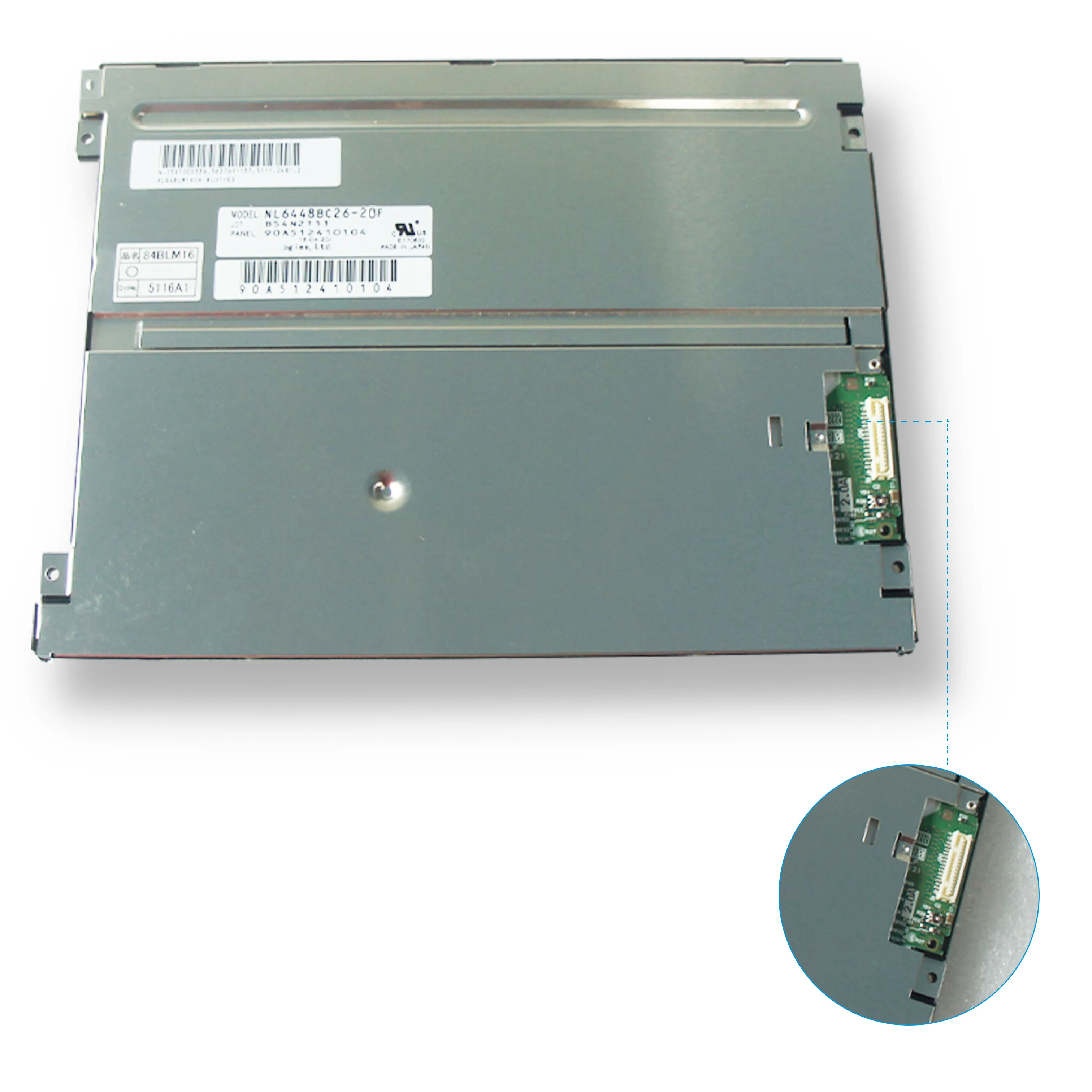

24.0 inch Computer lcd screen Panel G240HW01 V1
In the rapidly evolving landscape of display technology, the 24.0-inch LCD panel often serves as the unsung workhorse of both professional and consumer environments. Among the many models that populate this category, the G240HW01 V1 stands out as a specific, technically significant component. This article delves deep into the characteristics, applications, and technical specifications of this particular panel. While modern displays often chase higher resolutions and exotic panel types, the G240HW01 V1 represents a mature, optimized solution for specific use cases where reliability, color accuracy, and cost-efficiency are paramount. We will explore its architecture, compare it to contemporary alternatives, and discuss its role in industrial, medical, and commercial settings. Understanding this panel is not just about examining one piece of hardware; it is about appreciating the engineering trade-offs that define the LCD industry and how a single component can become a standard for a generation of equipment.
The G240HW01 V1 is a 24.0-inch, a-Si TFT-LCD (Amorphous Silicon Thin Film Transistor Liquid Crystal Display) panel primarily manufactured by AU Optronics (AUO). Its core design relies on a TN (Twisted Nematic) liquid crystal mode, which historically prioritizes fast response times over wide viewing angles. The panel’s native resolution is 1920 x 1080 (Full HD), resulting in a pixel density of approximately 91.79 PPI, which is adequate for standard desktop viewing distances. It employs a standard RGB vertical stripe arrangement for pixel structure. A critical specification is its 6-bit + Hi-FRC (Frame Rate Control) color depth, allowing it to represent 16.7 million colors. This is achieved by rapidly toggling between two colors to simulate intermediate shades, a technique that balances color performance with manufacturing cost. The interface is a single-channel LVDS (Low-Voltage Differential Signaling) system, typically with 30 pins, which is a legacy but robust connection standard. This architecture makes the panel particularly suited for environments where signal integrity and low latency are more critical than extreme color gamut or wide-angle viewing.


The optical characteristics of the G240HW01 V1 define its practical utility. It typically features a brightness rating of 300 cd/m² (nits), which is sufficient for indoor office lighting or slightly brighter environments. The contrast ratio is specified at 1000:1, a standard figure for TN panels of its era, providing decent differentiation between dark and light areas. The viewing angles, however, are the panel’s most significant limitation; they are typically rated at 85/85/80/80 degrees (CR≥10) for left, right, up, and down, respectively. In practical terms, this means color and contrast shift noticeably when viewed from off-axis positions. The backlight system is a key differentiator. The G240HW01 V1 uses an EEFL (External Electrode Fluorescent Lamp) or a standard CCFL (Cold Cathode Fluorescent Lamp) backlight, depending on the exact revision. Unlike modern LED-backlit panels, this technology provides a more stable, continuous light spectrum, which can be beneficial for certain color-critical applications when calibrated correctly, though it comes with a longer warm-up time and a finite lifespan measured in tens of thousands of hours.
In a market flooded with IPS and VA panels, the enduring relevance of a TN panel like the G240HW01 V1 requires explanation. The primary advantage is response time. TN technology inherently offers the fastest pixel transition speeds, often rated at 3.8 ms (Rise + Fall) or faster. This makes it ideal for applications where motion clarity is paramount, such as in financial trading terminals where real-time data scrolling must remain sharp, or in gaming monitors targeting competitive play. Furthermore, TN panels are significantly cheaper to produce at larger sizes, making the G240HW01 V1 a cost-effective choice for high-volume commercial signage, point-of-sale kiosks, and medical imaging devices where multiple monitors are deployed. Another factor is power consumption; while not as efficient as modern LED, the mature CCFL-based backlight of this panel has a predictable power draw, simplifying thermal management in industrial enclosures. The low input lag, a byproduct of the simple LVDS interface and fast pixel response, is another reason it is favored in real-time control room applications.
The G240HW01 V1 is found across a diverse range of sectors. In the industrial automation sector, it is integrated into Human-Machine Interfaces (HMIs) for factory floor equipment, where its durability and predictable performance are valued. In medical diagnostics, it appears in PACS (Picture Archiving and Communication System) workstations, particularly for grayscale modalities like X-ray and CT, where its high static contrast ratio is beneficial. The gaming industry also uses this panel in older or budget-focused 1080p monitors. Integration, however, presents challenges. The panel requires an external inverter board to drive the CCFL backlight, adding complexity to the power supply design. Its LVDS interface is rapidly being phased out in favor of newer eDP (Embedded DisplayPort) standards, meaning that replacement controllers are becoming scarce. Furthermore, the viewing angle limitations mean that in multi-monitor setups, users on the periphery see significant color shift. Proper thermal design is also critical, as the CCFL backlight generates considerable heat, which can degrade panel performance over time if not properly ventilated.
The legacy of the G240HW01 V1 is intrinsically tied to its reliability and the widespread transition away from CCFL backlighting. This panel was engineered during a period when display manufacturers prioritized long-term stability and color consistency over ultra-thin form factors. Many units are still functioning in the field after 10+ years, a testament to robust construction. However, the industry has overwhelmingly shifted to LED backlighting, which offers superior energy efficiency, longer lifespan, thinner profiles, and mercury-free construction. As a result, the G240HW01 V1 is now considered a legacy component. For maintenance and repair companies, this creates a challenge: sourcing genuine spare parts. The panel is frequently replaced in bulk for fleet servicing of outdated ATM machines, industrial consoles, and legacy medical systems. Understanding its specifications is crucial for engineers tasked with retrofitting these systems. While no longer at the forefront of innovation, the G240HW01 V1 remains a critical reference point for understanding the trade-offs between cost, performance, and longevity in the 24-inch LCD segment.
What is the exact resolution of the G240HW01 V1 panel?
The native resolution is 1920 x 1080 (Full HD).
Is this panel suitable for photo editing?
Generally no. Its limited viewing angles and 6-bit+FRC color depth make it unsuitable for color-critical work like photo editing.
What type of backlight does the G240HW01 V1 use?
It typically uses a CCFL (Cold Cathode Fluorescent Lamp) or EEFL backlight, not LED.
Can I replace a broken G240HW01 V1 with a modern LED panel?
Not directly. The LVDS interface and backlight voltage requirements are different. You would need a new controller board and possibly a different power supply.
What is the typical lifespan of this LCD panel?
The CCFL backlight is typically rated for 30,000 to 50,000 hours of use before brightness degrades significantly.
Is the viewing angle good for a multi-monitor setup?
No. TN panels like this have poor color and contrast when viewed from an angle, making them poor for multi-monitor walls where users sit at an angle.
What interface does this panel use for connection?
It uses a 30-pin single-channel LVDS (Low-Voltage Differential Signaling) interface.
Is this panel considered a widescreen display?
Yes, it has a 16:9 aspect ratio, which is standard for Full HD panels.
Where can I find the datasheet for the G240HW01 V1?
Datasheets are available from AU Optronics' legacy archives or third-party panel sourcing websites like Panelook or DisplayPlus.
Is it possible to repair a dead pixel on this panel?
It is generally not repairable. Dead pixels are a permanent defect in the liquid crystal layers and require panel replacement.
Conclusion
The G240HW01 V1 represents a pivotal moment in display history—a high-volume, reliable workhorse that met the demands of an era before the LED revolution. Its technical architecture, built on TN technology and CCFL backlighting, defined its strengths: rapid response times, predictable cost, and stable color output. While modern consumers and industries have largely moved on to IPS and VA panels for their superior viewing angles and LED-backlit panels for their efficiency, the legacy of panels like the G240HW01 V1 endures. They remain the backbone of legacy industrial, medical, and commercial systems that cannot be easily upgraded. For anyone involved in the repair, maintenance, or retrofitting of older display equipment, understanding this panel's specifications is not optional—it is essential. It is a reminder that in technology, the best solution is not always the newest, but the one that most effectively balances performance, cost, and durability for a specific, well-defined purpose.