- Industrial LCD display
-
Industrial Products
- DC Servo Drive
- AC Servo Drive
- other
- Heidelberg
- FANUC
- IFM
- Meter
- CCD
- Membrane Keypad
- Film
- YOKOGAWA Module
- Card
- ABB
- MITSUBISHI
- FANUC
- KEYENCE
- BECKHOFF
- Honeywell
- HOLLYSYS
- FUJI servo drives
- HP
- solenoid valve
- thermostat
- Siemens adapter
- color oscilloscope
- Fujitsu connector
- CHELIC
- SMC
- CISCO Module
- INTEL
- Key board
- FAIRCHILD
- Motherboard
- Board
- Bearing
- other
- Control Panel
- Contactor
- Circuit
- OMRON
- Relay
- Controller
- Photoelectric Switch
- Photoelectric Sensor
- Original
- Fan
- Motor Driver
- Limit Switch
- Amplifier
- power supply
- LENZE
- Cable
- Encoder
- Sensor
- Transformer
- Fiber Optic Sensor
- Protection Relay
- Temperature Controller
- Proximity Switch
- Switch Sensor
- Siemens
- Industrial board
- HMI Touch Glass
-
HMI Full Machine Whole unit
- OMRON HMI Touch Panel
- Siemens HMI Touch Panel
- Mitsubishi HMI Touch Panel
- Allen-Bradley automation HMI Touch Panel
- DELTA HMI Touch Panel
- EVIEW DELTA HMI Touch Panel
- KINCO DELTA HMI Touch Panel
- HITECH HMI Touch Panel
- WEINTECK HMI Touch Panel
- TECVIEW HMI Touch Panel
- WEINVIEW HMI Touch Panel
- PRO-FACE HMI Touch Panel
- SIMATIC HMI Touch Panel
- AMPIRE HMI Touch Panel
- HEIDELBERG HMI Touch Panel
- PANASONIC HMI Touch Panel
- PATLITE HMI Touch Panel
- KYOCERA HMI Touch Panel
- KEYENCE HMI Touch Panel
- WEINVIEW HMI Touch Panel
- HITECH HMI Touch Panel
- FUJI HMI Touch Panel
- HAKKO HMI Touch Panel
- SCHNEIDER HMI Touch Panel
- SAMKOON touch panel
- other
- Module
- lcd inverter
- Membrane Keypad Switch
- Winni Touch Screens
- Frequency Inverter
- Servo Motor
- PLC




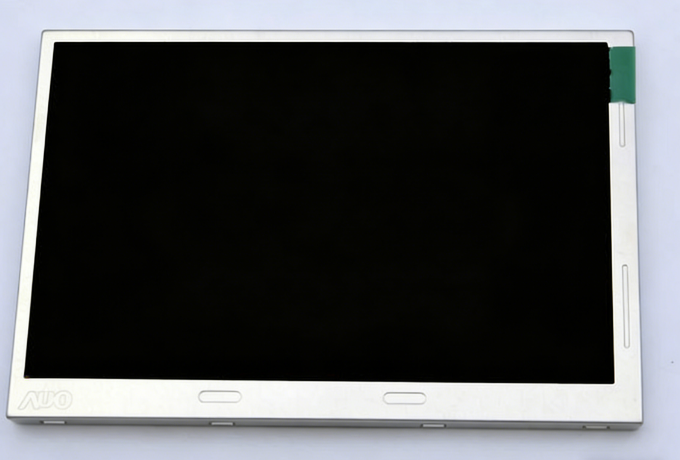
AUO 5-inch 800x480 LCD Display G050VTN01.1
In the intricate world of electronic components, the display often serves as the critical interface between machine and user. Among the myriad of options available to engineers and product developers, specific industrial-grade LCD panels stand out for their reliability and tailored performance. This article delves deep into one such component: the G050VTN01.1, a 5-inch LCD display module manufactured by AUO (AU Optronics). With a resolution of 800 x 480 pixels (WVGA), this panel is not a consumer-grade screen but a precision instrument designed for demanding applications.
Our exploration will move beyond basic datasheet specifications. We will dissect the technical architecture of the G050VTN01.1, uncover its ideal application environments, and contrast it with alternative technologies. Furthermore, we will provide practical guidance on integration, discuss its performance nuances, and analyze its position in the current market. This comprehensive guide aims to equip designers, engineers, and procurement specialists with the insights needed to evaluate whether this AUO display is the optimal visual solution for their embedded systems, industrial human-machine interfaces (HMIs), or portable medical devices.
Technical Architecture and Core Specifications
The G050VTN01.1 is built upon a TFT-LCD (Thin-Film Transistor Liquid Crystal Display) platform, a technology chosen for its consistent image quality and fast response times. The 5-inch diagonal active area provides a compact viewing space, while the 800 x 480 WVGA resolution offers a balanced pixel density for displaying detailed graphics, text, and user interface elements without excessive system overhead. The module typically incorporates a standard RGB interface, facilitating direct connection to many common display controllers and system-on-chip (SoC) solutions.
Key specifications that define its performance envelope include its brightness, measured in nits (cd/m²), which determines readability in various lighting conditions. The contrast ratio defines the difference between the darkest black and brightest white, impacting image depth. Viewing angles, specified in degrees (e.g., 80/80/80/80), indicate how the image quality holds when viewed from the sides, top, or bottom. Understanding these core parameters from the outset is crucial, as they form the non-negotiable foundation upon which all application decisions are made.
Primary Applications and Industry Fit
The G050VTN01.1 is distinctly positioned for industrial and commercial embedded systems, not consumer electronics. Its design prioritizes longevity, stability, and performance under stress over sleek aesthetics. A primary application is in Industrial Human-Machine Interfaces (HMIs) for factory automation, process control, and machinery. Here, its moderate resolution is sufficient for control dashboards, and its robust construction can withstand vibrations, temperature fluctuations, and continuous operation.
Another significant fit is within the portable medical and diagnostic device market. Devices such as patient monitors, handheld scanners, and diagnostic equipment benefit from the panel's compact size, reliability, and ability to render critical data clearly. Additionally, it finds use in transportation telematics (fleet management systems), point-of-sale (POS) terminals, and building automation controllers. In each case, the display acts as a durable and dependable portal for information exchange in controlled or challenging environments.
Comparative Analysis: TFT-LCD vs. Alternative Technologies
To appreciate the G050VTN01.1's value proposition, a comparison with other display technologies is essential. Against newer OLED panels, this TFT-LCD offers advantages in cost-effectiveness, longer operational lifespan (less risk of burn-in), and potentially higher brightness for sunlight readability. Its weaknesses include thicker form factors due to the backlight assembly and narrower viewing angles compared to high-end OLEDs.
When compared to basic segmented or character LCDs, the G050VTN01.1 provides vastly superior graphical capabilities, enabling modern GUI (Graphical User Interface) implementation. However, this comes with increased power consumption and system complexity. For projects requiring full graphics but with extreme cost constraints, smaller SPI-based TFTs might be considered, though they often sacrifice performance, size, and reliability. The G050VTN01.1 sits in a strategic middle ground, offering full graphics with industrial-grade integrity.
Integration Considerations and Design Challenges
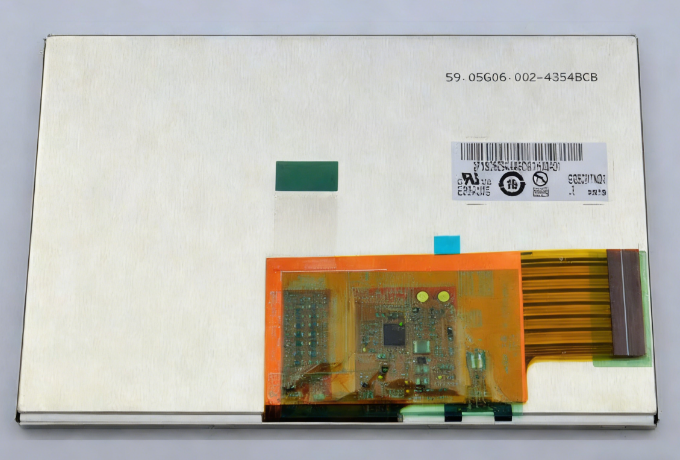
Successfully integrating the G050VTN01.1 into a product requires careful planning. Electrical integration involves managing the power supply sequence (power sequencing) to prevent damage to the LCD's delicate transistors. The host processor must have a compatible display controller (or require an external bridge IC) to drive the RGB data lines at the appropriate clock speed. Mechanically, designers must account for the module's exact footprint, mounting holes, and the placement of the connector, often a flexible printed circuit (FPC) with a ZIF (Zero Insertion Force) socket.
Optical integration is equally critical. The choice of touch panel (resistive or capacitive) must be compatible and properly laminated. The design of the front bezel must apply even pressure to avoid Newton's rings (visual interference patterns) and protect the panel. Furthermore, environmental sealing for dust and moisture ingress protection (if needed) adds another layer of design complexity. Addressing these challenges upfront is key to a stable and long-lasting product.
Performance Under Stress: Reliability and Environmental Factors
The true test of an industrial component like the G050VTN01.1 is its performance beyond the benign lab environment. Its operating and storage temperature ranges are a critical specification, defining its usability in unheated warehouses or under the hot sun in a vehicle. Reliability is quantified in terms of Mean Time Between Failures (MTBF), often calculated in tens of thousands of hours, reflecting the quality of its materials and construction.
The backlight, usually composed of LEDs in such modules, is a primary factor in long-term performance. Its gradual dimming over time (lumen depreciation) must be considered for products with long service lives. The panel's resistance to electrostatic discharge (ESD) is vital for assembly and field service. Finally, its ability to withstand mechanical shock and vibration ensures that connections remain solid and the image stable in mobile or high-impact settings. These factors collectively define the "industrial" in its industrial-grade designation.
Market Positioning and Sourcing Strategy
In the global supply chain for LCD modules, the G050VTN01.1 occupies a specific niche. As an AUO product, it carries the reputation of a tier-one panel manufacturer known for quality and consistency. Its pricing is typically higher than no-brand or lower-tier equivalents but offers greater assurance in volume production and long-term supply, which is crucial for products with multi-year lifecycles.
For procurement, understanding the product lifecycle status (e.g., active, end-of-life, obsolete) is paramount. Engaging with authorized distributors or experienced display module integrators is recommended. These partners can provide vital support, including technical documentation, compatible touch screen options, and sometimes even pre-tested driver solutions. For projects requiring future-proofing, discussing potential pin-compatible upgrade paths or second-source options with suppliers is a strategic step to mitigate supply chain risk.
FAQs: G050VTN01.1 AUO 5-Inch Display
Conclusion
The AUO G050VTN01.1 5-inch WVGA display module exemplifies the engineered precision required in professional and industrial applications. It is far more than a simple screen; it is a subsystem whose selection influences electrical design, mechanical integration, software development, and ultimately, the end-user experience and product reliability. Its value lies in its proven TFT-LCD technology, balanced specifications, and the manufacturing pedigree of AUO.
Choosing this display is a decision that aligns with projects prioritizing durability, long-term supply stability, and consistent performance over flashy consumer features. For designers navigating the complex landscape of embedded vision, a thorough understanding of components like the G050VTN01.1—from its technical roots to its market reality—is indispensable for bringing robust and successful products to life.