- Industrie-LCD-Display
-
Industrial Products
- DC Servo Drive
- AC Servo Drive
- other
- Heidelberg
- FANUC
- IFM
- Meter
- CCD
- Membrane Keypad
- Film
- YOKOGAWA
- Card
- ABB
- MITSUBISHI
- FANUC
- KEYENCE
- BECKHOFF
- Honeywell
- HOLLYSYS
- FUJI servo drives
- HP
- solenoid valve
- thermostat
- Siemens adapter
- color oscilloscope
- Fujitsu connector
- CHELIC
- SMC
- CISCO
- INTEL
- Key board
- FAIRCHILD
- Der Aufsichtsrat
- Board
- Bearing
- other
- Control Panel
- Contactor
- Circuit
- Omron
- Relais.
- Der controller
- Optoelektronische schalter
- Optoelektronische sensoren
- Original
- Fan
- Motortreiber
- Endschalter
- Verstärker
- power supply
- LENZE
- Cable
- Encoder
- Sensor
- Transformator
- Fiber Optic Sensor
- Schutzrelais
- Temperaturregler
- Näherungsschalter
- Switch Sensor
- Siemens
- PCB
- HMI Touch-Glas
-
HMI-Vollautomat Ganze Einheit
- OMRON HMI Touch Panel
- Siemens HMI Touch Panel
- Mitsubishi HMI Touch Panel
- Allen-Bradley Automatisierung HMI Touch
- DELTA HMI Touch Panel
- EVIEW DELTA HMI Touch Panel
- KINCO DELTA HMI Touch Panel
- HITECH HMI Touch Panel
- WEINTECK HMI Touch Panel
- TECVIEW HMI Touch Panel
- WEINVIEW HMI Touch Panel
- PRO-FACE HMI Touch Panel
- SIMATIC HMI Touch Panel
- AMPIRE HMI Touch Panel
- HEIDELBERG HMI Touch Panel
- PANASONIC HMI Touch Panel
- PATLITE HMI Touch Panel
- KYOCERA HMI Touch Panel
- KEYENCE HMI Touch Panel
- WEINVIEW HMI Touch Panel
- HITECH HMI Touch Panel
- FUJI HMI Touch Panel
- HAKKO HMI Touch Panel
- SCHNEIDER HMI Touch Panel
- SAMKOON touch panel
- andere
- Module
- LCD Wechselrichter
- Membran Tastenfeld Schalter
- Winni Touch Screens
- Frequenzumrichter
- Servo Motor
- PLC


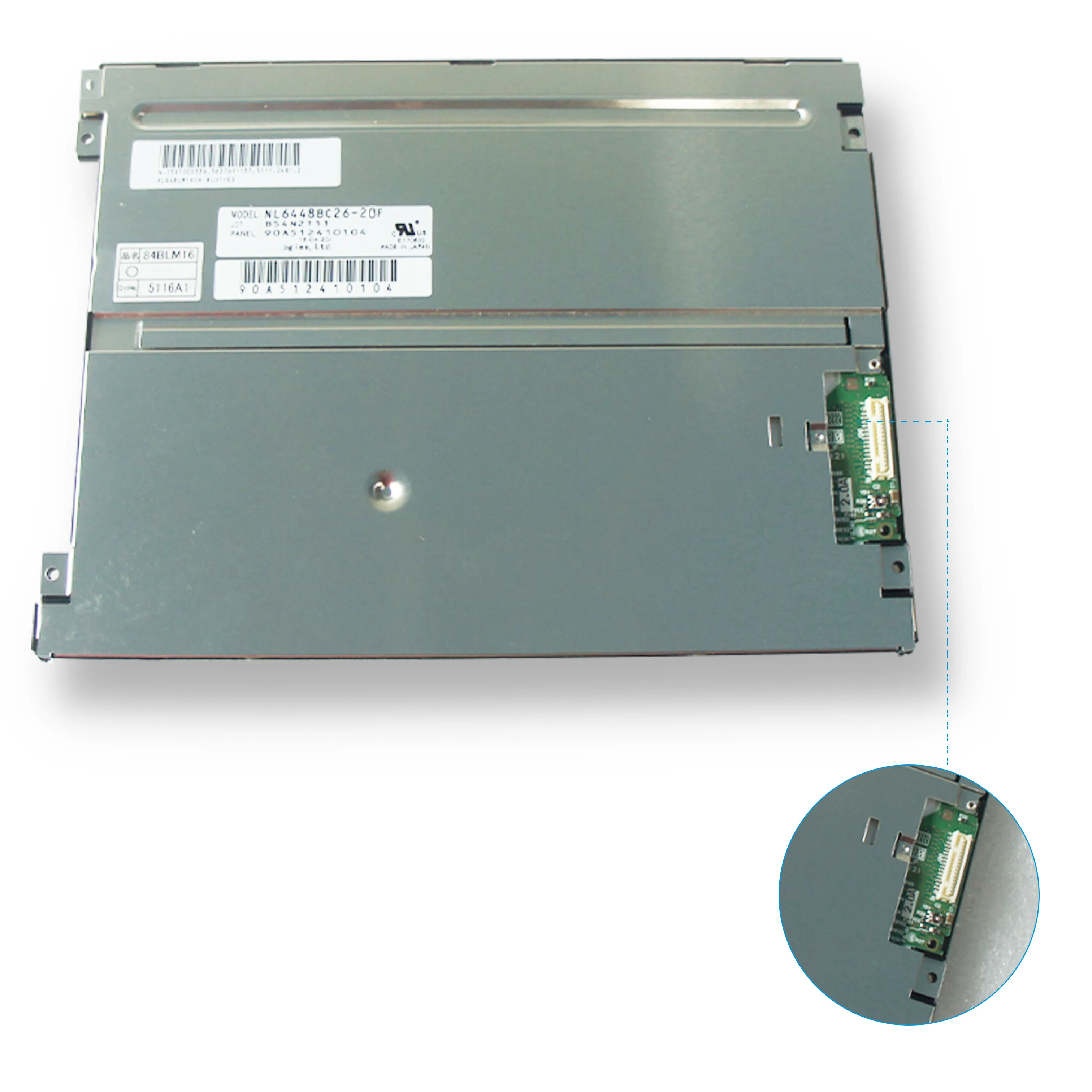

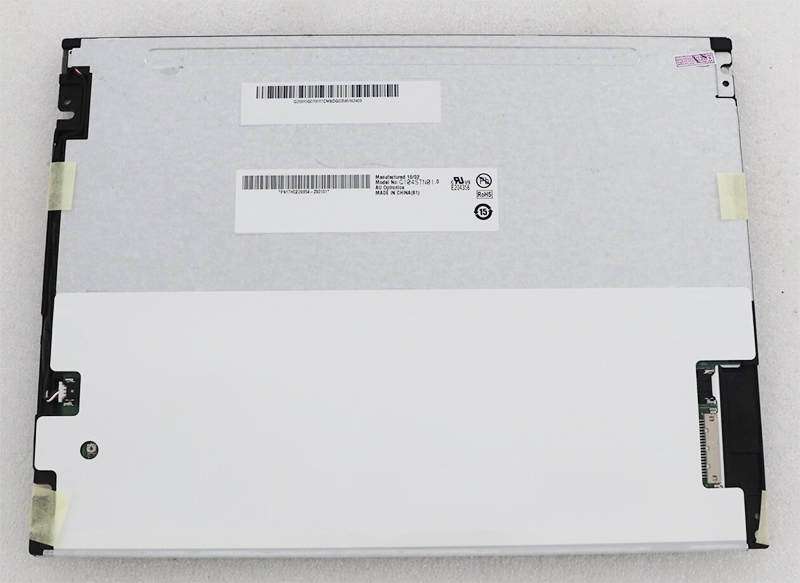
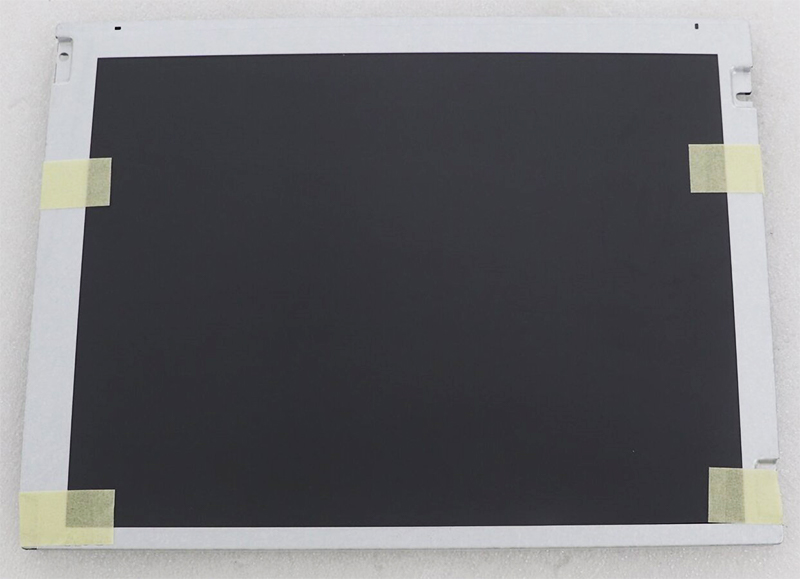
G104STN01.0 AUO 10.4inch 800*600 industrial lcd display
In the demanding world of industrial automation, medical instrumentation, and human-machine interfaces, the display is far more than a simple output device—it is the critical nexus of information and control. Selecting the right component requires a deep understanding of specifications that transcend consumer-grade metrics, focusing instead on reliability, longevity, and performance under duress. This article delves into one such pivotal component: the G104STN01.0, a 10.4-inch industrial LCD display module developed by AUO (AU Optronics).
Beyond its basic 800 x 600 SVGA resolution, the G104STN01.0 embodies a suite of engineering choices tailored for harsh environments. We will explore its core technological foundation, dissect the advantages of its STN (or more accurately, a-Silicon TFT) panel type for specific applications, and analyze its ruggedized mechanical and electrical design. Furthermore, we will examine its optimal application landscapes, provide guidance for successful system integration, and finally, contextualize its position within the current market of industrial displays. This comprehensive analysis aims to equip engineers, procurement specialists, and system designers with the insights needed to evaluate this module's suitability for their most challenging projects.
Core Technology and Specification Analysis
The G104STN01.0 is built on a 10.4-inch diagonal a-Si (amorphous Silicon) TFT LCD panel. A common point of confusion lies in its model name "STN," which historically refers to a passive-matrix technology. In AUO's nomenclature for this series, it denotes a specific product line, while the module itself utilizes mainstream active-matrix TFT technology, ensuring superior image quality and response times compared to true passive displays.
Its native resolution of 800 x 600 (SVGA) offers a 4:3 aspect ratio, a format still highly valued in industrial and medical fields for displaying traditional control panels, data forms, and diagnostic imagery without wasteful black bars. The module typically features a high-brightness backlight, often in the range of 500-1000 nits, ensuring readability in high-ambient light conditions. Key interface options usually include LVDS (Low-Voltage Differential Signaling), providing robust noise-resistant data transmission critical for industrial settings. A detailed examination of its datasheet reveals parameters like wide operating temperature ranges (often from -30°C to 80°C), high contrast ratios for legibility, and extended backlight lifespans, all of which form the bedrock of its industrial pedigree.
The Industrial Advantage: Ruggedness and Reliability
What truly differentiates the G104STN01.0 from commercial displays is its engineered resilience. Every aspect is fortified for continuous operation in unpredictable environments. The mechanical structure is designed to withstand significant vibration and shock, preventing internal connections from loosening or components from failing. Chemically strengthened glass or hard-coated surfaces provide resistance to scratches and abrasion from frequent interaction or cleaning with harsh agents.
Electronically, the module is built to resist electromagnetic interference (EMI), a common plague in factories packed with motors and relays. Its wide operating temperature range ensures startup and stable performance in freezing cold warehouses or sweltering industrial bays, where consumer screens would falter. Furthermore, industrial displays like this one are characterized by long-term availability and component consistency, guaranteeing supply chain stability for products with multi-year lifecycles, a stark contrast to the rapid obsolescence cycle of consumer electronics.
Ideal Application Landscapes
The specific characteristics of the G104STN01.0 make it a preferred choice in several key vertical markets. In Industrial Automation and Control, it serves as the primary interface for PLCs (Programmable Logic Controllers), SCADA systems, and factory machinery, where its readability and reliability are paramount. The 4:3 aspect ratio is ideal for legacy and modern control software layouts.
In the Medical Device field, this display can be found in patient monitoring systems, diagnostic equipment, and surgical tools. Its consistent performance, high brightness for clinical settings, and ability to withstand frequent disinfection protocols are crucial. Other significant applications include Transportation and Logistics (forklift dashboards, airway baggage handling systems), Point-of-Sale and Kiosks in demanding retail or outdoor environments, and specialized Test and Measurement equipment where precise data visualization is required round-the-clock.
System Integration and Interface Considerations
Successfully deploying the G104STN01.0 requires careful attention to integration. Engineers must first ensure compatibility between the module's LVDS interface and their host controller's output. This often involves an LVDS transmitter chip on the main board and careful routing of the differential pairs on the PCB to maintain signal integrity.
Power sequencing for the LCD panel and backlight must be strictly adhered to as per the datasheet to prevent permanent damage. The high-voltage inverter for a CCFL backlight (common in older variants) or the constant-current driver for an LED backlight requires proper design. Additionally, mechanical integration must account for the module's bezel dimensions, mounting holes, and connector placement. Thermal management is also vital; even robust displays need adequate heat dissipation, especially when operating at temperature extremes, to ensure longevity and prevent brightness degradation.
Backlighting Technology and Longevity
The backlight unit is often the lifespan-defining component of an LCD. The G104STN01.0 has been produced with both CCFL (Cold Cathode Fluorescent Lamp) and more modern LED (Light Emitting Diode) backlighting options. LED backlights have become the dominant choice due to their distinct advantages: they offer a wider color gamut, achieve high brightness more efficiently, have a faster turn-on time, and contain no mercury.
Most importantly, LED backlights typically boast a much longer operational half-life (often 50,000 hours or more) compared to CCFLs. This translates to lower total cost of ownership and reduced maintenance over a product's decade-long service life. For applications where display uniformity and consistency are critical over thousands of hours, specifying the LED-backlit version is a strategic decision that enhances system reliability.
Market Context and Comparative Perspective
Positioning the G104STN01.0 within the broader industrial display market clarifies its value proposition. It sits in the established segment of mid-size, mid-resolution panels designed for proven performance and cost-effectiveness. It competes with similar modules from manufacturers like Innolux, Panasonic, and Sharp. Its advantages often lie in AUO's strong supply chain, consistent quality, and the specific mechanical or optical characteristics tailored by the buyer's request.
When compared to newer high-resolution panels (like 1280x800 or Full HD), the G104STN01.0's SVGA resolution may seem modest. However, for many industrial applications, higher resolution is unnecessary and can even be a drawback, requiring more powerful and expensive processing hardware. The strength of this module is not in pixel density, but in its optimized, no-nonsense specification that delivers exactly what is needed for control and monitoring tasks, with unmatched robustness and at a compelling total system cost.
Frequently Asked Questions (FAQs)
Conclusion
The AUO G104STN01.0 10.4-inch industrial LCD display exemplifies the engineering philosophy required for mission-critical visual interfaces. It is not defined by cutting-edge consumer specs, but by a deliberate focus on durability, stability, and optimized performance within well-defined parameters. Its SVGA resolution, rugged build, wide temperature tolerance, and reliable backlighting are not arbitrary features but direct responses to the harsh realities of factory floors, medical suites, and logistical hubs.
For designers and engineers, selecting a display like the G104STN01.0 is a strategic decision that prioritizes total system reliability and lifecycle cost over mere pixel count. It represents a proven, dependable solution in an ecosystem where failure is not an option. In the intricate dance of industrial design, this module plays the crucial role of the steadfast partner, delivering clear and consistent performance year after year, under pressure.