- Industrie-LCD-Display
-
Industrial Products
- DC Servo Drive
- AC Servo Drive
- other
- Heidelberg
- FANUC
- IFM
- Meter
- CCD
- Membrane Keypad
- Film
- YOKOGAWA
- Card
- ABB
- MITSUBISHI
- FANUC
- KEYENCE
- BECKHOFF
- Honeywell
- HOLLYSYS
- FUJI servo drives
- HP
- solenoid valve
- thermostat
- Siemens adapter
- color oscilloscope
- Fujitsu connector
- CHELIC
- SMC
- CISCO
- INTEL
- Key board
- FAIRCHILD
- Der Aufsichtsrat
- Board
- Bearing
- other
- Control Panel
- Contactor
- Circuit
- Omron
- Relais.
- Der controller
- Optoelektronische schalter
- Optoelektronische sensoren
- Original
- Fan
- Motortreiber
- Endschalter
- Verstärker
- power supply
- LENZE
- Cable
- Encoder
- Sensor
- Transformator
- Fiber Optic Sensor
- Schutzrelais
- Temperaturregler
- Näherungsschalter
- Switch Sensor
- Siemens
- PCB
- HMI Touch-Glas
-
HMI-Vollautomat Ganze Einheit
- OMRON HMI Touch Panel
- Siemens HMI Touch Panel
- Mitsubishi HMI Touch Panel
- Allen-Bradley Automatisierung HMI Touch
- DELTA HMI Touch Panel
- EVIEW DELTA HMI Touch Panel
- KINCO DELTA HMI Touch Panel
- HITECH HMI Touch Panel
- WEINTECK HMI Touch Panel
- TECVIEW HMI Touch Panel
- WEINVIEW HMI Touch Panel
- PRO-FACE HMI Touch Panel
- SIMATIC HMI Touch Panel
- AMPIRE HMI Touch Panel
- HEIDELBERG HMI Touch Panel
- PANASONIC HMI Touch Panel
- PATLITE HMI Touch Panel
- KYOCERA HMI Touch Panel
- KEYENCE HMI Touch Panel
- WEINVIEW HMI Touch Panel
- HITECH HMI Touch Panel
- FUJI HMI Touch Panel
- HAKKO HMI Touch Panel
- SCHNEIDER HMI Touch Panel
- SAMKOON touch panel
- andere
- Module
- LCD Wechselrichter
- Membran Tastenfeld Schalter
- Winni Touch Screens
- Frequenzumrichter
- Servo Motor
- PLC


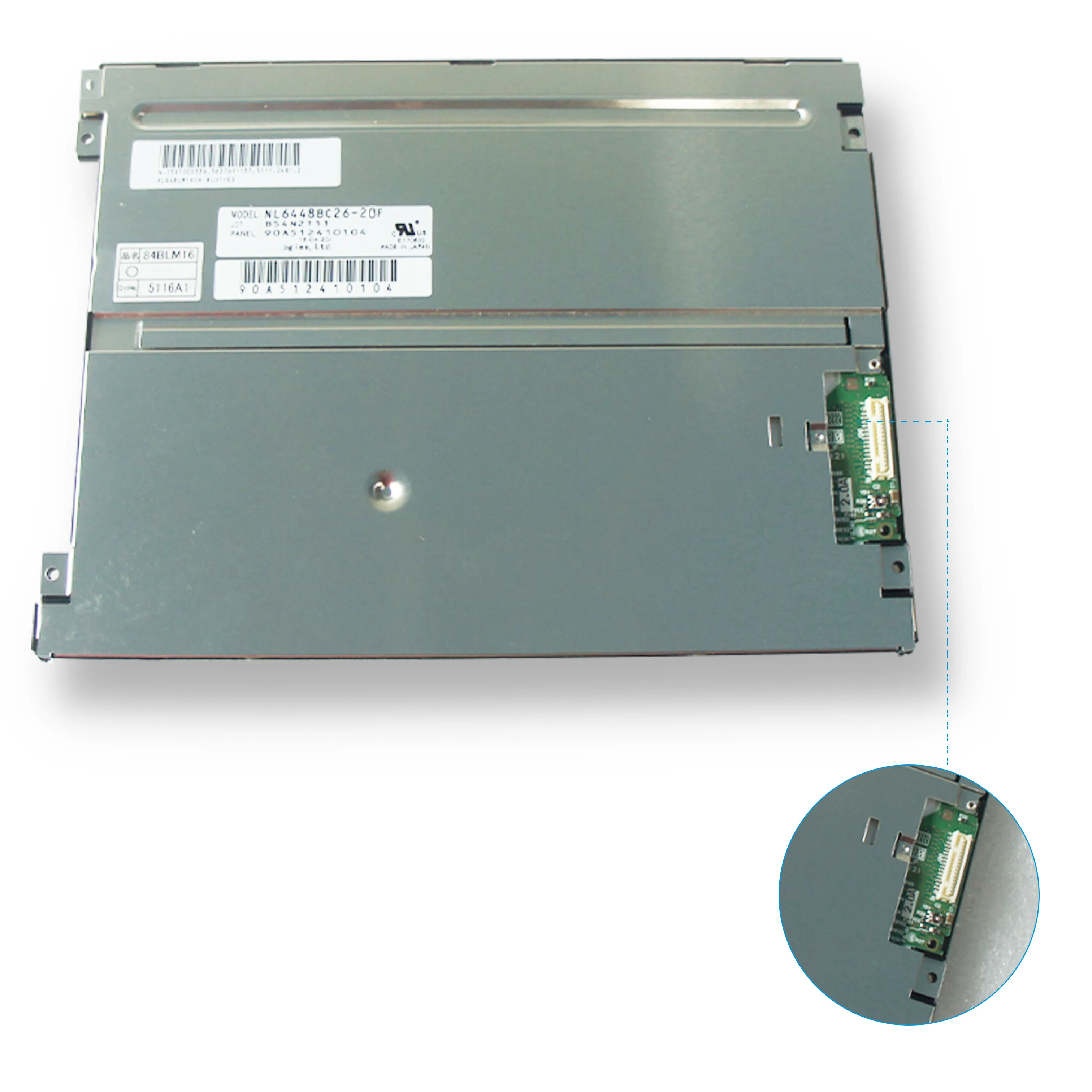

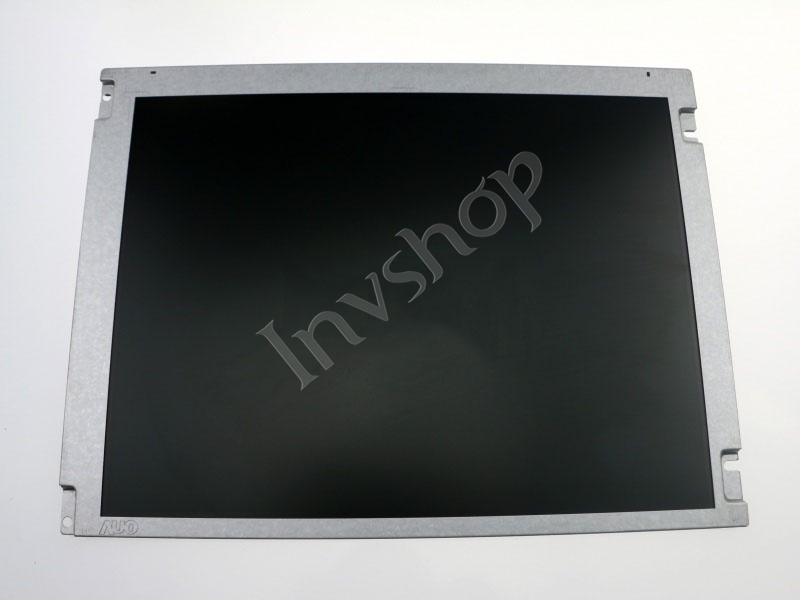
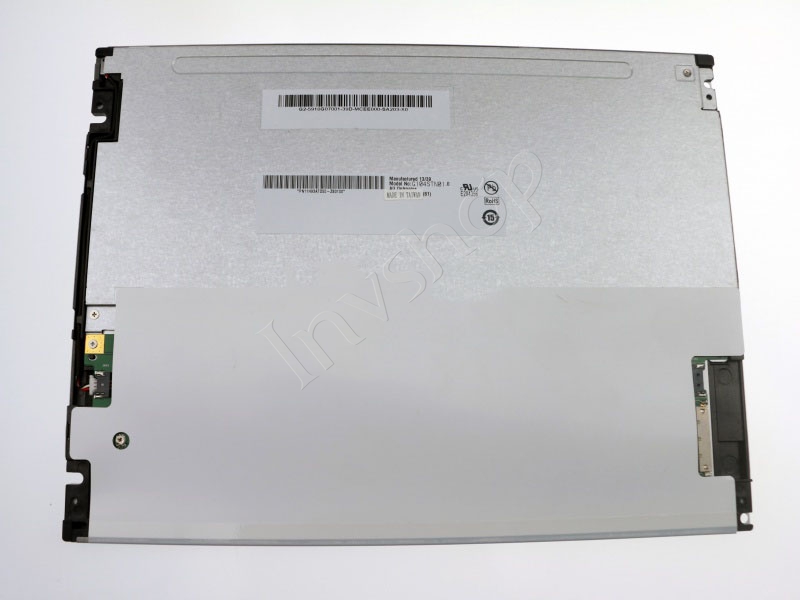
G104STN01.3 AUO 10.4inch 800*600 industrial lcd display
In the demanding world of industrial automation, medical equipment, and human-machine interfaces (HMIs), the display is far more than a simple output device—it is the critical bridge between complex systems and human operators. The choice of a display module directly impacts reliability, readability, and the overall success of an embedded application. This article provides an in-depth exploration of the G104STN01.3, a 10.4-inch industrial LCD display module manufactured by AUO (AU Optronics). We will move beyond basic specifications to examine why this particular model, with its 800 x 600 SVGA resolution and robust construction, has become a trusted component in mission-critical environments.
Our analysis will dissect its core technological attributes, the tangible benefits of its industrial-grade design, and its ideal application scenarios. We aim to equip engineers, product designers, and procurement specialists with a comprehensive understanding of how the G104STN01.3 performs under pressure, ensuring you can make an informed decision for your next project.
Decoding the G104STN01.3: Core Specifications and Technology
At its heart, the AUO G104STN01.3 is a 10.4-inch diagonal TFT-LCD module utilizing Super-Twisted Nematic (STN) derivative technology, often advanced STN like ASV or similar for improved performance. Its native resolution is 800 x 600 pixels (SVGA), a format that offers a balanced compromise between detail density and processing overhead for industrial systems. The module typically features a standard RGB interface, ensuring broad compatibility with a wide range of controllers and single-board computers.
The panel employs a transmissive display mode with a CCFL (Cold Cathode Fluorescent Lamp) backlight system, a proven technology known for its even brightness distribution and stable performance over a wide temperature range. Key specifications include a brightness level suitable for indoor industrial settings, a contrast ratio that ensures legibility, and color depth that supports essential color coding in HMI applications. Understanding these foundational specs is crucial for evaluating its fit within a system's electrical and optical parameters.
The Industrial-Grade Advantage: Ruggedness and Reliability
What truly distinguishes the G104STN01.3 from commercial-grade displays is its engineered resilience. Industrial environments present challenges such as constant vibration, temperature fluctuations, electrical noise, and extended operational hours. This module is built to withstand these stresses. Its construction involves robust materials and secure connections to prevent disassembly from shock or vibration.
Furthermore, it is designed to operate reliably across an extended temperature range, often from -20°C or -30°C to 70°C or higher. This ensures functionality in unheated warehouses or in proximity to hot machinery. The use of a CCFL backlight, while less energy-efficient than modern LEDs, is historically valued in industrial contexts for its stability in both high and low-temperature extremes and its long operational lifespan, which is critical for minimizing downtime and maintenance costs.
Optical Performance in Practical Environments
Beyond ruggedness, optical performance tailored for clarity is paramount. The 10.4-inch size with SVGA resolution provides a pixel pitch that renders text and graphics clearly without requiring excessive scaling, which is ideal for control panels and diagnostic screens. The viewing angles are sufficiently wide for an operator to see the screen clearly from various positions, a necessity in control rooms or on factory floors.
The anti-glare treatment on the display surface is a critical, often overlooked feature. It diffuses ambient light from overhead lamps or windows, significantly reducing reflections that could obscure information and cause operator error. This combination of size, resolution, and surface treatment ensures that data, schematics, and alarm statuses are legible at a glance under typical—and sometimes challenging—lighting conditions.
Typical Applications and Integration Scenarios
The G104STN01.3 finds its home in applications where dependability is non-negotiable. In Industrial Automation, it serves as the interface for PLCs (Programmable Logic Controllers), SCADA systems, and machine control panels, displaying real-time process data and control buttons. The Medical Device field utilizes it in diagnostic equipment, patient monitoring systems, and surgical tools where clear, consistent visual feedback is essential.
It is also prevalent in Transportation (e.g., vehicle dashboard displays, railway control), Point-of-Sale (POS) and Kiosk systems in harsh retail or outdoor environments, and specialized Test and Measurement instruments. Its standard interface and form factor simplify integration into existing chassis designs, making it a versatile choice for OEMs (Original Equipment Manufacturers) across sectors.
Critical Considerations for System Integration
Successfully integrating the G104STN01.3 requires attention to several technical details. Designers must account for the power requirements of both the LCD panel and the CCFL backlight inverter, ensuring the power supply can handle the inrush current at startup. Heat dissipation must be managed, as the backlight generates heat that must not exceed the module's maximum operating temperature.
Mechanical integration involves careful mounting to avoid stress on the glass, using the module's provided mounting holes. Electrically, mitigating electromagnetic interference (EMI) is crucial, as industrial settings are noisy. Proper shielding and grounding of the display assembly, along with the use of filtered connectors, are standard best practices to ensure a stable video signal and prevent system malfunctions.
The Ecosystem: Compatibility, Sourcing, and Lifecycle
Adopting an industrial component like the G104STN01.3 involves strategic sourcing decisions. Engineers must verify compatibility with their chosen controller or system-on-chip (SoC), ensuring the timing and voltage levels match. While AUO is the original manufacturer, the module is often available through authorized distributors and specialized industrial display suppliers.
A key advantage of such established industrial modules is their predictable and often extended product lifecycle, which can span many years—far longer than consumer displays. This is vital for OEMs who need to manufacture and support their products for a decade or more without forced redesigns due to display obsolescence. Securing a reliable supply chain partner is therefore as important as the technical evaluation.
FAQs: G104STN01.3 Industrial LCD Display
10. What is a key advantage regarding product lifecycle?Industrial displays like the G104STN01.3 have long and stable lifecycles, preventing forced redesigns and ensuring long-term supply for OEM products.
Conclusion
For system integrators and product developers, selecting a component like this is a strategic decision that affects product longevity, maintenance costs, and user safety. By understanding its specifications, strengths, and integration requirements, engineers can leverage the G104STN01.3 to build more resilient and trustworthy systems, ensuring that the vital link between machine and human remains steadfast under pressure.