- Industrial LCD display
-
Industrial Products
- DC Servo Drive
- AC Servo Drive
- other
- Heidelberg
- FANUC
- IFM
- Meter
- CCD
- Membrane Keypad
- Film
- YOKOGAWA Module
- Card
- ABB
- MITSUBISHI
- FANUC
- KEYENCE
- BECKHOFF
- Honeywell
- HOLLYSYS
- FUJI servo drives
- HP
- solenoid valve
- thermostat
- Siemens adapter
- color oscilloscope
- Fujitsu connector
- CHELIC
- SMC
- CISCO Module
- INTEL
- Key board
- FAIRCHILD
- Motherboard
- Board
- Bearing
- other
- Control Panel
- Contactor
- Circuit
- OMRON
- Relay
- Controller
- Photoelectric Switch
- Photoelectric Sensor
- Original
- Fan
- Motor Driver
- Limit Switch
- Amplifier
- power supply
- LENZE
- Cable
- Encoder
- Sensor
- Transformer
- Fiber Optic Sensor
- Protection Relay
- Temperature Controller
- Proximity Switch
- Switch Sensor
- Siemens
- Industrial board
- HMI Touch Glass
-
HMI Full Machine Whole unit
- OMRON HMI Touch Panel
- Siemens HMI Touch Panel
- Mitsubishi HMI Touch Panel
- Allen-Bradley automation HMI Touch Panel
- DELTA HMI Touch Panel
- EVIEW DELTA HMI Touch Panel
- KINCO DELTA HMI Touch Panel
- HITECH HMI Touch Panel
- WEINTECK HMI Touch Panel
- TECVIEW HMI Touch Panel
- WEINVIEW HMI Touch Panel
- PRO-FACE HMI Touch Panel
- SIMATIC HMI Touch Panel
- AMPIRE HMI Touch Panel
- HEIDELBERG HMI Touch Panel
- PANASONIC HMI Touch Panel
- PATLITE HMI Touch Panel
- KYOCERA HMI Touch Panel
- KEYENCE HMI Touch Panel
- WEINVIEW HMI Touch Panel
- HITECH HMI Touch Panel
- FUJI HMI Touch Panel
- HAKKO HMI Touch Panel
- SCHNEIDER HMI Touch Panel
- SAMKOON touch panel
- other
- Module
- lcd inverter
- Membrane Keypad Switch
- Winni Touch Screens
- Frequency Inverter
- Servo Motor
- PLC




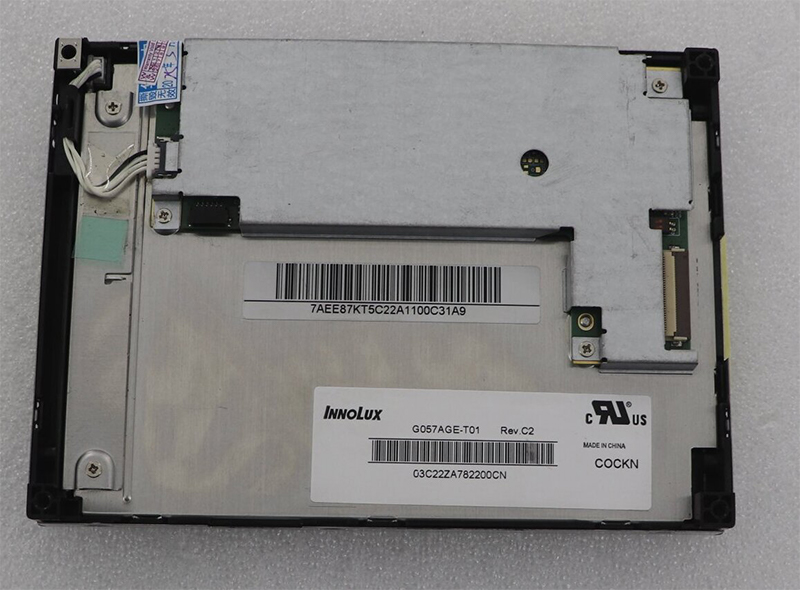
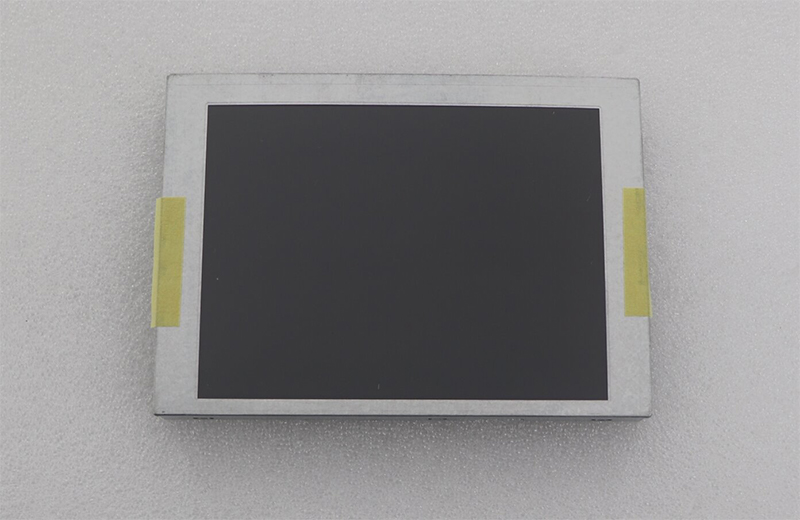
Innolux 5.7 inch 320x240 LCD Panel G057AGE-T01
In the intricate world of electronic components, where specifications dictate functionality and performance defines value, the choice of a display panel can be a pivotal decision for engineers and product designers. Amidst a sea of options, the G057AGE-T01 from Innolux emerges as a specialized solution, carving out its niche with a distinct set of characteristics tailored for specific industrial and embedded applications. This 5.7-inch LCD panel, with its 320x240 QVGA resolution, represents more than just a screen; it embodies a balance of reliability, readability, and integration simplicity that modern compact systems demand.
This article delves into a comprehensive analysis of the Innolux G057AGE-T01. We will move beyond basic datasheet parameters to explore its core technological profile, the unique advantages offered by its resistive touch interface, and the specific market applications where it excels. Further, we will provide practical insights into its electrical interface and integration considerations, compare it with alternative display technologies, and discuss its positioning within the broader supply chain and lifecycle context. Our goal is to provide a resource that informs strategic selection and successful implementation of this distinctive display module.
Core Technical Profile and Display Performance
The Innolux G057AGE-T01 is built around a TFT (Thin-Film Transistor) LCD, a technology renowned for delivering consistent image quality and reliable performance. The panel's 5.7-inch diagonal and 320 x 240 pixel resolution result in a pixel density that, while not high by consumer smartphone standards, is perfectly suited for its intended environments. This QVGA format offers excellent character and icon legibility, a critical factor in human-machine interfaces (HMIs) where clear information presentation is paramount.
It typically features a standard RGB interface, ensuring broad compatibility with a wide range of microcontrollers and system-on-chip (SoC) solutions. The module is designed for robustness, often operating effectively across a wide temperature range, which is a non-negotiable requirement for industrial automation, medical devices, or outdoor equipment. The balance of size, resolution, and inherent TFT advantages forms the foundation of its utility in markets where clarity and durability trump ultra-high definition.
The Role and Rationale of Resistive Touch
A defining feature of the G057AGE-T01 is its integrated 4-wire analog resistive touchscreen. In an era dominated by capacitive touch, the choice of resistive technology is deliberate and strategic. Resistive touchscreens operate on pressure, meaning they can be activated with a finger, gloved hand, stylus, or any other pointing device. This is a decisive advantage in industrial settings, medical laboratories, or outdoor kiosks where operators may be wearing protective gear or where environmental conditions require precise input.
While capacitive screens offer multi-touch and superior optical clarity, resistive panels like the one on this Innolux module provide unparalleled versatility and environmental resistance. They are less susceptible to interference from liquids or dust and are generally more cost-effective for basic point-of-touch functionality. This makes the G057AGE-T01 an ideal candidate for applications where functional reliability under varied conditions is more critical than sleek, consumer-grade interactivity.
Target Applications and Market Fit
The specific attributes of the G057AGE-T01 align perfectly with a spectrum of specialized applications. Its compact size and rugged build make it a staple in industrial control systems, serving as the interface for PLCs, CNC machines, and test equipment. In the medical device field, its reliability and ability to work with surgical gloves see it used in portable diagnostic devices and patient monitoring systems.
Furthermore, it finds a home in point-of-sale (POS) terminals, handheld data loggers, automotive auxiliary displays, and various embedded systems where space is constrained, and environmental factors are a concern. The panel is not designed for streaming video or complex graphical user interfaces but excels as a dependable window for system status, data entry, and command input in mission-critical tools and machinery.
Electrical Interface and Integration Considerations
Successful deployment of the G057AGE-T01 requires careful attention to its electrical and physical integration. Designers must account for its power requirements, typically a single 3.3V or 5V supply for the logic and a separate, higher-voltage backlight supply (often LED-based for longevity and efficiency). The RGB parallel interface demands a sufficient number of GPIO pins on the host controller.
Integration extends beyond the electrical. Mechanical mounting, considering the module's footprint and connector placement, is crucial. The resistive touchscreen requires a controller chip (often separate from the main display driver) to interpret the analog pressure signals into digital coordinates. Furthermore, developers must implement or procure appropriate driver software and calibration routines to ensure accurate touch response, a key step in achieving a polished end-user experience.
Comparative Analysis with Alternative Technologies
Positioning the G057AGE-T01 requires comparison with other available options. Against larger or higher-resolution TFTs, its advantage lies in lower cost, lower power consumption, and simpler driver requirements—benefits for cost-sensitive or power-constrained designs. Compared to monochrome or passive-matrix LCDs, it offers superior image quality, faster response times, and better viewing angles.
The most significant comparison is with capacitive touch panels. While capacitive is the default for consumer touch, the G057AGE-T01's resistive screen wins in niche applications requiring glove operation, stylus precision, or harsh environment tolerance. The choice ultimately hinges on the primary use case: for intuitive multi-touch in a clean office, choose capacitive; for guaranteed input in a factory or clinic, the resistive touch of the G057AGE-T01 is often the wiser, more reliable choice.
Supply Chain, Longevity, and Design-In Strategy
For industrial and medical products with long lifecycles, component availability is as important as performance. Innolux, as a major panel manufacturer, generally offers stable production runs for such industrial-grade modules. However, savvy designers always consider the long-term supply chain. This involves understanding the manufacturer's product lifecycle roadmap, identifying potential second sources or compatible alternatives, and possibly planning for last-time buys.
Adopting a module like the G057AGE-T01 is a multi-year commitment. The design-in strategy should include evaluating the total cost of ownership, the stability of the technical support, and the availability of reference designs. Ensuring a reliable supply for the entire production lifespan of the end product mitigates risk and prevents costly mid-cycle redesigns, making the selection of a proven, industrial-focused component a strategic business decision as much as a technical one.
Frequently Asked Questions (FAQs)
Q10: Where can I find technical documentation for the G057AGE-T01?A10: Datasheets, pinout diagrams, and application notes are typically available through authorized Innolux distributors or by request from Innolux directly.
Conclusion
The Innolux G057AGE-T01 5.7-inch LCD panel stands as a testament to the principle that optimal technology is defined by context, not just cutting-edge specs. It is not a general-purpose consumer display but a purpose-built component that excels in reliability, versatility, and integration simplicity for demanding professional environments. Its combination of a clear TFT panel and a rugged resistive touch interface addresses the core needs of industrial, medical, and embedded applications where input must be guaranteed and information must be legible under a variety of conditions.
Selecting this module is a deliberate choice for designers prioritizing functional robustness over aesthetic flair. By understanding its technical profile, integration requirements, and ideal use cases, engineers can leverage the G057AGE-T01 to build interfaces that are not only functional but fundamentally dependable—a crucial quality for the specialized tools and machines that keep critical industries operating smoothly. In a world of fleeting consumer gadgets, components like this provide the enduring backbone of technology we rely on every day.