- Industrial LCD display
-
Industrial Products
- DC Servo Drive
- AC Servo Drive
- other
- Heidelberg
- FANUC
- IFM
- Meter
- CCD
- Membrane Keypad
- Film
- YOKOGAWA Module
- Card
- ABB
- MITSUBISHI
- FANUC
- KEYENCE
- BECKHOFF
- Honeywell
- HOLLYSYS
- FUJI servo drives
- HP
- solenoid valve
- thermostat
- Siemens adapter
- color oscilloscope
- Fujitsu connector
- CHELIC
- SMC
- CISCO Module
- INTEL
- Key board
- FAIRCHILD
- Motherboard
- Board
- Bearing
- other
- Control Panel
- Contactor
- Circuit
- OMRON
- Relay
- Controller
- Photoelectric Switch
- Photoelectric Sensor
- Original
- Fan
- Motor Driver
- Limit Switch
- Amplifier
- power supply
- LENZE
- Cable
- Encoder
- Sensor
- Transformer
- Fiber Optic Sensor
- Protection Relay
- Temperature Controller
- Proximity Switch
- Switch Sensor
- Siemens
- Industrial board
- HMI Touch Glass
-
HMI Full Machine Whole unit
- OMRON HMI Touch Panel
- Siemens HMI Touch Panel
- Mitsubishi HMI Touch Panel
- Allen-Bradley automation HMI Touch Panel
- DELTA HMI Touch Panel
- EVIEW DELTA HMI Touch Panel
- KINCO DELTA HMI Touch Panel
- HITECH HMI Touch Panel
- WEINTECK HMI Touch Panel
- TECVIEW HMI Touch Panel
- WEINVIEW HMI Touch Panel
- PRO-FACE HMI Touch Panel
- SIMATIC HMI Touch Panel
- AMPIRE HMI Touch Panel
- HEIDELBERG HMI Touch Panel
- PANASONIC HMI Touch Panel
- PATLITE HMI Touch Panel
- KYOCERA HMI Touch Panel
- KEYENCE HMI Touch Panel
- WEINVIEW HMI Touch Panel
- HITECH HMI Touch Panel
- FUJI HMI Touch Panel
- HAKKO HMI Touch Panel
- SCHNEIDER HMI Touch Panel
- SAMKOON touch panel
- other
- Module
- lcd inverter
- Membrane Keypad Switch
- Winni Touch Screens
- Frequency Inverter
- Servo Motor
- PLC


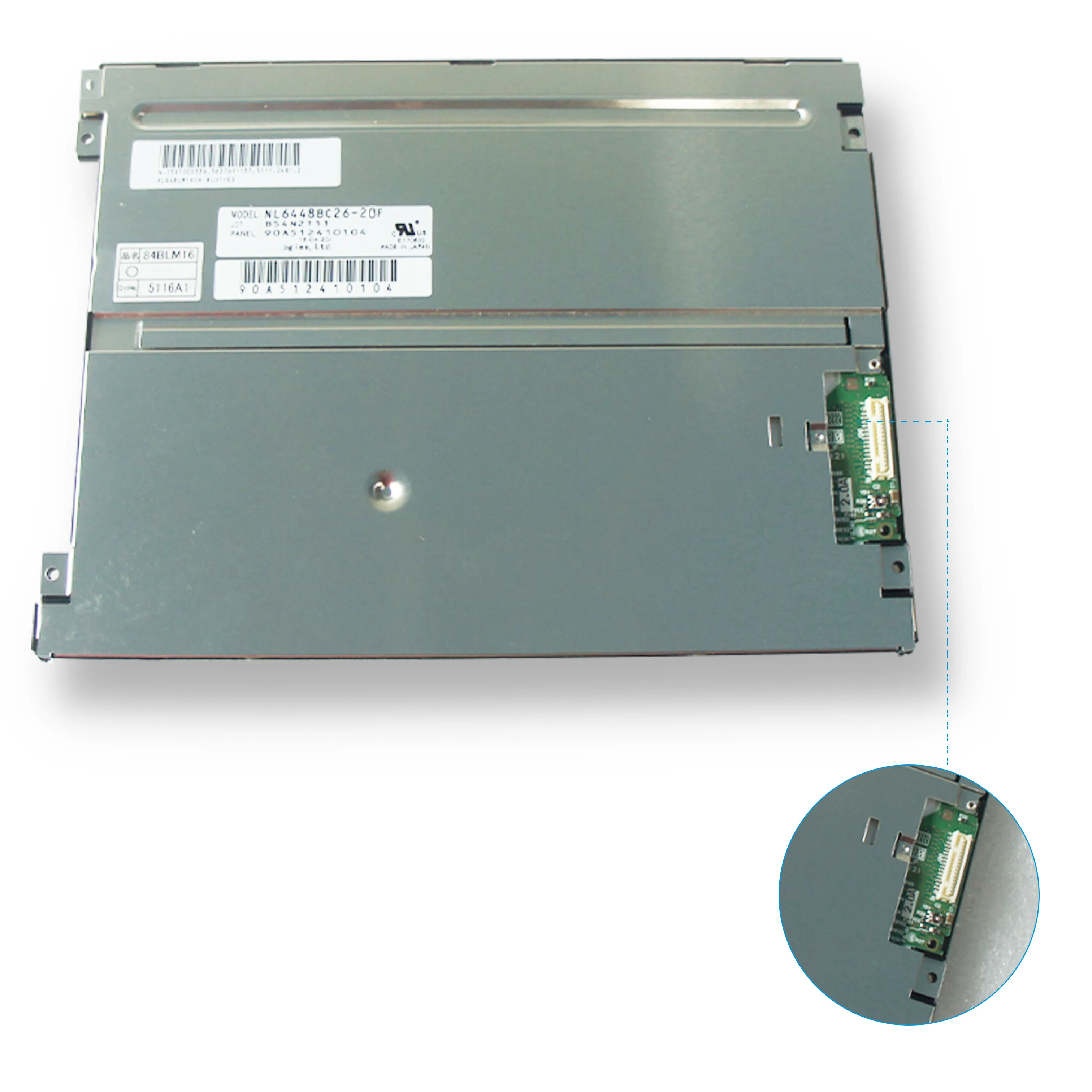

LB104V03-A1 10.4" 640*480 TFT-LCD 30 pins LCD Display
In the rapidly evolving landscape of display technology, where high-resolution 4K panels and flexible OLEDs dominate the headlines, there exists a steadfast category of industrial-grade components that power the backbone of critical systems. The LB104V03-A1, a 10.4-inch TFT-LCD module, belongs to this distinguished class. While its native resolution of 640x480 pixels (VGA) may seem modest by modern consumer standards, this display is far from obsolete. It represents a carefully engineered solution designed for specific environments where reliability, wide-temperature operation, and consistent performance outweigh pixel density. This article delves deeply into the technical architecture, interface specifications, and practical applications of the LB104V03-A1. We will move beyond superficial specifications to explore the engineering choices behind its 30-pin interface, its comparative advantages, and its continued relevance in sectors like medical imaging, industrial automation, and marine navigation. The objective is to provide engineers, procurement specialists, and system integrators with a comprehensive understanding of this component's true value proposition.
The LB104V03-A1 is more than a simple display; it is a precisely tuned optical and electronic system. At its core, the panel utilizes Twisted Nematic (TN) technology. While TN panels are often criticized for narrow viewing angles in consumer monitors, in the industrial context, this technology is prized for its rapid response times and lower power consumption. What distinguishes this specific model is its exceptional contrast ratio and luminance. Typical specifications for this unit hover around 350 cd/m² to 450 cd/m², making it readable in well-lit factory floors or near windows in medical carts. The 640x480 resolution, spread across a 10.4-inch diagonal, results in an effective pixel pitch that is comfortable for viewing data, text, and simple graphics without requiring scaling. The optical stack is also notable. The LB104V03-A1 frequently includes an anti-glare (AG) surface treatment, which diffuses ambient light sources and prevents distracting reflections. This is far more critical in a surgical or cockpit setting than a glossy high-PPI consumer tablet. Furthermore, the color depth, typically 262k colors (6-bit), is entirely adequate for the false-color imaging used in ultrasound machines or the status indicators on a control panel, where absolute color fidelity is less important than grayscale stability.


The defining physical characteristic of this display is its 30-pin connector. Understanding this interface is crucial for successful integration. The LB104V03-A1 utilizes the LVDS (Low-Voltage Differential Signaling) standard. This is a fundamental advantage over older parallel RGB interfaces. LVDS transmits pixel data over twisted-pair wires as differential voltages, which provides exceptional immunity to electromagnetic interference (EMI). In an industrial environment filled with motors, pumps, and switching power supplies, this signal integrity is non-negotiable. The 30-pin layout is typically configured as a single-channel LVDS link. This means the timing controller (T-CON) on the panel receives the red, green, and blue data streams, along with clock and control signals (HSync, VSync, DE), over just four data pairs and one clock pair. This streamlined design reduces cable clutter and simplifies PCB layout for the driving board. However, it imposes a limitation: the maximum pixel clock frequency. For a 640x480 panel running at 60Hz, the required clock is well within the single-channel LVDS bandwidth. Engineers must verify the pin mapping against the manufacturer datasheet, as some variants may swap the polarity of the LVDS pairs. A common mistake is assuming a universal pinout, which can lead to a scrambled image or no display at all. The interface is precisely engineered for a specific voltage level (typically 3.3V for the logic), and careful attention must be paid to the power sequencing to prevent latch-up or damage to the driver ICs.
A key attribute of the LB104V03-A1 is its power architecture. This display is designed for a single-rail supply, typically in the range of 3.3V or 5V, depending on the specific version. The backlight unit, historically a CCFL (Cold Cathode Fluorescent Lamp) in earlier versions, requires a separate, high-voltage inverter. However, many modern variants or aftermarket replacements have migrated to LED backlighting. This transition is critical. LED backlights offer significant advantages: lower power draw (reducing heat in a sealed enclosure), longer lifespan (50,000+ hours vs. 20,000 hours for CCFL), and no requirement for a high-voltage AC inverter. The thermal behavior of the panel is also a specialized consideration. Industrial designs often require the display to operate in temperatures ranging from -10°C to +60°C. The liquid crystal material itself slows down in cold temperatures, causing a ghosting effect. The LB104V03-A1 is often specified with a heater circuit or at least selected for a wider temperature LC fluid. Effective thermal management involves not just removing heat from the backlight and driver ICs, but also ensuring the panel is not subjected to localized hot spots from adjacent processors or power regulators. A dedicated thermal pad or metal bracket is often necessary to conduct heat away from the T-CON module, which is the most heat-sensitive component on the board. Designing for these power and thermal profiles is what separates a reliable twenty-year industrial system from a failed consumer gadget.
The logic of using the LB104V03-A1 becomes clear when placed within its target environments. In medical diagnostics, specifically patient monitors and anesthesia machines, the panel's modest resolution is a deliberate feature. A 640x480 display is perfectly sized to show five or six waveforms (ECG, SpO2, blood pressure) simultaneously with crisp alphanumeric data. The anti-glare coating is vital in a brightly lit operating room or ICU bay. The 10.4-inch size is a sweet spot for portable devices, balancing screen real estate with chassis depth. In the industrial machinery sector, the LB104V03-A1 is frequently found in Human-Machine Interfaces (HMIs) for CNC machines and PLC workstations. Here, the panel's high contrast and wide viewing angle (vertically, due to TN orientation) allow an operator standing at a 45-degree angle to read critical error messages or RPM values. The 30-pin LVDS interface simplifies integration with standard single-board computers like the Raspberry Pi (via adapter boards) or custom ARM-based controllers. Furthermore, the panel's long product life cycle is a silent, but massive, advantage. While consumer display manufacturers change panel designs every six months, the LB104V03-A1 (and its compatible derivatives) have been in production for over a decade. This guarantees that a system certified for medical use (requiring lengthy and expensive re-testing) will not suffer from an "end-of-life" component crisis prematurely. The display is not a trend; it is a tool.
For a system integrator, using the LB104V03-A1 requires a strategic approach to supply chain management. Because it is an older standard, it is subject to availability fluctuations. A crucial step is identifying exact cross-references. Many manufacturers produced compatible 10.4-inch VGA panels with a 30-pin LVDS connector. The NEC NL10276BC13-03, the Sharp LQ104V1DG31, and the Hitachi TX39D97VC1GAA are common electrical and mechanical drop-in replacements. However, the mounting holes, bezel thickness, and backlight connector location may vary by fractions of a millimeter. An integrator must order samples to verify fit-in-enclosure before committing to a production run. From a software perspective, there is no driver complexity. The display is a standard VGA "dumb" monitor. The primary task is ensuring the video source is generating a standard VESA timing signal (640x480 @ 60Hz). Using a non-standard timing (e.g., 70Hz or a different blanking interval) can cause the T-CON to go out of sync. When sourcing, one must also distinguish between the CCFL and LED backlight versions. The part number suffix often indicates this (e.g., -A1 vs. -A2). Mixing them up can lead to a system that appears to work but fails within months due to inverter incompatibility or insufficient backlight voltage. The best practice is to maintain a BOM (Bill of Materials) that specifies both the panel part number and the exact LED driver or inverter model.
A raw LB104V03-A1 panel is capable of good image quality, but it can be optimized for specific tasks. The typical gamma curve for a TN panel is 2.2, but variations exist. In a medical application, the DICOM Part 14 grayscale standard is mandatory. This requires adjusting the luminance response of the panel to a specific non-linear curve. This is done not in the panel itself, but in the video source or a dedicated calibration LUT (Look-Up Table). For industrial HMI, contrast and brightness are usually cranked to maximum for daylight visibility, but this accelerates wear on the backlight LEDs. A smarter strategy is to use a light sensor (often integrated into the device chassis) to dynamically adjust the backlight PWM signal. The panel supports this; it simply requires a PWM input on the backlight connector. Another critical optimization is flicker reduction. Fixed-frequency PWM dimming can cause visible flicker, especially when captured by a camera. This is unacceptable in a monitoring station. Using a higher PWM frequency (e.g., > 1kHz) or, better yet, a DC dimming solution, can eliminate this issue. Finally, while the panel is not designed for video playback, its response time can be improved by adjusting the overdrive settings on the T-CON, if accessible. This is an advanced technique that involves boosting the voltage briefly to speed up the liquid crystal transition, reducing motion blur on scrolling data.
FAQs – Frequently Asked Questions about the LB104V03-A1
What is the native resolution of the LB104V03-A1?
The native resolution is 640 x 480 pixels (VGA), with a 4:3 aspect ratio.
What type of interface does it use?
It uses a single-channel LVDS (Low-Voltage Differential Signaling) interface on a 30-pin connector.
Does the panel support an LED backlight?
Many modern variants and compatible replacements use LED backlighting, but original versions may use CCFL. Check the specific part number suffix.
Can I use a Raspberry Pi with this display?
Yes, but you need an LVDS adapter/converter board that can output the correct 640x480 timing and voltage levels.
What is the typical operating temperature range?
Industrial variants typically operate from -10°C to +60°C, though storage range is wider.
Is the viewing angle suitable for a medical cart?
The contrast is best when viewed from a vertical axis, but the high brightness and anti-glare treatment make it functional for fixed-angle medical carts.
How can I tell if my panel is CCFL or LED?
CCFL versions have a high-voltage inverter connector and are thicker. LED versions have a low-voltage DC input for backlight and are usually thinner.
What are common drop-in replacements for this panel?
Compatible parts include the NEC NL10276BC13-03, Sharp LQ104V1DG31, and Hitachi TX39D97VC1GAA.
Do I need a special cable for the 30-pin connector?
Yes, you need a specific 30-pin LVDS cable with the correct pitch (typically 2.0mm or 1.25mm) and pin assignment for the specific panel brand.
Is the panel suitable for outdoor use?
Direct sunlight is difficult, but the high luminance (350-450 cd/m²) and anti-glare coating make it marginally readable in bright indirect light. A transflective version would be better for full sunlight.
Conclusion: The Unwavering Relevance of a Technical Standard
The LB104V03-A1 represents a fascinating paradox in the world of technology: a component that is simultaneously "old" and highly advanced. It lacks the glitter of modern high-resolution displays but possesses a quiet, engineering-driven competence that is essential for the systems we rely on most. We have explored its optical characteristics, its robust LVDS architecture, the criticality of power and thermal dynamics, its strategic fit in medical and industrial sectors, and the practicalities of sourcing and optimization. This panel’s longevity is not an accident. It is the result of a perfect intersection of purpose, standardization, and reliability. For the engineer building a device that must function flawlessly for ten years in a demanding environment, the LB104V03-A1 is not a compromise; it is the optimal solution. The true value of this display lies not in its pixel count, but in its predictability and ruggedness. As we push forward into an era of ubiquitous screens, understanding and leveraging such legacy-professional components is a mark of an experienced and thoughtful designer. It is a testament to the fact that in engineering, the best tool is not always the newest, but the one that performs its duty flawlessly, day after day.