- Industrial LCD display
-
Industrial Products
- DC Servo Drive
- AC Servo Drive
- other
- Heidelberg
- FANUC
- IFM
- Meter
- CCD
- Membrane Keypad
- Film
- YOKOGAWA Module
- Card
- ABB
- MITSUBISHI
- FANUC
- KEYENCE
- BECKHOFF
- Honeywell
- HOLLYSYS
- FUJI servo drives
- HP
- solenoid valve
- thermostat
- Siemens adapter
- color oscilloscope
- Fujitsu connector
- CHELIC
- SMC
- CISCO Module
- INTEL
- Key board
- FAIRCHILD
- Motherboard
- Board
- Bearing
- other
- Control Panel
- Contactor
- Circuit
- OMRON
- Relay
- Controller
- Photoelectric Switch
- Photoelectric Sensor
- Original
- Fan
- Motor Driver
- Limit Switch
- Amplifier
- power supply
- LENZE
- Cable
- Encoder
- Sensor
- Transformer
- Fiber Optic Sensor
- Protection Relay
- Temperature Controller
- Proximity Switch
- Switch Sensor
- Siemens
- Industrial board
- HMI Touch Glass
-
HMI Full Machine Whole unit
- OMRON HMI Touch Panel
- Siemens HMI Touch Panel
- Mitsubishi HMI Touch Panel
- Allen-Bradley automation HMI Touch Panel
- DELTA HMI Touch Panel
- EVIEW DELTA HMI Touch Panel
- KINCO DELTA HMI Touch Panel
- HITECH HMI Touch Panel
- WEINTECK HMI Touch Panel
- TECVIEW HMI Touch Panel
- WEINVIEW HMI Touch Panel
- PRO-FACE HMI Touch Panel
- SIMATIC HMI Touch Panel
- AMPIRE HMI Touch Panel
- HEIDELBERG HMI Touch Panel
- PANASONIC HMI Touch Panel
- PATLITE HMI Touch Panel
- KYOCERA HMI Touch Panel
- KEYENCE HMI Touch Panel
- WEINVIEW HMI Touch Panel
- HITECH HMI Touch Panel
- FUJI HMI Touch Panel
- HAKKO HMI Touch Panel
- SCHNEIDER HMI Touch Panel
- SAMKOON touch panel
- other
- Module
- lcd inverter
- Membrane Keypad Switch
- Winni Touch Screens
- Frequency Inverter
- Servo Motor
- PLC




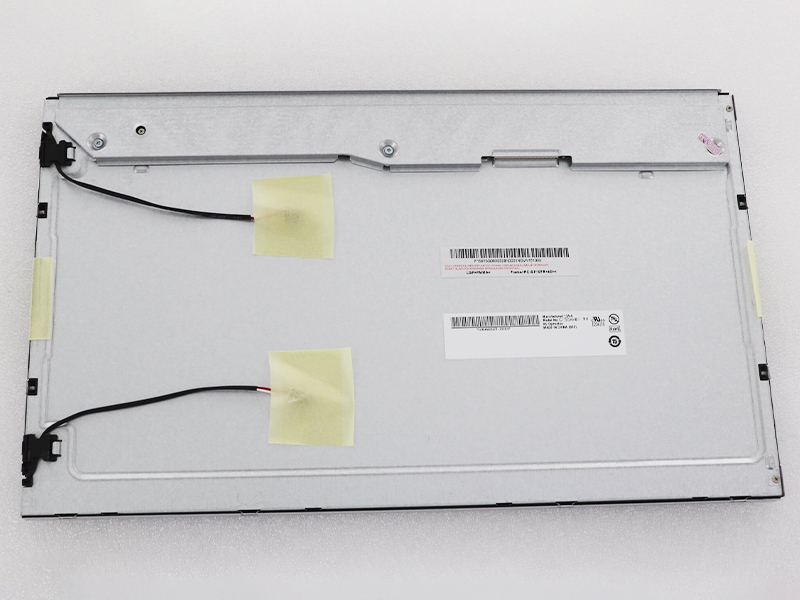
new G156XW01 V0 1366*768 15.6 inch AUO LED G156XW01.0
In the intricate ecosystem of modern display technology, where 4K and OLED often dominate the headlines, the significance of foundational, high-volume panel models can be overlooked. Yet, these components are the unsung heroes powering millions of devices worldwide. This article delves deep into the AUO G156XW01 V0, a 15.6-inch LCD panel with a 1366x768 resolution, to uncover its technical DNA, market role, and enduring relevance. We move beyond basic specifications to explore the engineering rationale behind its design, the specific applications it enables, and the competitive landscape it inhabits.
Our analysis aims to provide electronics manufacturers, procurement specialists, and tech enthusiasts with a comprehensive understanding of this pivotal component. By examining its performance characteristics, integration challenges, and lifecycle position, we reveal why such a panel remains a critical part of the global supply chain, even in an era of rapidly advancing display standards.
Decoding the G156XW01 V0: Core Specifications and Architecture
The alphanumeric code G156XW01 V0 is a precise technical identifier from AU Optronics (AUO). Breaking it down: 'G' typically denotes a panel group, '156' confirms the 15.6-inch diagonal size, and 'WX' indicates a Wide aspect ratio (16:9) format. The '01 V0' specifies the revision and version of the model. Its native resolution of 1366 x 768 pixels, known as HD or WXGA, defines its pixel density and clarity. The panel utilizes a Twisted Nematic (TN) or potentially an Advanced FFS (AFFS) LCD structure with an LED backlight system, offering a balance of cost, response time, and power efficiency.
Key architectural features include its interface, likely LVDS (Low-Voltage Differential Signaling), which dictates how it communicates with a device's controller board. The module's mechanical dimensions, bezel design, and mounting hole patterns are standardized for drop-in compatibility across a range of chassis. Understanding these foundational specs is crucial, as they form the immutable constraints within which the panel operates, influencing everything from image quality to manufacturing feasibility for OEMs.
The Engineering Rationale Behind 1366x768 at 15.6 Inches
The choice of 1366x768 resolution for a 15.6-inch panel is not arbitrary but a result of calculated engineering and market segmentation. This resolution provides a sufficient pixel count for basic desktop productivity, web browsing, and multimedia consumption while maintaining a significantly lower cost structure compared to Full HD (1920x1080) panels. The lower pixel count reduces the complexity of the driving circuitry, improves manufacturing yield, and lessens the processing load on the host device's graphics subsystem.
From a human factors perspective, at this screen size and typical viewing distance, the resolution strikes a functional balance. Text remains legible without mandatory operating system scaling, which can cause compatibility issues in older or specialized software. This makes the G156XW01 V0 an ideal solution for budget-conscious laptops, industrial control systems, and embedded applications where premium visual fidelity is secondary to reliability, cost-effectiveness, and broad software compatibility.
Primary Applications and Target Device Integration
The G156XW01 V0 finds its home in specific, volume-driven market segments. Its most common application is in entry-level and budget-friendly consumer laptops, where it serves as the primary display, offering a balance of size and affordability. Beyond consumer electronics, this panel is a workhorse in commercial and industrial environments.
Point-of-Sale (POS) Systems: Reliable displays for transaction terminals.
Industrial HMI Panels: Machine interfaces where durability and consistent performance are key.
Kiosks and Digital Signage: For basic information display in controlled environments.
Low-cost All-in-One PCs: For education and emerging markets.
Integration requires careful matching with the appropriate controller board (LVDS controller), inverter (if CCFL, though LED is more likely), and power supply. Its standardized form factor allows OEMs to design a single chassis that can accommodate this panel or similar alternatives, providing supply chain flexibility.
Performance Analysis: Brightness, Color, and Viewing Angles
Performance expectations for the G156XW01 V0 must be contextualized within its market tier. It typically offers a brightness rating in the range of 200-250 nits, adequate for indoor use. Color gamut coverage is usually around 45-50% of the NTSC standard, resulting in a palette sufficient for everyday tasks but not for color-critical work. Contrast ratios are moderate, ensuring basic depth in imagery.
A defining characteristic, especially if based on TN technology, is its viewing angle performance. Vertical and horizontal viewing angles may be limited (e.g., 80/80 degrees at a defined contrast ratio), meaning color and contrast shift noticeably when viewed off-center. This is a deliberate trade-off for achieving faster pixel response times and lower cost. For its intended uses—often involving a single, direct user—this limitation is acceptable and is a key factor in its cost structure.
Supply Chain and Compatibility Considerations
For manufacturers and repair specialists, navigating the supply chain for panels like the G156XW01 V0 involves understanding compatibility nuances. While the model number is specific, cross-referencing with compatible or "equivalent" parts is common. These equivalents may share identical physical dimensions, mounting points, interface pinouts, and electrical parameters, allowing for direct replacement.
Interface Pinout: Ensuring the LVDS signal and power pins match exactly.
Backlight Type: Confirming LED array voltage and current requirements.
Mechanical Fit: Verifying thickness, bezel clip locations, and connector position.
Sourcing from reputable distributors is essential to avoid counterfeit or remarked panels that fail prematurely. The lifecycle stage of this panel also matters; as it is a mature product, long-term availability may become a planning factor for new product designs.

The Competitive Landscape and Future Trajectory
The G156XW01 V0 operates in a competitive space alongside similar panels from manufacturers like LG Display, Innolux, and BOE. Competition revolves around marginal improvements in brightness, power consumption, or cost per unit. Its primary value proposition remains its proven reliability and extreme cost-effectiveness for specific applications.
Looking forward, the trajectory for this class of panel is one of gradual niche specialization. While mainstream consumer laptops shift irrevocably to higher resolutions, the demand for robust, low-cost displays in commercial, industrial, and ultra-budget segments persists. The future of models like the G156XW01 V0 lies not in obsolescence, but in continued optimization for these durable markets, potentially seeing integration with longer-life LED backlights and enhanced durability features for harsh environments.
FAQs: AUO G156XW01 V0 Display Panel
Q1: What is the exact resolution of the G156XW01 V0 panel?
A1: It has a native resolution of 1366 x 768 pixels (WXGA/HD).
Q2: What is the screen size?
A2: The panel measures 15.6 inches diagonally.
Q3: Which company manufactures this display?
A3: It is manufactured by AU Optronics (AUO).
Q4: What type of interface does it use?
A4: It typically uses an LVDS (Low-Voltage Differential Signaling) interface.
Q5: Is this a Full HD panel?
A5: No, 1366x768 is HD/WXGA. Full HD is 1920x1080.
Q6: What are its main applications?
A6: Budget laptops, POS systems, industrial HMIs, kiosks, and low-cost All-in-One PCs.
Q7: Is it compatible with other 15.6-inch panels?
A7: Only if they share the exact same mechanical dimensions, interface pinout, and electrical specs.
Q8: What are the typical brightness and viewing angles?
A8: Brightness is often 200-250 nits. Viewing angles are limited, characteristic of its technology (likely TN).
Q9: Where can I source a replacement?
A9: From specialized electronic component distributors or reputable panel suppliers, using the exact model number.
Q10: Is this panel being phased out?
A10: As a mature product, its use in new consumer laptops is declining, but it remains relevant for specific commercial/industrial markets.
Conclusion
The AUO G156XW01 V0 is a testament to the principle that optimal technology is not always the latest or highest-resolution, but the most fit-for-purpose. This 15.6-inch HD panel embodies a carefully calibrated set of trade-offs—cost, performance, reliability, and compatibility—that have secured its place in vast global supply chains. It powers devices where simplicity, affordability, and durability are paramount.
For professionals involved in product design, procurement, or repair, understanding such components is crucial. It enables informed decision-making, from selecting the right display for a new embedded system to ensuring successful replacement and compatibility. As display technology continues its relentless advance, the lessons in engineering pragmatism and market segmentation exemplified by the G156XW01 V0 will remain perpetually relevant.