- Industrial LCD display
-
Industrial Products
- DC Servo Drive
- AC Servo Drive
- other
- Heidelberg
- FANUC
- IFM
- Meter
- CCD
- Membrane Keypad
- Film
- YOKOGAWA Module
- Card
- ABB
- MITSUBISHI
- FANUC
- KEYENCE
- BECKHOFF
- Honeywell
- HOLLYSYS
- FUJI servo drives
- HP
- solenoid valve
- thermostat
- Siemens adapter
- color oscilloscope
- Fujitsu connector
- CHELIC
- SMC
- CISCO Module
- INTEL
- Key board
- FAIRCHILD
- Motherboard
- Board
- Bearing
- other
- Control Panel
- Contactor
- Circuit
- OMRON
- Relay
- Controller
- Photoelectric Switch
- Photoelectric Sensor
- Original
- Fan
- Motor Driver
- Limit Switch
- Amplifier
- power supply
- LENZE
- Cable
- Encoder
- Sensor
- Transformer
- Fiber Optic Sensor
- Protection Relay
- Temperature Controller
- Proximity Switch
- Switch Sensor
- Siemens
- Industrial board
- HMI Touch Glass
-
HMI Full Machine Whole unit
- OMRON HMI Touch Panel
- Siemens HMI Touch Panel
- Mitsubishi HMI Touch Panel
- Allen-Bradley automation HMI Touch Panel
- DELTA HMI Touch Panel
- EVIEW DELTA HMI Touch Panel
- KINCO DELTA HMI Touch Panel
- HITECH HMI Touch Panel
- WEINTECK HMI Touch Panel
- TECVIEW HMI Touch Panel
- WEINVIEW HMI Touch Panel
- PRO-FACE HMI Touch Panel
- SIMATIC HMI Touch Panel
- AMPIRE HMI Touch Panel
- HEIDELBERG HMI Touch Panel
- PANASONIC HMI Touch Panel
- PATLITE HMI Touch Panel
- KYOCERA HMI Touch Panel
- KEYENCE HMI Touch Panel
- WEINVIEW HMI Touch Panel
- HITECH HMI Touch Panel
- FUJI HMI Touch Panel
- HAKKO HMI Touch Panel
- SCHNEIDER HMI Touch Panel
- SAMKOON touch panel
- other
- Module
- lcd inverter
- Membrane Keypad Switch
- Winni Touch Screens
- Frequency Inverter
- Servo Motor
- PLC




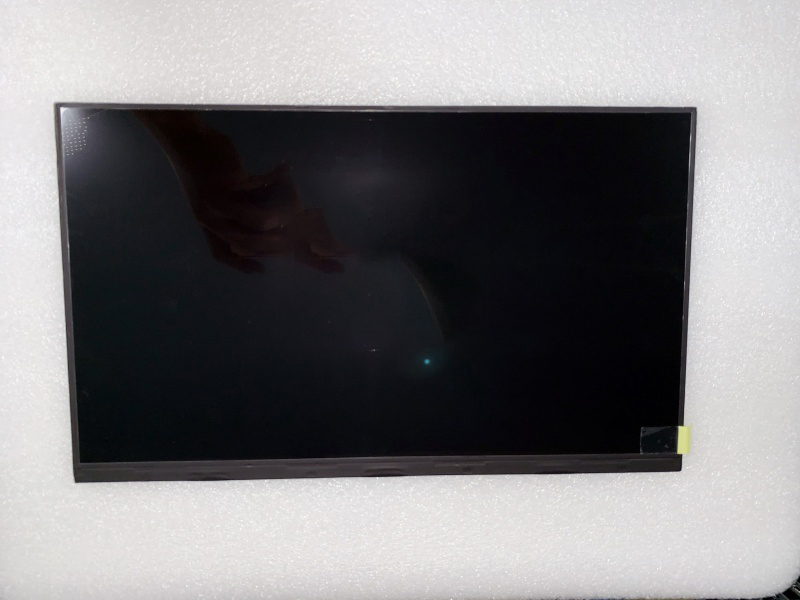
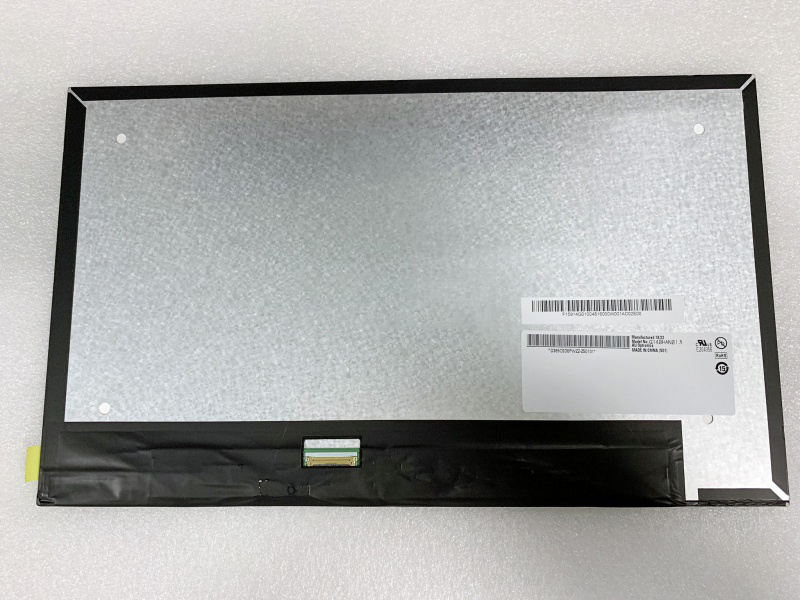
G140HAN01.1 AUO 14 inch TFT-LCD screen 1920*1080 Display
In the intricate ecosystem of modern computing, the display panel is the primary conduit of information and experience. Among the myriad of components that specify a laptop's performance, the screen defines the user's visual reality. This article delves into a specific and widely implemented panel: the G140HAN01.1, a 14-inch TFT-LCD module manufactured by AUO (AU Optronics). This model, with its 1920x1080 Full HD resolution, represents a critical intersection of mainstream consumer demand, manufacturing efficiency, and technical balance.
Our exploration moves beyond basic specifications to uncover the engineering rationale, market positioning, and practical implications of this ubiquitous display. We will dissect its core technology, analyze its performance characteristics in context, and evaluate its role within the broader landscape of laptop design. For IT professionals, procurement specialists, and discerning users, understanding the nuances of such a component is key to making informed decisions about device selection, compatibility, and expected visual performance.
Decoding the Model: AUO's G140HAN01.1 in Context
The alphanumeric string G140HAN01.1 is a precise identifier following AUO's internal nomenclature. Breaking it down, "G" often signifies a Glare (glossy) panel finish, "140" indicates a 14.0-inch diagonal size, and "HAN" points to the specific design family and technology generation. The "01.1" suffix denotes a minor revision or version. This model is part of AUO's mass-production portfolio, designed to meet the high-volume needs of global laptop manufacturers.
Its 1920x1080 resolution on a 14-inch screen yields a pixel density of approximately 157 PPI (Pixels Per Inch). This represents the industry's sweet spot for mainstream laptops, offering a significant clarity upgrade from legacy 1366x768 HD panels without imposing the severe scaling challenges or premium cost of 4K displays. The panel's proliferation across countless mid-range business and consumer laptops from major brands underscores its role as a workhorse component, balancing cost, performance, and manufacturability.
Technical Architecture: A Closer Look at TFT-LCD and IPS
At its heart, the G140HAN01.1 is a Twisted Nematic (TN) or, more commonly in its iterations, an In-Plane Switching (IPS)-type TFT-LCD panel. TFT (Thin-Film Transistor) technology provides the active matrix that controls each individual pixel, enabling fast response and sharp images. While early versions of this panel family may have used TN, the widespread adoption of IPS for this specification is due to its superior viewing angles and color consistency.
The IPS technology aligns liquid crystals horizontally to the substrate. When voltage is applied, they rotate in-plane. This mechanism is fundamentally different from TN and results in the G140HAN01.1 offering typical viewing angles of 178/178 degrees (horizontal/vertical). This means colors and contrast remain stable even when viewed from sharp angles, a critical feature for collaborative work or casual viewing. The panel typically supports 6-bit+FRC (Frame Rate Control) color depth, simulating 16.7 million colors, which is adequate for standard office and multimedia use.
Performance Metrics: Brightness, Contrast, and Color Gamut
Evaluating the panel's performance requires examining key metrics. The G140HAN01.1 commonly features a luminance of 250 nits (cd/m²), a standard brightness suitable for indoor environments. Contrast ratios are typically in the range of 700:1 to 1000:1, delivering decent differentiation between dark and light areas, though not reaching the depth of high-end VA or OLED panels.
Its color gamut coverage is a defining characteristic. Most variants cover approximately 45% NTSC or 62% sRGB. This is a standard gamut, sufficient for everyday tasks, web browsing, and office applications. However, it falls short for color-critical work like professional photo editing or graphic design, which require 90%+ sRGB or Adobe RGB coverage. This specification clearly positions the panel for general productivity and entertainment, not for creative professional workflows.
The User Experience: Responsiveness, Power, and Compatibility
From a user's perspective, the panel's response time, typically rated at 25ms (grey-to-grey), is sufficient for general computing and video playback but may exhibit slight motion blur in fast-paced gaming. Its power consumption is optimized for mobility, with a typical module drawing between 2.5W to 4W, contributing directly to laptop battery life.
Compatibility is a major strength. The G140HAN01.1 uses a standard 30-pin or 40-pin LVDS (Low-Voltage Differential Signaling) interface, a long-established and reliable connection protocol. This makes it a direct replacement candidate for a vast array of older 14-inch laptop screens with similar resolutions. Its physical dimensions and mounting hole patterns are standardized, facilitating repairs and upgrades in the aftermarket.
Market Positioning and Competitive Landscape
The G140HAN01.1 exists in a fiercely competitive segment. It faces direct competition from similar panels by manufacturers like LG Display (model LP140WFH-SPD1), Innolux, and BOE. Competition revolves around subtle improvements in contrast, power efficiency, or thinner bezel designs while maintaining cost parity.
Its market position is that of a high-value, reliable commodity. It is not marketed as a premium feature but as a dependable baseline for Full HD visual quality. For OEMs, its appeal lies in AUO's consistent manufacturing yield, stable supply chains, and proven reliability, which minimize risk in large-scale laptop production. It represents the balanced choice when the design goal is "good enough" Full HD without frills.
Applications and Considerations for Replacement & Upgrade
This panel is most commonly encountered in business-class laptops (e.g., certain Lenovo ThinkPad, Dell Latitude, HP EliteBook models) and consumer models from 2015 onwards. For individuals seeking to replace a cracked or faulty screen, the G140HAN01.1 is a frequent and compatible candidate.
When sourcing a replacement, verifying the exact compatibility is crucial. One must match the interface pin count (30/40), connector placement, thickness, and bezel dimensions. Furthermore, while the G140HAN01.1 provides a solid baseline, users seeking wider color gamut, higher brightness (300+ nits), or faster response for gaming should look for specific "upgrade" panel models that physically fit but offer enhanced specifications, often at a higher cost.
FAQs: G140HAN01.1 Display Panel
Q10: Does it support touch functionality?A: No, the G140HAN01.1 is a standard non-touch display panel.
Conclusion
The AUO G140HAN01.1 is far more than a simple part number; it is a testament to balanced engineering and mass-market optimization. It delivers the essential benefits of Full HD resolution and wide viewing angles to millions of users, forming the visual backbone of a significant segment of the laptop market. Its specifications—from its 250-nit brightness to its 45% NTSC gamut—are not arbitrary but are carefully calibrated to meet precise cost and performance targets.
Understanding this panel provides valuable insight into the economics and design priorities of mainstream computing. For the average user, it offers a clear and consistent viewing experience. For technicians and procurers, it represents a reliable, interoperable component. While it does not push the boundaries of display technology, the G140HAN01.1 fulfills its role with remarkable efficiency, solidifying its status as a quintessential workhorse in the digital age.