- Industrial LCD display
-
Industrial Products
- DC Servo Drive
- AC Servo Drive
- other
- Heidelberg
- FANUC
- IFM
- Meter
- CCD
- Membrane Keypad
- Film
- YOKOGAWA Module
- Card
- ABB
- MITSUBISHI
- FANUC
- KEYENCE
- BECKHOFF
- Honeywell
- HOLLYSYS
- FUJI servo drives
- HP
- solenoid valve
- thermostat
- Siemens adapter
- color oscilloscope
- Fujitsu connector
- CHELIC
- SMC
- CISCO Module
- INTEL
- Key board
- FAIRCHILD
- Motherboard
- Board
- Bearing
- other
- Control Panel
- Contactor
- Circuit
- OMRON
- Relay
- Controller
- Photoelectric Switch
- Photoelectric Sensor
- Original
- Fan
- Motor Driver
- Limit Switch
- Amplifier
- power supply
- LENZE
- Cable
- Encoder
- Sensor
- Transformer
- Fiber Optic Sensor
- Protection Relay
- Temperature Controller
- Proximity Switch
- Switch Sensor
- Siemens
- Industrial board
- HMI Touch Glass
-
HMI Full Machine Whole unit
- OMRON HMI Touch Panel
- Siemens HMI Touch Panel
- Mitsubishi HMI Touch Panel
- Allen-Bradley automation HMI Touch Panel
- DELTA HMI Touch Panel
- EVIEW DELTA HMI Touch Panel
- KINCO DELTA HMI Touch Panel
- HITECH HMI Touch Panel
- WEINTECK HMI Touch Panel
- TECVIEW HMI Touch Panel
- WEINVIEW HMI Touch Panel
- PRO-FACE HMI Touch Panel
- SIMATIC HMI Touch Panel
- AMPIRE HMI Touch Panel
- HEIDELBERG HMI Touch Panel
- PANASONIC HMI Touch Panel
- PATLITE HMI Touch Panel
- KYOCERA HMI Touch Panel
- KEYENCE HMI Touch Panel
- WEINVIEW HMI Touch Panel
- HITECH HMI Touch Panel
- FUJI HMI Touch Panel
- HAKKO HMI Touch Panel
- SCHNEIDER HMI Touch Panel
- SAMKOON touch panel
- other
- Module
- lcd inverter
- Membrane Keypad Switch
- Winni Touch Screens
- Frequency Inverter
- Servo Motor
- PLC




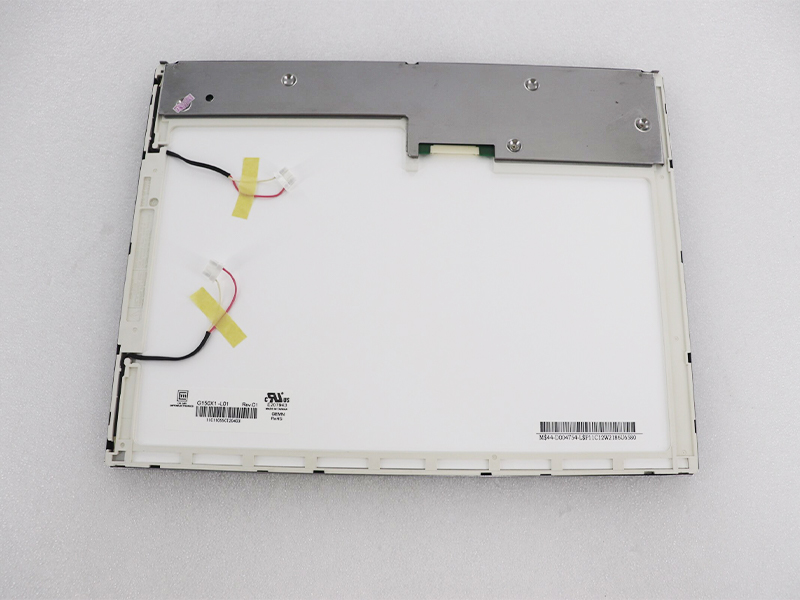
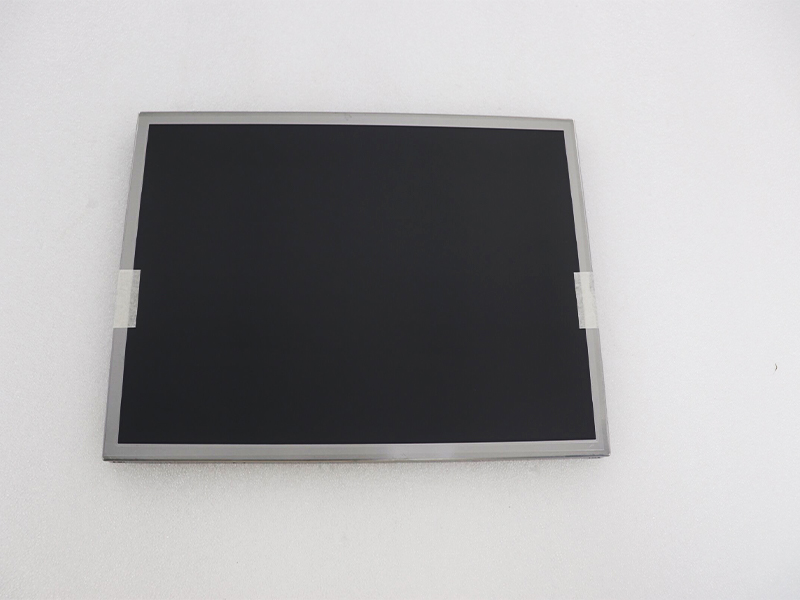
G150X1-L01 CMO 15inch 1024*768 LCD Display
In the intricate world of industrial and embedded display solutions, specific component models like the G150X1-L01 represent far more than a simple part number. They are the nexus of engineering specifications, application suitability, and long-term supply chain strategy. This CMO-manufactured 15-inch LCD panel, with its XGA (1024x768) resolution, stands as a quintessential example of a mature, reliable technology that continues to power critical applications across diverse sectors, from industrial control systems and medical devices to point-of-sale terminals and transportation.
This article delves deep into the G150X1-L01, moving beyond basic datasheet parameters to explore its enduring relevance in a market increasingly dominated by high-resolution displays. We will dissect its core technological profile, analyze its key performance characteristics, and contextualize its advantages within specific operational environments. Furthermore, we will examine the critical considerations for integration, sourcing, and lifecycle management, providing a comprehensive resource for engineers, procurement specialists, and product developers who rely on proven display technology for mission-critical systems.
Decoding the G150X1-L01: A Technical Profile
The G150X1-L01 is a 15.0-inch diagonal active matrix TFT-LCD module produced by CMO (Chi Mei Optoelectronics, now part of Innolux). Its native XGA resolution (1024 x 768 pixels) offers a 4:3 aspect ratio, a format that remains highly practical for many vertical applications designed for data entry, form-based interfaces, and legacy software compatibility. The module typically employs a CCFL (Cold Cathode Fluorescent Lamp) backlighting system, which, while less energy-efficient than modern LED backlights, provides stable and uniform illumination with a proven track record.
Key interface options often include LVDS (Low-Voltage Differential Signaling), a standard and robust interface for transmitting high-speed video data with minimal noise interference. Understanding this technical foundation is crucial, as it defines the panel's basic compatibility requirements. The electrical, mechanical, and optical characteristics outlined in its datasheet form the absolute baseline for any integration effort, dictating power needs, physical mounting constraints, and fundamental image performance.
Performance Characteristics and Visual Ergonomics
Beyond the basic specs, the performance of the G150X1-L01 in real-world conditions defines its value. Its brightness, typically in the range of 250-300 nits, is sufficient for indoor environments under controlled lighting. The contrast ratio delivers clear differentiation between foreground and background elements, essential for text and schematic display. Perhaps most critically for industrial settings are its viewing angles. With standard specifications, it provides adequate horizontal and vertical viewing cones for operator flexibility, though it may not match the wide-angle performance of IPS (In-Plane Switching) panels used in consumer devices.
The choice of XGA resolution on a 15-inch screen results in a specific pixel pitch, balancing between screen real estate and image sharpness. For applications where operators view the screen from a typical desk distance, this balance is often ideal, reducing eye strain during prolonged use compared to lower-resolution panels where individual pixels may be more discernible. The color gamut and reproduction are suitable for graphical user interfaces and basic color coding, aligning with its role as a functional display rather than a multimedia showcase.
The Strategic Advantages of a Mature Display Solution
In an era of rapid technological obsolescence, the maturity of the G150X1-L01 platform is its strategic superpower. Long-term reliability is paramount in industrial and medical applications, where display failure can halt production or critical procedures. This model's extensive field history means its failure modes and operational limits are well-understood, reducing unforeseen risks. Furthermore, its technology stack is fully debugged, leading to stable driver compatibility and predictable performance over its entire operational lifespan.
Another significant advantage is cost-effectiveness. As a well-established product, it often presents a lower total cost of ownership compared to cutting-edge panels, both in terms of initial unit cost and the engineering resources required for integration. For products with long lifecycles (e.g., industrial machinery, aviation, certain medical devices), using a mature, available display mitigates the severe risk of a forced mid-cycle redesign due to panel end-of-life (EOL) announcements from manufacturers.
Ideal Application Environments and Use Cases
The G150X1-L01 finds its true home in environments where robustness, predictability, and functional clarity trump ultra-high resolution or sleek form factors. Its primary domains include:
Industrial Human-Machine Interfaces (HMIs): Controlling machinery, factory automation, and process monitoring systems where software interfaces are often optimized for 4:3 ratios.
Medical Monitoring Equipment: Devices for patient vital signs or diagnostic apparatus where color accuracy for specific indicators and 24/7 reliability are critical.
Point-of-Sale (POS) and Kiosk Systems: Transaction terminals and self-service kiosks requiring durable, always-on displays with clear legibility.
Transportation and Avionics: In-vehicle information systems or auxiliary displays where sunlight readability (often with enhanced filters) and vibration resistance are key.
In these contexts, the display acts as a dependable window into the machine's operations, valued for its consistency and seamless integration into larger, purpose-built systems.
Critical Considerations for System Integration
Successfully incorporating the G150X1-L01 into a product requires careful planning. The CCFL backlight necessitates an inverter circuit to generate the high-voltage AC power needed, adding complexity and a potential point of failure compared to direct LED driver circuits. Thermal management must account for the heat dissipated by both the panel and the CCFL tubes. Mechanically, designers must adhere to precise cutout dimensions, bezel mounting points, and connector placement as per the datasheet.
Electrically, the LVDS interface must be correctly implemented on the host controller board, with proper impedance matching to ensure signal integrity. Furthermore, the power sequencing requirements—the specific order in which panel power, logic power, and backlight power are applied and removed—are critical to prevent damage. Neglecting these integration details can lead to reduced performance, intermittent operation, or premature failure, undermining the display's inherent reliability.
Sourcing, Lifecycle Management, and Future-Proofing
Procuring a display like the G150X1-L01 in today's market involves navigating its product lifecycle stage. As a mature product, it may be in a maintenance or not-recommended-for-new-design (NRND) phase. Establishing a relationship with a reputable distributor or display solutions provider is essential. They can provide current availability, lead times, and crucially, lifecycle forecasting to help plan for eventual end-of-life.
Securing a final buy of panels for the projected lifespan of the end product.
Working with partners who offer replacement or equivalent panels with form-fit-function compatibility.
Considering a managed LCD migration service to transition to a newer, available panel with minimal engineering disruption when the time comes.
Proactive lifecycle management transforms a potential supply chain crisis into a planned, manageable event.
FAQs: G150X1-L01 Display Module
10. How do I manage its eventual end-of-life (EOL)?Plan proactively by working with distributors for lifecycle forecasts, consider a final buy, or engage a partner for a managed migration to a compatible replacement.
Conclusion
The G150X1-L01 CMO 15-inch LCD display exemplifies the enduring importance of right-fit technology over merely new technology. Its XGA resolution, 4:3 format, and proven CCFL backlighting continue to serve as the optimal solution for countless industrial, medical, and commercial interfaces where reliability, cost-effectiveness, and functional clarity are the paramount design criteria.
For engineers and product managers, understanding this module in depth—from its technical performance and integration nuances to its strategic sourcing and lifecycle—is essential. It empowers them to build robust, long-lasting systems while effectively mitigating the supply chain risks associated with mature components. In a world chasing the next pixel density breakthrough, the G150X1-L01 stands as a reminder that in specialized vertical markets, stability and proven performance often deliver the greatest value.