- Industrial LCD display
-
Industrial Products
- DC Servo Drive
- AC Servo Drive
- other
- Heidelberg
- FANUC
- IFM
- Meter
- CCD
- Membrane Keypad
- Film
- YOKOGAWA Module
- Card
- ABB
- MITSUBISHI
- FANUC
- KEYENCE
- BECKHOFF
- Honeywell
- HOLLYSYS
- FUJI servo drives
- HP
- solenoid valve
- thermostat
- Siemens adapter
- color oscilloscope
- Fujitsu connector
- CHELIC
- SMC
- CISCO Module
- INTEL
- Key board
- FAIRCHILD
- Motherboard
- Board
- Bearing
- other
- Control Panel
- Contactor
- Circuit
- OMRON
- Relay
- Controller
- Photoelectric Switch
- Photoelectric Sensor
- Original
- Fan
- Motor Driver
- Limit Switch
- Amplifier
- power supply
- LENZE
- Cable
- Encoder
- Sensor
- Transformer
- Fiber Optic Sensor
- Protection Relay
- Temperature Controller
- Proximity Switch
- Switch Sensor
- Siemens
- Industrial board
- HMI Touch Glass
-
HMI Full Machine Whole unit
- OMRON HMI Touch Panel
- Siemens HMI Touch Panel
- Mitsubishi HMI Touch Panel
- Allen-Bradley automation HMI Touch Panel
- DELTA HMI Touch Panel
- EVIEW DELTA HMI Touch Panel
- KINCO DELTA HMI Touch Panel
- HITECH HMI Touch Panel
- WEINTECK HMI Touch Panel
- TECVIEW HMI Touch Panel
- WEINVIEW HMI Touch Panel
- PRO-FACE HMI Touch Panel
- SIMATIC HMI Touch Panel
- AMPIRE HMI Touch Panel
- HEIDELBERG HMI Touch Panel
- PANASONIC HMI Touch Panel
- PATLITE HMI Touch Panel
- KYOCERA HMI Touch Panel
- KEYENCE HMI Touch Panel
- WEINVIEW HMI Touch Panel
- HITECH HMI Touch Panel
- FUJI HMI Touch Panel
- HAKKO HMI Touch Panel
- SCHNEIDER HMI Touch Panel
- SAMKOON touch panel
- other
- Module
- lcd inverter
- Membrane Keypad Switch
- Winni Touch Screens
- Frequency Inverter
- Servo Motor
- PLC



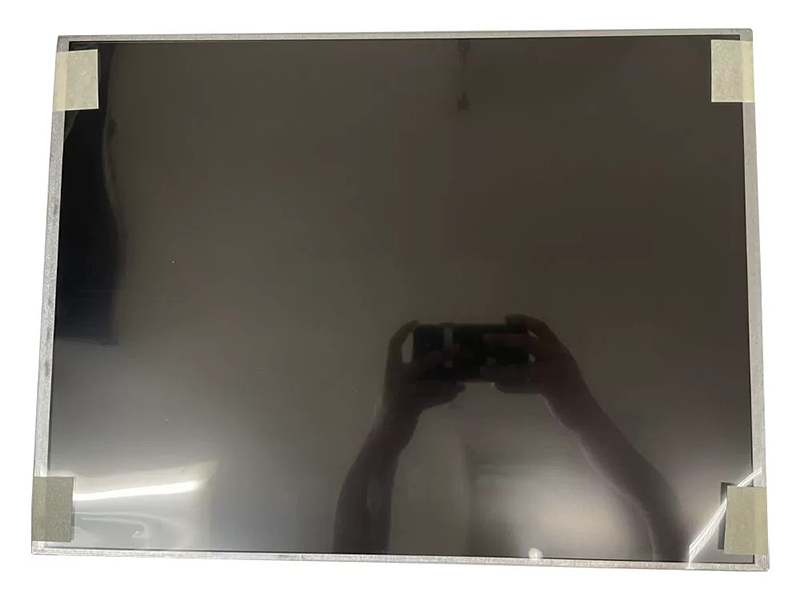
G213QAN02.0 AUO 21.3-inch 1536*2048 LCD screen
In the realm of diagnostic displays, size, resolution, and grayscale performance are non-negotiable. The G213QAN02.0, manufactured by AU Optronics (AUO), stands as a specialized 21.3-inch LCD panel that has carved a distinct niche in the medical and industrial imaging sectors. Unlike standard consumer monitors optimized for vivid color and video playback, this panel is engineered for precision. Its unique native resolution of 1536 x 2048—often referred to as a Portrait QXGA (Quad Extended Graphics Array)—is not an arbitrary specification; it is a direct response to the rigorous demands of Digital Radiography (DR) and Picture Archiving and Communication Systems (PACS). This article delves deep into the technical architecture, optical performance, and practical value of the G213QAN02.0. We will explore why this specific panel remains a critical component for professionals who require absolute fidelity in grayscale imagery, and how its design principles differ fundamentally from general-purpose displays. By understanding its specifications, we reveal the engineering philosophy behind a screen that is less about entertainment and more about clinical certainty.
At the heart of the G213QAN02.0 lies its most defining feature: the 1536 x 2048 resolution in a 4:3 aspect ratio. To the uninitiated, this may seem unusual compared to the standard 1920 x 1080 or 4K panels. However, this resolution is a deliberate choice for portrait-mode medical imaging. A chest X-ray or a mammogram is inherently taller than it is wide. By rotating the panel to a vertical orientation (the native landscape of the glass is often designed for portrait use), the pixel matrix creates a 1:1 mapping with the DICOM (Digital Imaging and Communications in Medicine) standard for high-resolution medical images. This eliminates the need for interpolation, where the software creates "fake" pixels to match a different resolution, which can blur critical micro-fractures or calcifications. The panel’s 21.3-inch diagonal size provides a substantial viewing area without being physically cumbersome in a reading room. This specific form factor ensures that a full lung field or a complete skeletal view can be displayed at actual size, allowing radiologists to measure distances, angles, and densities with absolute scale accuracy. It is a resolution born from a specific workflow, not from market trends.

While color monitors render the world through RGB (Red, Green, Blue), the G213QAN02.0 is often configured to prioritize grayscale—though it is technically an RGB color panel, its primary calibration target is the DICOM Part 14 Grayscale Standard Display Function (GSDF). This is the single most important metric for a medical display. The panel is engineered to produce a consistent luminance response from the darkest black to the brightest white. In a standard monitor, adjacent gray levels might appear identical, a phenomenon known as "contrast saturation." For a radiologist, a subtle 2% difference in density can be the difference between a benign cyst and a malignant tumor. The G213QAN02.0, through advanced 10-bit data processing (delivering over 1 billion colors) or high-quality 8-bit + FRC (Frame Rate Control), ensures that each of the 256 shades of gray (in an 8-bit workflow) is distinct and equidistant according to the DICOM standard. It achieves this by using an IPS (In-Plane Switching) technology variant that offers wide viewing angles (typically 178°/178°). This ensures that the image does not "wash out" or invert when viewed from different positions, which is critical when multiple clinicians review a scan simultaneously.
Unlike consumer screens that use edge-lit LED bars for thinness, the G213QAN02.0 frequently utilizes a robust backlight system designed for longevity and stability. The panel typically employs WLED (White Light Emitting Diode) backlighting, but with a critical distinction: it is managed by a proprietary driving IC that regulates current to prevent flicker and drift. Medical display standards require a panel to maintain a specific luminance (usually between 300 and 450 cd/m² for secondary displays, and higher for primary diagnostic monitors) over thousands of hours. If the brightness degrades by 5%, the grayscale response curve shifts, and the DICOM calibration is lost. The G213QAN02.0 is designed to support a high contrast ratio (often 1000:1 or higher), which is essential for viewing anatomy that combines dense bone and air-filled lungs in a single frame. An integrated ambient light sensor is common, allowing automatic brightness adjustment to maintain a constant perceived luminance. This system is not about saving power (though it does) but about ensuring that a report read at 9:00 AM is optically identical to one read at 5:00 PM, eliminating a variable that could affect diagnostic accuracy.
The value of a high-fidelity panel is nullified if the data transfer is compromised. The G213QAN02.0, depending on the specific monitor assembly it is built into (by manufacturers like Barco, Eizo, or NEC), relies on high-bandwidth digital interfaces. While the raw LVDS (Low-Voltage Differential Signaling) connector on the panel itself is internal, the end-product monitor will typically provide DisplayPort and DVI-DL (Dual-Link) inputs. A single-link DVI cannot support the full 1536 x 2048 resolution at a 60 Hz refresh rate due to bandwidth limitations. Dual-link DVI doubles the data rate, ensuring crisp, artifact-free image transfer. DisplayPort offers a more modern, daisy-chainable solution. Crucially, these connections must support 10-bit color depth (30-bit color) to properly drive the panel’s grayscale capabilities. A standard HDMI 1.4 port is often avoided because it may default to 8-bit video RGB mode, clipping the subtle gray bands. The monitor’s internal scaler is also critical; it must accept a 1536 x 2048 input and map it pixel-to-pixel without re-sampling, ensuring that every data point from the PACS server reaches its corresponding TFT cell untouched.
In an era where 4K (3840 x 2160) and even 8K panels are becoming affordable, one might question the relevance of the older 1536 x 2048 format. The answer lies in practical pixel density and software ergonomics. A 4K 21.3-inch monitor has a much higher pixel density, but it forces a workflow change: the radiologist must either view images zoomed in (losing the "big picture") or scale down the high-resolution data to fit the screen, which negates the benefit of 4K. The G213QAN02.0 is a "sweet spot" monitor. Its pixel pitch (approximately 0.21 mm) delivers a sharp 200 PPI (Pixels Per Inch) – high enough to resolve micro-calcifications, but large enough that the entire anatomy is visible at 100% zoom. Furthermore, many PACS software packages are still optimized for the 3MP (Megapixel) class display (1536 x 2048 = 3.1 MP). Upgrading to a 5MP or 8MP monitor often requires different graphics cards and software licenses. The G213QAN02.0 offers a proven, cost-effective, and perfectly matched hardware solution for the vast archive of legacy and current 3MP DICOM images. It is not a relic; it is a refined tool that represents an optimal balance between resolution, medical workflow efficiency, and total cost of ownership.
What is the native resolution of the G213QAN02.0?
The native resolution is 1536 x 2048 pixels, which is a 3.1 Megapixel panel designed primarily for portrait orientation.
Is this a color or monochrome LCD panel?
It is an RGB color panel, but it is heavily optimized for high-quality grayscale reproduction and DICOM calibration.
What is the typical brightness (luminance) of this screen?
Typical luminance is around 300-400 cd/m², with some high-brightness versions reaching up to 1000 cd/m² for specific mammography applications.
What type of LCD technology is used (TN, VA, IPS)?
It uses a variant of IPS (In-Plane Switching) technology, providing excellent 178° viewing angles and consistent color/gray levels.
Why is the resolution 1536 x 2048 and not 1920 x 1080?
This resolution matches the standard for 1:1 mapping of DICOM medical images (like X-rays), avoiding interpolation and maintaining diagnostic accuracy.
Can I use this panel for general desk work or gaming?
Technically yes, but it is not recommended. The 4:3 aspect ratio is poor for web browsing, and the DICOM calibration makes colors look unnatural and desaturated.
What is the primary application for this screen?
It is a secondary diagnostic monitor for PACS workstations, used extensively in radiology for viewing X-rays, CT scans, and MRIs.
Does it require a special video card?
Yes. You typically need a Dual-Link DVI or DisplayPort output from a certified medical-grade graphics card to achieve 10-bit color and full resolution.
How does it differ from a standard LCD medical monitor?
The G213QAN02.0 is the raw glass; a medical monitor is a complete system including the backlight driver, calibration software, and DICOM compliance certificate.
Is it considered obsolete given modern 4K monitors?
No. It remains highly relevant. Its pixel pitch is optimized for viewing full anatomy at 100% scale, which is superior to scaling down a 4K image for PACS reading.
Conclusion: A Legacy of Precision in a Pixels-Everywhere World
The G213QAN02.0 is far more than a dated component; it is a testament to the principle that technology should be purpose-built. In a market flooded with high-resolution panels optimized for media consumption, this AUO screen stands firm as a dedicated tool for medical diagnostics. Its unique 1536 x 2048 resolution, coupled with strict adherence to DICOM grayscale standards, provides a consistent, scale-accurate canvas that remains the gold standard for PACS workstations. The panel’s robust backlight stability and wide IPS viewing angles remove technical ambiguity from the diagnostic process, allowing the clinician to focus entirely on the patient’s anatomy rather than the display’s artifacts. While newer technologies like OLED and 8K promise future benefits, the G213QAN02.0 represents a mature, reliable, and perfectly engineered solution for the present. For any facility looking to establish or maintain a high-quality reading room, understanding this panel is the first step toward ensuring that the image on the screen is exactly the image captured by the sensor—no more, no less. It is the quiet guardian of diagnostic accuracy.