- Industrial LCD display
-
Industrial Products
- DC Servo Drive
- AC Servo Drive
- other
- Heidelberg
- FANUC
- IFM
- Meter
- CCD
- Membrane Keypad
- Film
- YOKOGAWA Module
- Card
- ABB
- MITSUBISHI
- FANUC
- KEYENCE
- BECKHOFF
- Honeywell
- HOLLYSYS
- FUJI servo drives
- HP
- solenoid valve
- thermostat
- Siemens adapter
- color oscilloscope
- Fujitsu connector
- CHELIC
- SMC
- CISCO Module
- INTEL
- Key board
- FAIRCHILD
- Motherboard
- Board
- Bearing
- other
- Control Panel
- Contactor
- Circuit
- OMRON
- Relay
- Controller
- Photoelectric Switch
- Photoelectric Sensor
- Original
- Fan
- Motor Driver
- Limit Switch
- Amplifier
- power supply
- LENZE
- Cable
- Encoder
- Sensor
- Transformer
- Fiber Optic Sensor
- Protection Relay
- Temperature Controller
- Proximity Switch
- Switch Sensor
- Siemens
- Industrial board
- HMI Touch Glass
-
HMI Full Machine Whole unit
- OMRON HMI Touch Panel
- Siemens HMI Touch Panel
- Mitsubishi HMI Touch Panel
- Allen-Bradley automation HMI Touch Panel
- DELTA HMI Touch Panel
- EVIEW DELTA HMI Touch Panel
- KINCO DELTA HMI Touch Panel
- HITECH HMI Touch Panel
- WEINTECK HMI Touch Panel
- TECVIEW HMI Touch Panel
- WEINVIEW HMI Touch Panel
- PRO-FACE HMI Touch Panel
- SIMATIC HMI Touch Panel
- AMPIRE HMI Touch Panel
- HEIDELBERG HMI Touch Panel
- PANASONIC HMI Touch Panel
- PATLITE HMI Touch Panel
- KYOCERA HMI Touch Panel
- KEYENCE HMI Touch Panel
- WEINVIEW HMI Touch Panel
- HITECH HMI Touch Panel
- FUJI HMI Touch Panel
- HAKKO HMI Touch Panel
- SCHNEIDER HMI Touch Panel
- SAMKOON touch panel
- other
- Module
- lcd inverter
- Membrane Keypad Switch
- Winni Touch Screens
- Frequency Inverter
- Servo Motor
- PLC



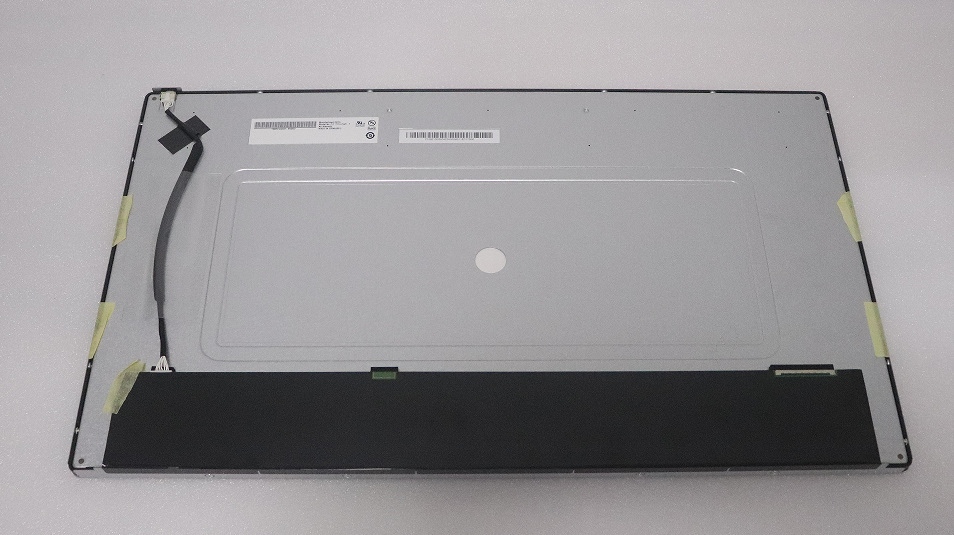
G215HAN01.1 AUO 21.5" TFT-LCD screen 1920*1080 Display
The industrial display market often demands a delicate balance between cost, reliability, and visual performance, a balance that the G215HAN01.1 panel from AU Optronics (AUO) embodies with exceptional precision. As a 21.5-inch TFT-LCD screen with a Full HD resolution of 1920x1080, this model has carved out a significant niche, not as a flashy consumer product, but as a workhorse for professional applications. From medical imaging terminals and banking kiosks to factory floor HMIs (Human-Machine Interfaces), the G215HAN01.1 is frequently the hidden component enabling critical visual interactions. This article delves deep beyond the basic specification sheet. We will examine the intricate architectural design choices, the rationale behind its electrical characteristics, and its optical calibration potential. By dissecting the panel’s timing controller, backlight design, and interface architecture, we aim to provide an actionable understanding for engineers, procurement specialists, and system integrators who need to determine why this specific model remains a relevant and reliable choice in a sea of rapidly evolving display technologies.
At its core, the G215HAN01.1 is a a-Si TFT-LCD (amorphous silicon Thin Film Transistor) panel, a technology that has been refined for decades to offer a superior cost-to-performance ratio for mid-to-large sized displays. What distinguishes this AUO model is the synergy between its three primary optical layers: the Liquid Crystal cell, the backlight unit, and the polarizing films. The panel utilizes TN (Twisted Nematic) technology, which, while often criticized for narrow viewing angles compared to IPS, offers a significant advantage in this context: faster response times and lower power consumption at high luminance levels. For an industrial panel intended for static or semi-static imagery (like a menu board or a machine status screen), the 5ms (typical) response time is more than adequate, and the reduced light leakage inherent to TN designs contributes to deeper black levels in a controlled environment.
The backlight unit employs a WLED (White Light Emitting Diode) edge-lit system. This design choice is critical for two reasons. First, it enables the slim 10.74mm profile of the panel, which is essential for integration into restricted enclosures. Second, the edge-lit configuration distributes light through a light guide plate (LGP) with specialized dot patterns to achieve high uniformity, typically rated at 80% minimum. The polarizer stack is engineered not just for contrast, but for durability. Industrial panels often operate in environments with high ambient light, so the anti-glare (AG) treatment on the surface is a heavy etching, reducing specular reflections to less than 1% while maintaining a sharp image. Understanding this layer synergy explains why the panel maintains its 1000:1 contrast ratio even after years of operation, unlike cheaper models where the polarizer degrades or the LGP yellows.

While 1920x1080 (Full HD) is a common resolution, its implementation in the G215HAN01.1 is anything but generic. The panel employs a stripe-pixel arrangement for its RGB subpixels, which is the standard for sharp text rendering. However, the real engineering depth lies in the aperture ratio and the pixel pitch. With a native resolution of 1920 x 1080 pixels on a 21.5" diagonal, the pixel pitch calculates to approximately 0.24795 mm. This is a critical number for integrators: it defines the maximum viewing distance for data readability. For a point-of-sale terminal, a 0.24mm pitch ensures that a 10-point font is legible from a distance of about 1.5 meters, offering a sweet spot between information density and eye strain.
Furthermore, the pixel architecture is driven by a 2-LVDS (Low-Voltage Differential Signaling) interface. This is a deliberate choice over modern eDP (Embedded DisplayPort) interfaces, which are common in laptops. Why LVDS? In the industrial world, longevity and transferability are paramount. LVDS is a mature, well-understood standard that can be easily implemented with a wide range of available controller boards and ARM/x86 processors. The 2-channel design supports up to 8-bit color depth (16.7 million colors), but it can also operate in 6-bit + FRC (Frame Rate Control) mode to simulate 8-bit on lower-cost drivers. The two channels operate interleaved—one handling the odd-numbered clock cycles, the other handling the even—which effectively doubles the data throughput without increasing the per-channel frequency, crucial for reducing electromagnetic interference (EMI) in sensitive medical or test equipment.
The specification sheet for the G215HAN01.1 typically lists a typical luminance of 450 cd/m² (nits) and a contrast ratio of 1000:1. These numbers are not arbitrary; they are calculated based on the Binning of the LED strips and the Optical Efficiency of the Panel. The 450 cd/m² rating is a typical value, meaning a standard unit fresh from production. However, the backlight driver circuit is designed to support a higher current for a warranty period. The maximum luminance can be pushed to over 500 cd/m², but doing so accelerates LED degradation (lumen depreciation). The 1000:1 contrast ratio is achieved by a combination of the TN cell's dark-state transmittance (minimum light leakage when black is commanded) and the backlight's deep dimming capability.
It is vital to understand that this contrast ratio is measured under ideal conditions (0 lux ambient light). In a real-world industrial setting, ambient light severely impacts perceived contrast. The anti-glare polarizer helps, but the panel's true strength lies in its high luminance headroom. For a kiosk in a sunlit lobby, the panel can be operated at near-max brightness to overcome the ambient light, maintaining a usable perceived contrast of maybe 20:1. Conversely, in a dark control room, the backlight can be dimmed to 100 cd/m², preserving eye comfort while still delivering the full 1000:1 native contrast. This dynamic range, from 100 cd/m² to 450+ cd/m² without significant color shift (due to the LED phosphor stability), is what makes it superior to consumer monitors that often struggle below 200 cd/m² or above 300 cd/m².
Integration is where the G215HAN01.1 truly distinguishes itself from consumer monitors. The panel communicates via a 30-pin LVDS connector, specifically a standard 0.5mm pitch FI-RE series from JAE or compatible. This is a mechanical and electrical standard deeply embedded in the industrial ecosystem. The pinout defines two 8-bit channels, meaning 4 data pairs per channel (for R, G, B, and controls) plus a clock pair. The timing controller (TCON) on the panel is configured to accept a specific clock frequency—typically around 74.25 MHz for Full HD at 60 Hz. This exact frequency must be generated by the source (e.g., a Raspberry Pi Compute Module 4 or an industrial motherboard). Deviations cause artifacts or blank screens.
One often-overlooked constraint is the Power Sequence Timing. The panel requires a strict sequence: VCC (power) must be applied first, then the LVDS signals, followed by the backlight enable. Reverse or out-of-order sequencing can latch the TCON or damage the input CMOS buffers. The datasheet specifies delays like t1 (VCC to LVDS) = 0.5ms minimum, and t2 (LVDS to Backlight) = 200ms typical. Furthermore, the LVDS swing voltage is specified at 1.2V to 1.8V (common mode), which requires LVDS transmitters on the source side to be compliant. Using a standard TTL-to-LVDS converter IC (like a DS90C385) is the most common solution for single-board computers. This strict interface definition ensures plug-and-play compatibility, provided the source hardware respects these electrical and temporal boundaries.
Industrial panels like the G215HAN01.1 are engineered for a different operational lifecycle than consumer monitors. While a TV might operate 8 hours a day, this AUO panel is rated for continuous 24/7 operation in a temperature range of 0°C to 50°C (operating) and storage from -20°C to 60°C. The critical factor here is thermal management. The LED backlight generates the majority of the heat. The panel's metal chassis and back cover act as a heatsink. If the panel is mounted inside a sealed enclosure without airflow, the internal temperature can rise 10-15°C above ambient. If ambient air is 35°C, the panel may operate at 50°C, which is its maximum rated operating temperature.
Operating at the high end of the thermal envelope reduces the lifespan of the white LEDs. The typical lifetime of the LED backlight is rated at 50,000 hours to half-brightness (L50). At 50°C, this lifetime can drop to 30,000 hours. Engineers must account for this by designing in active cooling (small fans) or derating the brightness via PWM. The panel supports PWM (Pulse Width Modulation) dimming via a dedicated pin (typically pin 14 on the backlight connector), operating at a recommended 200Hz to 1kHz. A duty cycle of 50% effectively halves the average current, reducing heat generation significantly without visible flicker (provided the PWM frequency is above 200Hz). Understanding this thermal derating curve is essential for predicting field failures or warranty returns for a 5-year deployment.
Q1: What is the exact resolution of the G215HAN01.1?
A: It is 1920 x 1080 pixels (Full HD) with a 16:9 aspect ratio.
Q2: What interface connector does it use?
A: It uses a 30-pin, 2-channel LVDS connector (typically JAE FI-RE series, 0.5mm pitch).
Q3: What is the typical power consumption?
A: Approximately 12-15W for the LCD panel and 17-20W for the backlight (depending on brightness settings).
Q4: Can it be used outdoors in direct sunlight?
A: It has an anti-glare surface and 450 cd/m² typical brightness, but for direct sunlight, a higher-brightness (1000+ cd/m²) panel or a sunlight-readable module (with optical bonding) is recommended.
Q5: What is the viewing angle?
A: Typical TN viewing angles: 80° (L/R/Up/Down) typically specified as CR > 10:1. It has significant color shift when viewed from extreme angles.
Q6: Do I need a special controller board?
A: Yes. You need a controller board that natively supports 2-channel LVDS output (not single-channel or eDP). Many generic LVDS-to-HDMI or LVDS-to-VGA boards work.
Q7: What is the white LED backlight lifetime?
A: Rated at 50,000 hours to half-brightness (L50) under typical ambient conditions (25°C).
Q8: Is touchscreen available?
A: This is a bare LCD panel. Touch functionality requires an integrated touch module (resistive or capacitive) bonded to the panel by a third party or OEM.
Q9: What is the pixel pitch?
A: Approximately 0.24795 mm x 0.24795 mm (horizontal x vertical).
Q10: What is the operating temperature range?
A: 0°C to +50°C (operating), -20°C to +60°C (storage).
Conclusion
The G215HAN01.1 AUO 21.5" TFT-LCD panel is a testament to the principle that in industrial design, simplicity and robustness often outweigh raw specifications. It is not the thinnest, brightest, or widest-viewing panel on the market. Instead, its value is distilled from a profound understanding of the operational realities of digital signage, kiosk, and HMI applications. It relies on a mature, inherently stable TN-LCD architecture paired with a high-luminance, long-life WLED backlight and a universally compatible LVDS interface. For the system integrator, the panel offers a predictable, well-documented platform that minimizes electrical and mechanical integration risks. The strict timing sequences, thermal limitations, and connector compatibility issues discussed are not obstacles but design constraints that enable reliable 24/7 operation. In a market flooded with disposable consumer panels, the G215HAN01.1 remains a professional-grade tool. When deployed within its thermal and electrical envelope, it delivers years of stable, accurate imagery. The final takeaway is clear: choosing this panel is a strategic decision to prioritize reliability and long-term support over fleeting trends, ensuring that the final product—whether a medical monitor or a factory terminal—performs its function accurately, day in and day out.