- Industrial LCD display
-
Industrial Products
- DC Servo Drive
- AC Servo Drive
- other
- Heidelberg
- FANUC
- IFM
- Meter
- CCD
- Membrane Keypad
- Film
- YOKOGAWA Module
- Card
- ABB
- MITSUBISHI
- FANUC
- KEYENCE
- BECKHOFF
- Honeywell
- HOLLYSYS
- FUJI servo drives
- HP
- solenoid valve
- thermostat
- Siemens adapter
- color oscilloscope
- Fujitsu connector
- CHELIC
- SMC
- CISCO Module
- INTEL
- Key board
- FAIRCHILD
- Motherboard
- Board
- Bearing
- other
- Control Panel
- Contactor
- Circuit
- OMRON
- Relay
- Controller
- Photoelectric Switch
- Photoelectric Sensor
- Original
- Fan
- Motor Driver
- Limit Switch
- Amplifier
- power supply
- LENZE
- Cable
- Encoder
- Sensor
- Transformer
- Fiber Optic Sensor
- Protection Relay
- Temperature Controller
- Proximity Switch
- Switch Sensor
- Siemens
- Industrial board
- HMI Touch Glass
-
HMI Full Machine Whole unit
- OMRON HMI Touch Panel
- Siemens HMI Touch Panel
- Mitsubishi HMI Touch Panel
- Allen-Bradley automation HMI Touch Panel
- DELTA HMI Touch Panel
- EVIEW DELTA HMI Touch Panel
- KINCO DELTA HMI Touch Panel
- HITECH HMI Touch Panel
- WEINTECK HMI Touch Panel
- TECVIEW HMI Touch Panel
- WEINVIEW HMI Touch Panel
- PRO-FACE HMI Touch Panel
- SIMATIC HMI Touch Panel
- AMPIRE HMI Touch Panel
- HEIDELBERG HMI Touch Panel
- PANASONIC HMI Touch Panel
- PATLITE HMI Touch Panel
- KYOCERA HMI Touch Panel
- KEYENCE HMI Touch Panel
- WEINVIEW HMI Touch Panel
- HITECH HMI Touch Panel
- FUJI HMI Touch Panel
- HAKKO HMI Touch Panel
- SCHNEIDER HMI Touch Panel
- SAMKOON touch panel
- other
- Module
- lcd inverter
- Membrane Keypad Switch
- Winni Touch Screens
- Frequency Inverter
- Servo Motor
- PLC


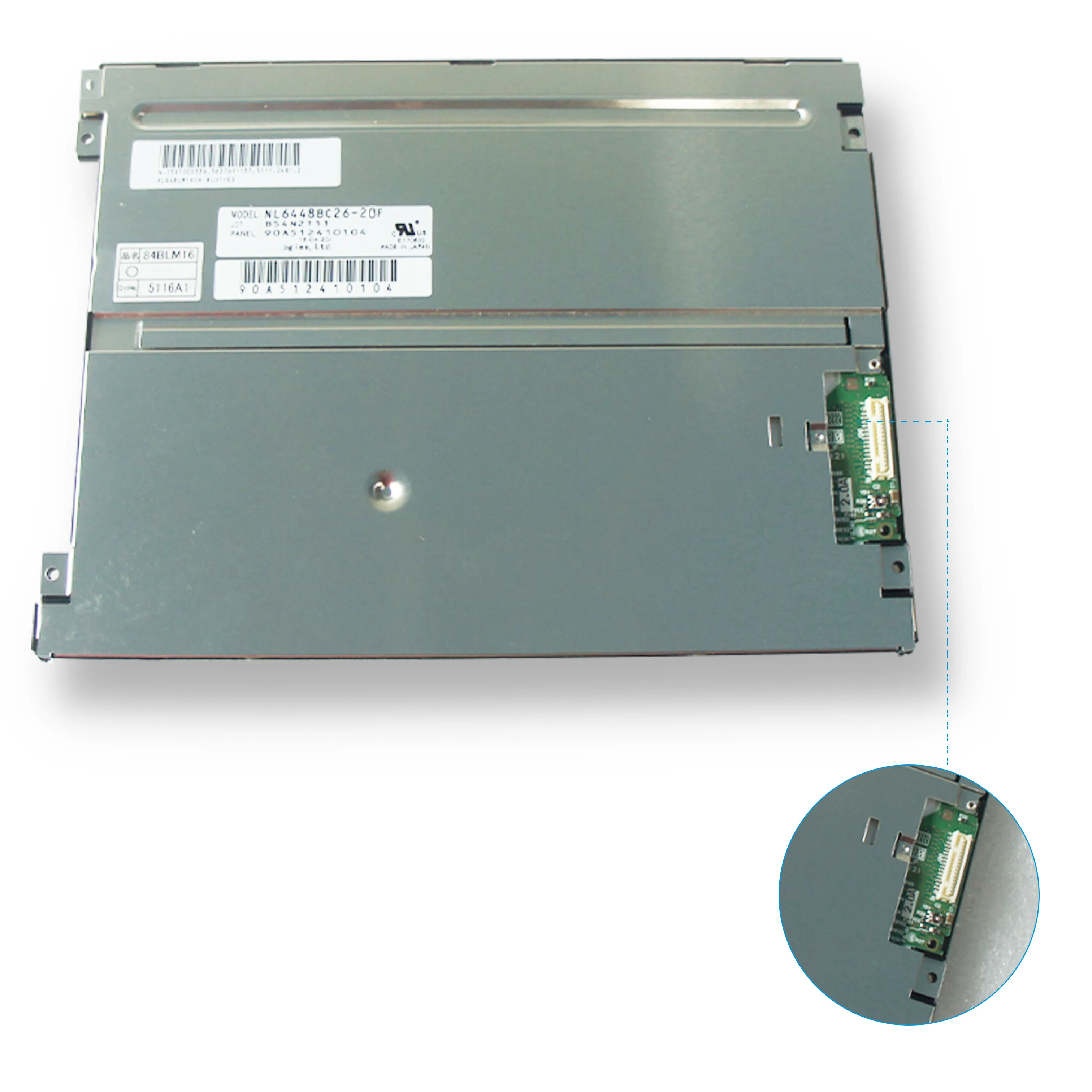

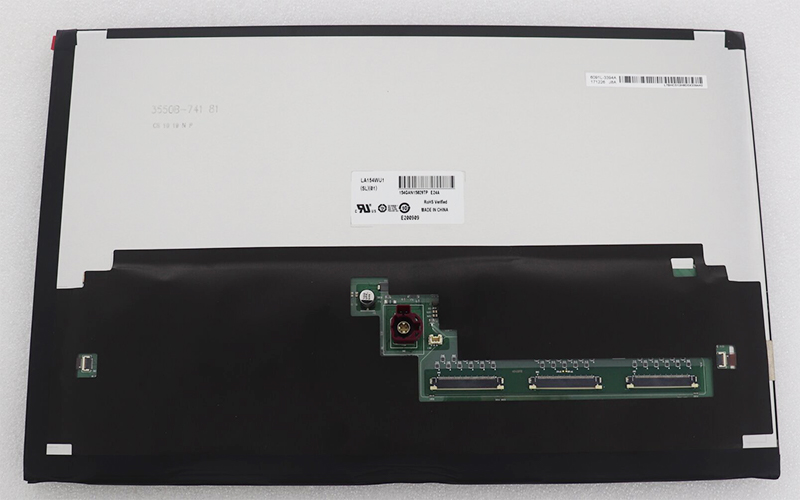
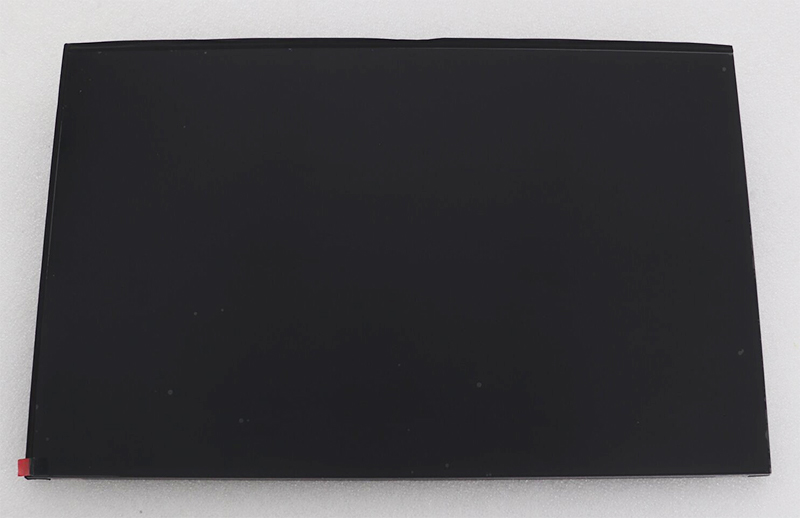
LA154WU1-SL01 LG 15.4 inch TFT-LCD screen 1920*1200 Display
In the rapidly evolving landscape of industrial and commercial display technology, the balance between resolution, form factor, and reliability remains a critical challenge. The LA154WU1-SL01 LG 15.4 inch TFT-LCD screen, boasting a native resolution of 1920x1200, represents a specific but vital niche in this ecosystem. Unlike consumer-grade displays optimized for cost, this panel is engineered for applications where precision, longevity, and consistent performance are non-negotiable.
This article delves deep into the architectural and functional specifics of the LA154WU1-SL01. We will move beyond the basic specifications to explore the pixel mechanics of the WUXGA resolution, the significance of its LVDS interface, and its place within LG’s industrial display lineage. For engineers, procurement specialists, and system integrators, understanding the nuances of this panel—from its optical characteristics to its thermal management requirements—is essential for successful deployment. This analysis aims to provide a definitive resource for evaluating the LA154WU1-SL01 against the demanding criteria of modern embedded systems and professional display applications.
The 1920x1200 resolution, known as WUXGA (Widescreen Ultra Extended Graphics Array), offers a distinct advantage over the more common 1920x1080 (Full HD). The additional 120 vertical pixels, representing a 16:10 aspect ratio instead of 16:9, are not merely a numerical curiosity. In professional environments like medical imaging, air traffic control, or financial trading, this extra real estate allows for the simultaneous display of toolbars, status information, or patient data without obscuring the primary content. The LA154WU1-SL01 leverages this format to provide a higher pixel density of approximately 147 PPI (Pixels Per Inch) on a 15.4-inch diagonal. This results in sharper text rendering and finer image detail, critical for applications requiring prolonged viewing accuracy. Furthermore, the 16:10 ratio aligns more naturally with standard document sizes (like A4 or US Letter), reducing the need for constant vertical scrolling. For system designers, choosing a WUXGA panel means prioritizing information density and vertical workspace over the cinematic aspect ratio preferred in consumer media.
A key differentiator for the LA154WU1-SL01 lies in its backlight technology. This model typically utilizes a WLED (White Light Emitting Diode) edge-lit system, a standard for industrial panels requiring consistent luminance and a slim profile. The rated luminance for this panel generally falls in the range of 300 cd/m² (nits). While not the highest on the market, this brightness level is a deliberate design choice, balancing power consumption against visibility in controlled indoor environments. The backlight driver circuitry is designed for stable current regulation, which directly impacts the uniformity of illumination across the screen. Inconsistencies in this system can lead to "hot spots" or "mura" effects. The contrast ratio, often specified around 800:1 or 1000:1 (typical), is a function of the TN (Twisted Nematic) or possibly IPS (In-Plane Switching) technology used in the LCD cell. An IPS variant would offer superior viewing angles compared to TN, which is crucial for multi-viewer environments. An engineer must verify the specific suffix codes of the LA154WU1-SL01 to confirm the panel technology and corresponding optical characteristics, as these variances dictate the effective viewing cone for the installation.
Connectivity is the nervous system of any display module. The LA154WU1-SL01 communicates via a LVDS (Low-Voltage Differential Signaling) interface, typically configured as a 2-channel, 30-pin connector. LVDS is the veteran standard for industrial TFT displays, prized for its noise immunity and capability to transmit high-bandwidth data over longer distances compared to older single-ended interfaces. The dual-channel configuration is essential for driving the 1920x1200 resolution at the necessary refresh rate (usually 60Hz). Each channel handles half of the pixel data, reducing the clock frequency required per channel and minimizing electromagnetic interference (EMI). For the integrator, the physical connector specification—pitch, pin-out, and locking mechanism—is paramount. Incorrect cable assembly or grounding can introduce ghosting or flicker. Understanding the LVDS timing parameters, including the pixel clock rate (typically around 120-130 MHz) and the horizontal/vertical blanking intervals, is necessary when pairing this panel with a compatible controller board or embedded system GPU.
Industrial displays are often subjected to conditions where consumer panels would fail. The LA154WU1-SL01 is designed with a wider operating temperature range, typically from 0°C to 50°C or -10°C to 60°C, depending on the specific revision. This ensures reliable startup and operation in unheated equipment rooms or near machinery. The bezel construction and mounting holes are standardized to fit into existing 15.4-inch cutouts, facilitating easy drop-in replacements. More critically, the module is built to withstand vibration and shock, common in mobile medical carts or factory floor installations. The panel itself often has a specified storage temperature range that is even wider, allowing for logistics and storage in non-climate-controlled environments. Passive cooling via the integrated aluminum chassis is generally sufficient for its thermal dissipation. However, for enclosures with poor ventilation, forced air flow over the backlight driver board may be necessary to prevent accelerated LED aging. The physical robustness of this panel is a direct function of its intended operational lifespan, often rated for 50,000 hours of continuous use, which translates to over five years of 24/7 operation.
Integrating the LA154WU1-SL01 requires a holistic approach. The first and most common pitfall is firmware and timing incompatibility. While the physical LVDS connector may fit, the display controller must be programmed with the correct initialization commands and clocking parameters for the specific panel. Using a generic controller board without proper firmware will result in a black screen or distorted image. The second is sourcing. Due to its industrial designation, this panel is not widely available through retail channels. Procurement should be done through specialized LCD distributors or authorized surplus suppliers. Counterfeit or "second-grade" panels can exhibit pixel defects, poor uniformity, or reduced brightness. Third, the backlight inverter or LED driver board must match the panel's voltage and current requirements. An under-specced driver will cause flickering, while an over-specced one can damage the LEDs. Finally, consider the viewing environment. If the application requires high transmissive readability (through an abrasive surface or in direct sunlight), additional optical bonding (e.g., with an AR or AG glass) may be necessary, adding to the total system cost and thickness.
One of the greatest challenges with specialized displays like the LA154WU1-SL01 is the total cost of ownership and lifecycle planning. LG typically commits to a specific production life for industrial panels, but this is finite. An integrator relying on this exact model must consider a strategy for lifetime buys or alternative compatible panels. A key factor is the LVDS interface itself. While robust, the industry is slowly transitioning to eDP (Embedded DisplayPort) for higher resolutions and thinner cables. A system designed today for LVDS may become obsolete in a decade. Mitigation involves designing the carrier board with a flexible interface connector that could be adapted. Additionally, the availability of replacement backlight tubes (for CCFL variants) or whole backlight units for this model dictates repair feasibility. Proactive maintenance, including periodic cleaning of the polarizer to prevent chemical haze and ensuring proper ventilation to extend LED life, is less expensive than a full panel replacement. The LA154WU1-SL01 is a reliable workhorse, but its value is maximized when a total lifecycle support strategy is in place from the initial design phase.
Q: What is the exact resolution of the LG LA154WU1-SL01?
A: It is 1920 x 1200 pixels (WUXGA), providing a 16:10 aspect ratio.
Q: What type of backlight does this panel use?
A: It uses a WLED (White Light Emitting Diode) edge-lit backlight system.
Q: What is the typical brightness level for this display?
A: The typical luminance is around 300 cd/m² (nits).
Q: Is this a touch screen display?
A: No, it is a standard TFT-LCD panel. A touch sensor would need to be added separately by an integrator.
Q: What is the interface connector type and pin count?
A: It typically uses a 30-pin LVDS (Low-Voltage Differential Signaling) connector with a 2-channel configuration.
Q: Can I use this display with a Raspberry Pi?
A: Yes, but only with an intermediary LVDS-to-HDMI or LVDS-to-DSI controller board that has firmware supporting this specific panel's timing.
Q: What is the operating temperature range?
A: The industrial grade range is typically 0°C to +50°C or wider, depending on the specific revision.
Q: How do I determine if the panel is TN or IPS technology?
A: Check the specific model suffix on the LG label. IPS panels will have much wider viewing angles (e.g., 89/89/89/89) versus TN (e.g., 70/70/60/70).
Q: Is this an eDP or LVDS screen?
A: It is an LVDS screen. eDP is a different interface protocol.
Q: What is the typical power consumption?
A: Power consumption is usually around 10-15 watts, depending on the backlight driver and brightness setting.
Conclusion
The LG LA154WU1-SL01 is a testament to the enduring relevance of the 15.4-inch WUXGA form factor in specialized industrial environments. It is not a display for the masses, but a precision tool for the professional. Its value lies not in flashy features but in its reliable adherence to standards: a robust LVDS interface, a well-characterized WLED backlight, and a resolution that prioritizes functional workspace over entertainment aspect ratios. For the system integrator, success with this panel hinges on meticulous attention to detail—from matching the controller firmware to ensuring proper thermal management and sourcing authentic, high-grade units. As the industry slowly shifts toward higher-bandwidth interfaces and embedded designs, the LA154WU1-SL01 serves as a reminder that dependability and a perfect fit for the task are often more valuable than raw innovation. When properly specified and integrated, this LG panel delivers the long-term, consistent visual performance that demanding mission-critical applications require.