- Industrial LCD display
-
Industrial Products
- DC Servo Drive
- AC Servo Drive
- other
- Heidelberg
- FANUC
- IFM
- Meter
- CCD
- Membrane Keypad
- Film
- YOKOGAWA Module
- Card
- ABB
- MITSUBISHI
- FANUC
- KEYENCE
- BECKHOFF
- Honeywell
- HOLLYSYS
- FUJI servo drives
- HP
- solenoid valve
- thermostat
- Siemens adapter
- color oscilloscope
- Fujitsu connector
- CHELIC
- SMC
- CISCO Module
- INTEL
- Key board
- FAIRCHILD
- Motherboard
- Board
- Bearing
- other
- Control Panel
- Contactor
- Circuit
- OMRON
- Relay
- Controller
- Photoelectric Switch
- Photoelectric Sensor
- Original
- Fan
- Motor Driver
- Limit Switch
- Amplifier
- power supply
- LENZE
- Cable
- Encoder
- Sensor
- Transformer
- Fiber Optic Sensor
- Protection Relay
- Temperature Controller
- Proximity Switch
- Switch Sensor
- Siemens
- Industrial board
- HMI Touch Glass
-
HMI Full Machine Whole unit
- OMRON HMI Touch Panel
- Siemens HMI Touch Panel
- Mitsubishi HMI Touch Panel
- Allen-Bradley automation HMI Touch Panel
- DELTA HMI Touch Panel
- EVIEW DELTA HMI Touch Panel
- KINCO DELTA HMI Touch Panel
- HITECH HMI Touch Panel
- WEINTECK HMI Touch Panel
- TECVIEW HMI Touch Panel
- WEINVIEW HMI Touch Panel
- PRO-FACE HMI Touch Panel
- SIMATIC HMI Touch Panel
- AMPIRE HMI Touch Panel
- HEIDELBERG HMI Touch Panel
- PANASONIC HMI Touch Panel
- PATLITE HMI Touch Panel
- KYOCERA HMI Touch Panel
- KEYENCE HMI Touch Panel
- WEINVIEW HMI Touch Panel
- HITECH HMI Touch Panel
- FUJI HMI Touch Panel
- HAKKO HMI Touch Panel
- SCHNEIDER HMI Touch Panel
- SAMKOON touch panel
- other
- Module
- lcd inverter
- Membrane Keypad Switch
- Winni Touch Screens
- Frequency Inverter
- Servo Motor
- PLC


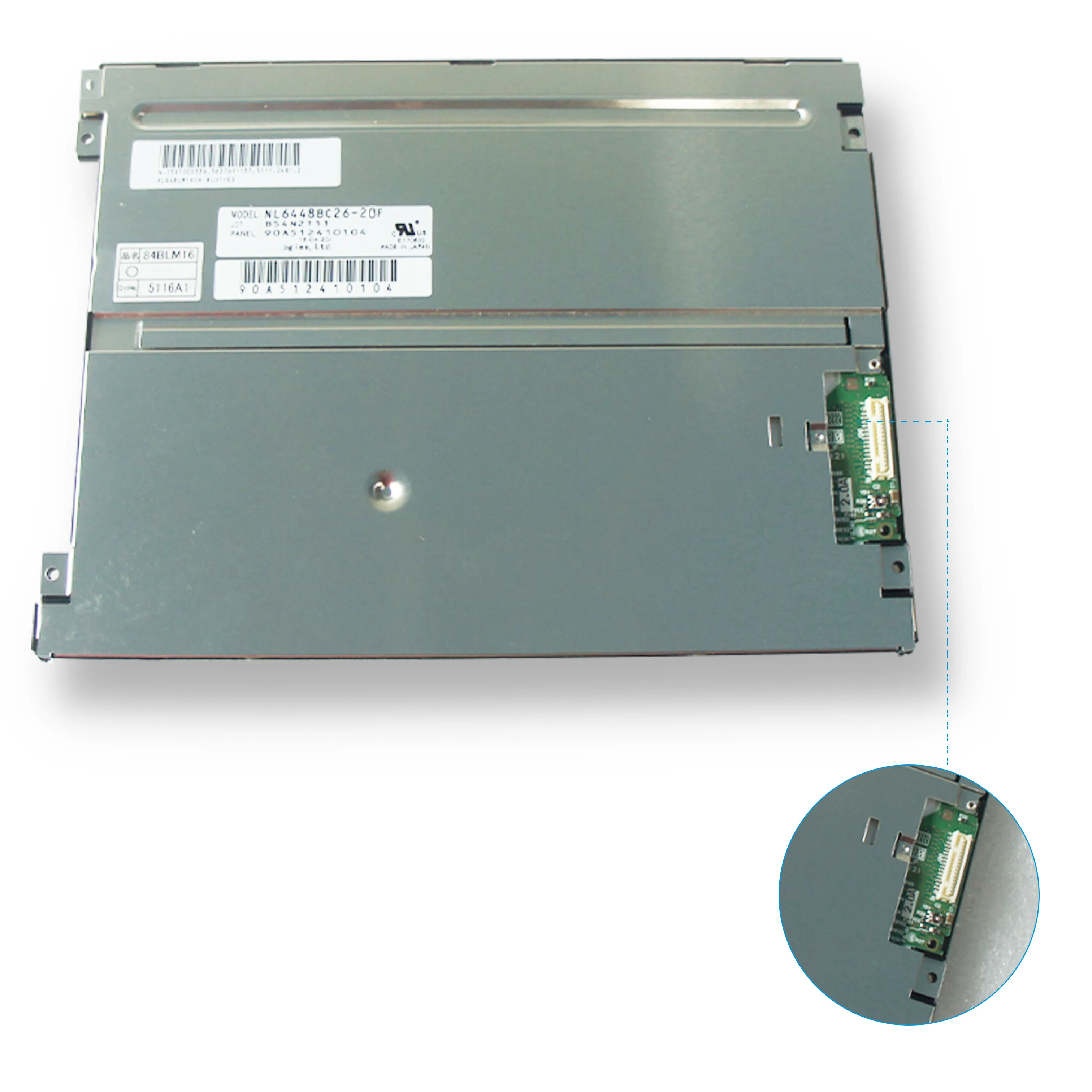

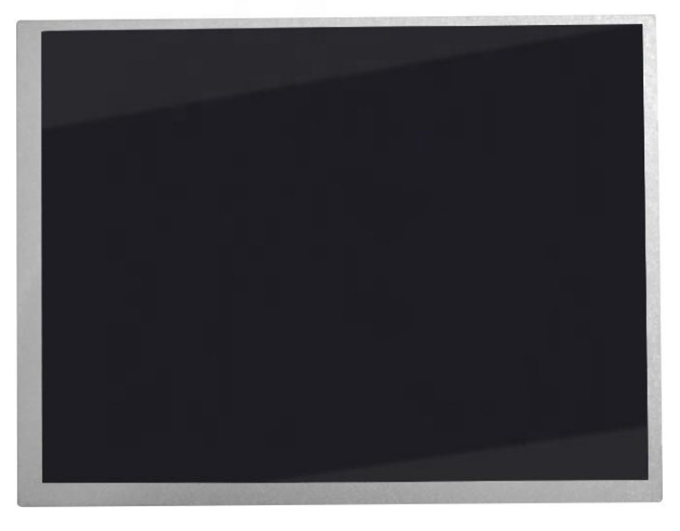
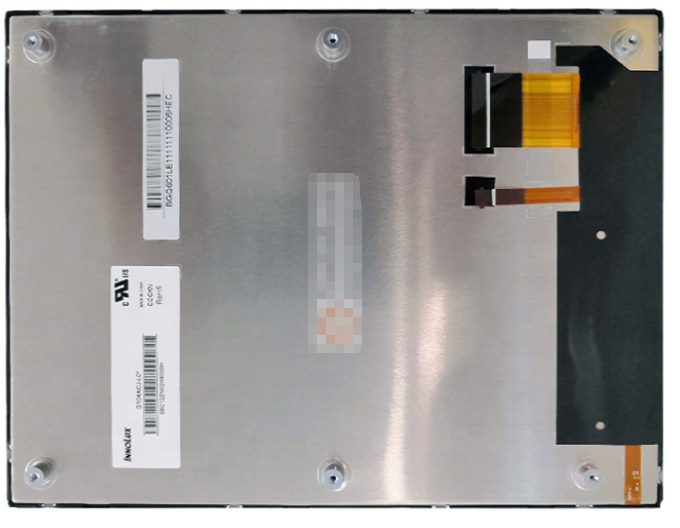
G104ACJ-L01 Innolux 10.4 inch 960*1280 TFT-LCD screen
In the intricate world of industrial and specialized display solutions, the choice of a screen is rarely about raw pixel count alone. It is a critical decision that impacts usability, reliability, and the overall performance of the end product. At the heart of many demanding applications, from medical devices to portable test equipment and industrial human-machine interfaces (HMIs), lies a component like the G104ACJ-L01, a 10.4-inch TFT-LCD module from Innolux. This specific panel, with its unconventional 960 x 1280 portrait-mode resolution, represents a fascinating case study in purpose-driven engineering.
This article delves deep into the G104ACJ-L01, moving beyond basic datasheet specifications to explore its unique value proposition. We will dissect the rationale behind its distinctive aspect ratio, examine its technical characteristics and performance envelope, and analyze the key interfaces that bring it to life. Furthermore, we will investigate its ideal application ecosystems, provide crucial integration guidelines for engineers, and finally, contextualize its position within the competitive landscape of industrial displays. Our goal is to provide a comprehensive resource that illuminates why this particular screen is not just another component, but a tailored solution for vertical markets where standard displays fall short.
The Rationale Behind the Portrait Orientation: More Than Just A Resolution
The most striking feature of the Innolux G104ACJ-L01 is its 960 (RGB) x 1280 resolution, which translates to a 3:4 aspect ratio in its native portrait orientation. This is a deliberate departure from the widescreen formats (16:9, 16:10) that dominate consumer electronics. The design is rooted in ergonomics and data presentation efficiency. Many professional and industrial applications are inherently vertical: patient charts in medical monitors, lengthy lists of parameters in control systems, diagnostic readouts, or digital manuals.
A portrait screen aligns with the natural top-to-bottom flow of information, reducing excessive scrolling and presenting more contiguous data at a glance. This orientation also often leads to a more compact physical footprint for the device housing it, which is crucial for portable or bench-top equipment. The choice of 960x1280 provides a sharp pixel density for a 10.4-inch diagonal, ensuring text and fine graphics are rendered with clarity, while balancing the cost and power consumption associated with higher-resolution panels. It is a resolution born from function, not fashion.
Technical Deep Dive: Core Specifications and Performance
At its core, the G104ACJ-L01 is an a-Si TFT LCD module with an LED backlight system. Its 10.4-inch active area delivers a brightness typically ranging from 500 to 1000 nits, allowing for readability in various ambient lighting conditions, including brightly lit industrial floors. The contrast ratio and color performance are tailored for reliability and accuracy rather than vibrant multimedia consumption.
Key performance parameters include its wide operating temperature range, a critical factor for industrial and medical-grade equipment that must function in non-climate-controlled environments. The viewing angles, particularly in the vertical direction given its portrait use, are optimized to ensure minimal color shift when viewed from above or below. Furthermore, the module often incorporates robust mechanical design features to withstand vibration and shock, and may offer enhanced reliability ratings for long-term, 24/7 operation—a non-negotiable requirement in many of its target applications.
Interface and Integration: The LVDS Connection
The G104ACJ-L01 typically utilizes an LVDS (Low-Voltage Differential Signaling) interface. This choice is significant. LVDS has long been the industry standard for robust, noise-resistant data transmission in industrial and automotive displays. It offers a reliable method for high-speed data transfer from the system's graphics controller to the LCD panel over a twisted-pair cable, minimizing electromagnetic interference (EMI)—a common concern in electrically noisy industrial environments.
For integrators, understanding the pinout, power sequence, and signal timing of this LVDS interface is paramount. The module requires specific power supply voltages for the logic board and the LED backlight, which must be sequenced correctly to prevent damage. Successful integration hinges on meticulously following Innolux's controller board specification and potentially utilizing a compatible timing controller (TCON) or fully validated driver board to ensure stable and flicker-free operation.
Target Applications and Ecosystem Fit
The unique attributes of the G104ACJ-L01 carve out a clear niche. Its primary applications are found in B2B and professional sectors where reliability and form-factor are paramount:
Medical Diagnostic Equipment: Portable ultrasound machines, patient monitors, and diagnostic stations benefit from the portrait layout for displaying vital sign trends and medical imagery.
Industrial HMI & Control Panels: Factory automation interfaces, PLC control screens, and test/measurement devices use the vertical format to present multi-level menus, data logs, and control parameters efficiently.
Transportation & Avionics: In-vehicle information systems, rear-seat displays, or auxiliary cockpit panels where space is constrained and information is often structured vertically.
Specialized POS/Kiosks: Certain retail or information kiosks designed for forms, documents, or list-based interactions.
Design Considerations and Integration Challenges
Integrating the G104ACJ-L01 into a product requires careful planning. Mechanical designers must account for its portrait mounting, ensuring proper bezel support and heat dissipation. The optical bonding option, often available for such panels, is a critical consideration; it enhances readability in high-ambient-light conditions by reducing glare and internal reflection, and improves durability by laminating the touchscreen (if used) directly to the LCD.
Electrical design must address power integrity, EMI shielding for the LVDS lines, and potentially the integration of a touch controller (commonly resistive or projective capacitive for these applications). Firmware and driver development must be configured for the native portrait resolution to avoid software rotation overhead and potential degradation in image quality. Sourcing and lifecycle are also key, as industrial products often have longer production runs than consumer gadgets, requiring stable component availability.
Market Context and Alternative Considerations
While the G104ACJ-L01 is a strong contender, the market offers alternatives. Competing panels from manufacturers like AUO or Panasonic may offer similar specifications with slight variations in brightness, interface (some may move to eDP), or mechanical dimensions. The decision often comes down to specific supply chain relationships, cost at volume, and exact technical compliance.
Furthermore, the landscape is evolving. The rise of open-frame monitors and system-on-chip (SoC) solutions with integrated display drivers can simplify integration. However, for a known, reliable, and application-specific solution, a validated module like the G104ACJ-L01 offers a lower-risk path. It represents a mature, optimized component for a well-defined set of challenges, standing in contrast to the rapid-iteration, consumer-grade display market.
FAQs: Innolux G104ACJ-L01 10.4-inch LCD Screen
Conclusion
The Innolux G104ACJ-L01 10.4-inch TFT-LCD module exemplifies the principle that in specialized technology, the best solution is often the most purpose-fit one. Its defining portrait resolution is not an oddity but a thoughtful response to the ergonomic and data-flow requirements of professional vertical markets. Through its robust LVDS interface, wide operating specifications, and industrial-grade construction, it provides a reliable foundation for equipment where failure is not an option.
For engineers and product managers, selecting this screen goes beyond checking a box for a display; it is a strategic decision that influences device design, user experience, and long-term reliability. In a landscape cluttered with generic widescreen panels, the G104ACJ-L01 stands as a testament to targeted innovation, offering a clear, reliable, and efficient window for the data that drives critical decisions in medicine, industry, and beyond.