- Industrial LCD display
-
Industrial Products
- DC Servo Drive
- AC Servo Drive
- other
- Heidelberg
- FANUC
- IFM
- Meter
- CCD
- Membrane Keypad
- Film
- YOKOGAWA Module
- Card
- ABB
- MITSUBISHI
- FANUC
- KEYENCE
- BECKHOFF
- Honeywell
- HOLLYSYS
- FUJI servo drives
- HP
- solenoid valve
- thermostat
- Siemens adapter
- color oscilloscope
- Fujitsu connector
- CHELIC
- SMC
- CISCO Module
- INTEL
- Key board
- FAIRCHILD
- Motherboard
- Board
- Bearing
- other
- Control Panel
- Contactor
- Circuit
- OMRON
- Relay
- Controller
- Photoelectric Switch
- Photoelectric Sensor
- Original
- Fan
- Motor Driver
- Limit Switch
- Amplifier
- power supply
- LENZE
- Cable
- Encoder
- Sensor
- Transformer
- Fiber Optic Sensor
- Protection Relay
- Temperature Controller
- Proximity Switch
- Switch Sensor
- Siemens
- Industrial board
- HMI Touch Glass
-
HMI Full Machine Whole unit
- OMRON HMI Touch Panel
- Siemens HMI Touch Panel
- Mitsubishi HMI Touch Panel
- Allen-Bradley automation HMI Touch Panel
- DELTA HMI Touch Panel
- EVIEW DELTA HMI Touch Panel
- KINCO DELTA HMI Touch Panel
- HITECH HMI Touch Panel
- WEINTECK HMI Touch Panel
- TECVIEW HMI Touch Panel
- WEINVIEW HMI Touch Panel
- PRO-FACE HMI Touch Panel
- SIMATIC HMI Touch Panel
- AMPIRE HMI Touch Panel
- HEIDELBERG HMI Touch Panel
- PANASONIC HMI Touch Panel
- PATLITE HMI Touch Panel
- KYOCERA HMI Touch Panel
- KEYENCE HMI Touch Panel
- WEINVIEW HMI Touch Panel
- HITECH HMI Touch Panel
- FUJI HMI Touch Panel
- HAKKO HMI Touch Panel
- SCHNEIDER HMI Touch Panel
- SAMKOON touch panel
- other
- Module
- lcd inverter
- Membrane Keypad Switch
- Winni Touch Screens
- Frequency Inverter
- Servo Motor
- PLC


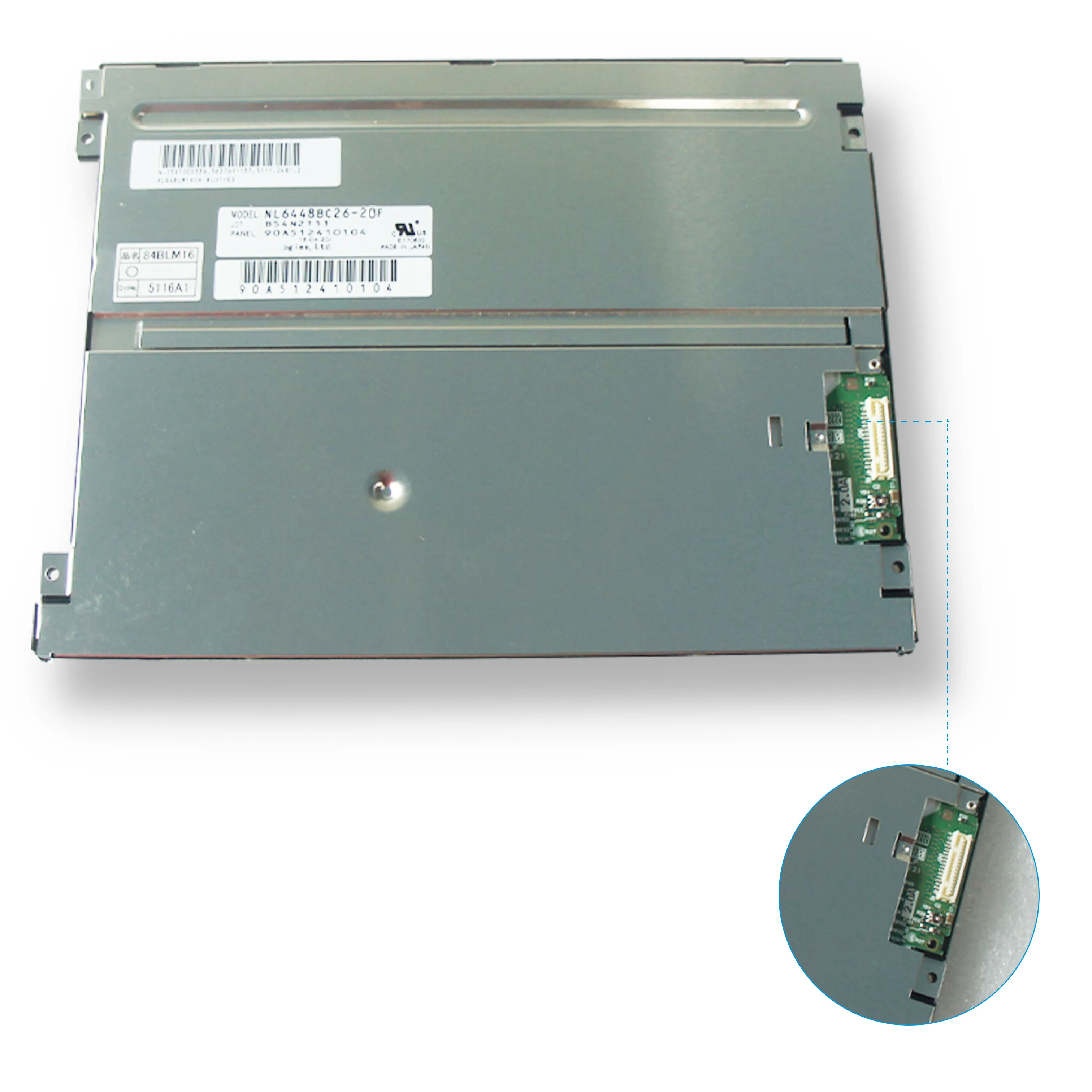

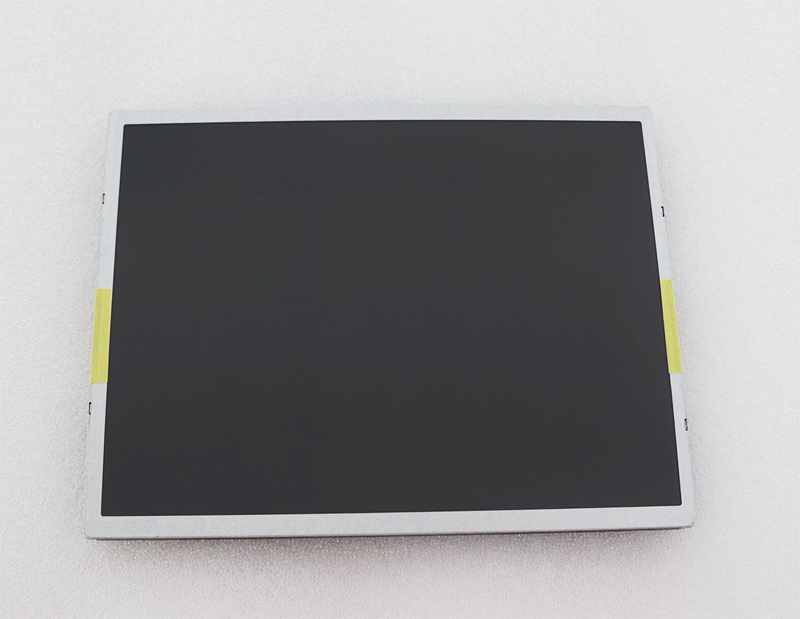
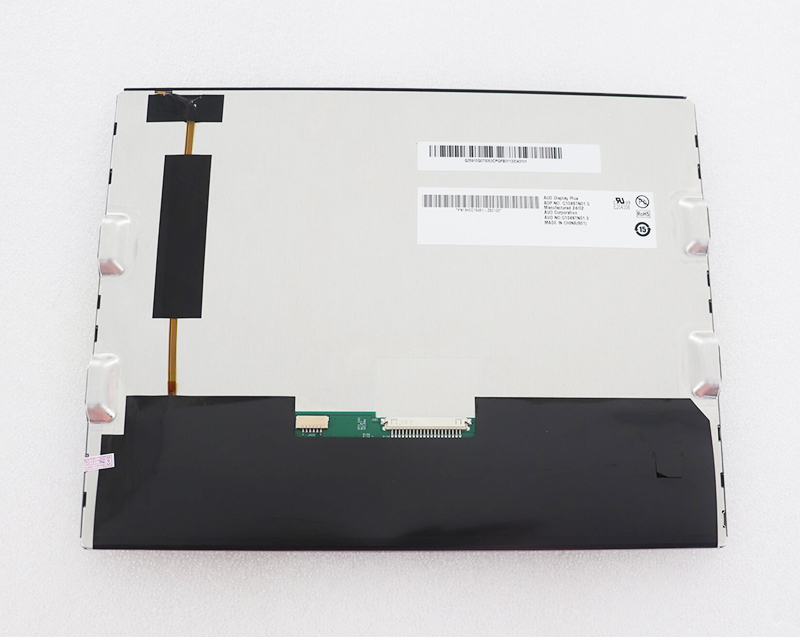
G104STN01.5 AUO 10.4" TFT-LCD screen 800*600 Display
In the intricate world of industrial and embedded display solutions, the choice of a screen is rarely about flashy specs alone. It hinges on reliability, compatibility, and the precise fulfillment of a specific technical role. The G104STN01.5 by AUO (AU Optronics) stands as a quintessential example of such a component—a 10.4-inch TFT-LCD module engineered not for consumer glamour, but for steadfast performance in demanding environments. With a resolution of 800 x 600 pixels (SVGA) and an STN-derived display technology, it represents a mature, trusted standard in a landscape increasingly dominated by high-resolution panels.
This article delves into a comprehensive technical exploration of the G104STN01.5 display. We will move beyond the basic datasheet parameters to understand its core technology, the implications of its design choices, and its ideal application scenarios. From decoding its model number and interface logic to comparing it with modern alternatives, we aim to provide engineers, procurement specialists, and technology integrators with the depth of knowledge required to make an informed decision on whether this display is the optimal solution for their next project.
Decoding the G104STN01.5: Model Number and Core Specifications
The model name G104STN01.5 is a concise blueprint of the display's identity. 'G' often denotes AUO's industrial-grade product line. '104' signifies a 10.4-inch diagonal screen size. 'STN' is the critical clue, referring to Super-Twisted Nematic technology, a variant of passive-matrix LCDs. The '01.5' typically indicates a specific revision or version of the panel. The core specification is its 800 x 600 SVGA resolution, yielding a pixel pitch of approximately 0.264mm x 0.264mm. This resolution, while considered low by today's consumer standards, offers distinct advantages in industrial contexts: larger, more legible UI elements, lower processing power requirements, and reduced cost.
Other foundational specs include a landscape-oriented 4:3 aspect ratio, a contrast ratio typically around 300:1, and a brightness level in the range of 250-300 nits. The color depth is usually 18-bit (262K colors), providing sufficient color representation for most industrial HMI, instrumentation, and control system interfaces. Understanding these baseline figures is the first step in assessing its fit for purpose.
The STN Technology Advantage: Stability and Legacy Compatibility
Unlike the active-matrix (TFT) technology prevalent in smartphones and monitors, STN is a passive-matrix technology. In the G104STN01.5, it's implemented in a refined, color-capable form. The key advantage of STN in such applications is its exceptional stability and lower power consumption compared to early-generation TFTs. It is less susceptible to image sticking or burn-in under static display conditions—a common issue in process control screens showing fixed graphics for extended periods.
Furthermore, this display serves as a direct legacy replacement component. Many industrial machines, medical devices, and point-of-sale systems designed in the late 1990s and early 2000s were built around STN-type 10.4" SVGA panels. The G104STN01.5 offers a reliable, drop-in upgrade path for maintaining and refurbishing this vast installed base, ensuring system longevity without costly software or controller redesigns.
Interface and Integration: The LVDS Connection Standard
The G104STN01.5 utilizes a Low-Voltage Differential Signaling (LVDS) interface. This is a critical feature for industrial integration. LVDS is a robust, noise-resistant digital transmission standard ideal for environments with electromagnetic interference. It uses differential pairs to transmit data, minimizing signal degradation over the typical cable lengths found in equipment assembly.
The module commonly features a single-channel LVDS input with a standard 20-pin or 30-pin connector. This interface carries the pixel clock, data enable signals, and the RGB data lines. Integrators must ensure their system's graphics controller or single-board computer supports LVDS output with a matching voltage (often 3.3V) and a timing controller (T-Con) configuration compatible with the panel's native resolution and refresh rate. This plug-and-play compatibility, given the right cable, simplifies the mechanical and electrical integration process.
Optical Characteristics and Viewing Performance
The optical performance of the G104STN01.5 is tailored for functional readability rather than wide-angle entertainment. Its viewing angles are typically around 45/45/20/35 degrees (Left/Right/Up/Down), which is sufficient for a screen often viewed directly head-on in a cabinet or machine. The brightness of ~250 nits is adequate for indoor, controlled-lighting environments common in factories, labs, or retail settings.
The backlight system is usually CCFL (Cold Cathode Fluorescent Lamp), a technology now largely succeeded by LED in newer panels. CCFL provides even, diffuse illumination but has a finite lifespan (often rated at 20,000-50,000 hours) and requires an inverter for power. When used in refurbishment, the backlight condition is a key consideration, though replacement CCFL tubes and inverters are widely available.
Typical Application Scenarios and Use Cases
Industrial Human-Machine Interfaces (HMIs): For factory automation, PLC control screens, and CNC machine operator panels.
Medical Equipment: In patient monitoring devices, diagnostic instruments, and older medical imaging systems.
Point-of-Sale (POS) and Kiosks: As the display for retail terminals, self-service kiosks, and hospitality systems.
Transportation and Avionics: In vehicle information displays and legacy aircraft instrumentation (subject to specific qualifications).
Test and Measurement Equipment: As the integrated screen for oscilloscopes, signal generators, and network analyzers.
Market Context and Modern Alternatives
In today's market, the G104STN01.5 occupies a specific niche. It is not a cutting-edge panel but a mature, cost-effective solution for specific problems. Modern alternatives for a 10.4-inch format would predominantly be active-matrix TFT-LCDs with LED backlights, higher resolutions (1024x768 XGA or 1280x800 WXGA), wider viewing angles (IPS technology), and lower power consumption.
The decision to choose the G104STN01.5 often boils down to direct compatibility with existing hardware/controller designs, lower BOM cost for price-sensitive projects, or the need for its specific STN performance characteristics. For new designs, engineers would likely opt for a modern LED-backlit TFT for better overall performance, unless explicitly constrained by legacy system requirements.
Frequently Asked Questions (FAQs)
Q10: For a new design, should I choose this or a modern TFT?A10: For a new design, a modern LED-backlit TFT with wider viewing angles and higher resolution is generally recommended unless you have strict legacy compatibility or specific cost constraints that favor the G104STN01.5.
Conclusion
In a rapidly evolving technological landscape, understanding such components is crucial for effective system maintenance, cost management, and informed design choices. Whether you are sourcing a drop-in replacement to extend the life of critical equipment or evaluating display options for a cost-sensitive project, the G104STN01.5 stands as a testament to the enduring importance of tailored, robust engineering in the embedded world.