- Industrial LCD display
-
Industrial Products
- DC Servo Drive
- AC Servo Drive
- other
- Heidelberg
- FANUC
- IFM
- Meter
- CCD
- Membrane Keypad
- Film
- YOKOGAWA Module
- Card
- ABB
- MITSUBISHI
- FANUC
- KEYENCE
- BECKHOFF
- Honeywell
- HOLLYSYS
- FUJI servo drives
- HP
- solenoid valve
- thermostat
- Siemens adapter
- color oscilloscope
- Fujitsu connector
- CHELIC
- SMC
- CISCO Module
- INTEL
- Key board
- FAIRCHILD
- Motherboard
- Board
- Bearing
- other
- Control Panel
- Contactor
- Circuit
- OMRON
- Relay
- Controller
- Photoelectric Switch
- Photoelectric Sensor
- Original
- Fan
- Motor Driver
- Limit Switch
- Amplifier
- power supply
- LENZE
- Cable
- Encoder
- Sensor
- Transformer
- Fiber Optic Sensor
- Protection Relay
- Temperature Controller
- Proximity Switch
- Switch Sensor
- Siemens
- Industrial board
- HMI Touch Glass
-
HMI Full Machine Whole unit
- OMRON HMI Touch Panel
- Siemens HMI Touch Panel
- Mitsubishi HMI Touch Panel
- Allen-Bradley automation HMI Touch Panel
- DELTA HMI Touch Panel
- EVIEW DELTA HMI Touch Panel
- KINCO DELTA HMI Touch Panel
- HITECH HMI Touch Panel
- WEINTECK HMI Touch Panel
- TECVIEW HMI Touch Panel
- WEINVIEW HMI Touch Panel
- PRO-FACE HMI Touch Panel
- SIMATIC HMI Touch Panel
- AMPIRE HMI Touch Panel
- HEIDELBERG HMI Touch Panel
- PANASONIC HMI Touch Panel
- PATLITE HMI Touch Panel
- KYOCERA HMI Touch Panel
- KEYENCE HMI Touch Panel
- WEINVIEW HMI Touch Panel
- HITECH HMI Touch Panel
- FUJI HMI Touch Panel
- HAKKO HMI Touch Panel
- SCHNEIDER HMI Touch Panel
- SAMKOON touch panel
- other
- Module
- lcd inverter
- Membrane Keypad Switch
- Winni Touch Screens
- Frequency Inverter
- Servo Motor
- PLC



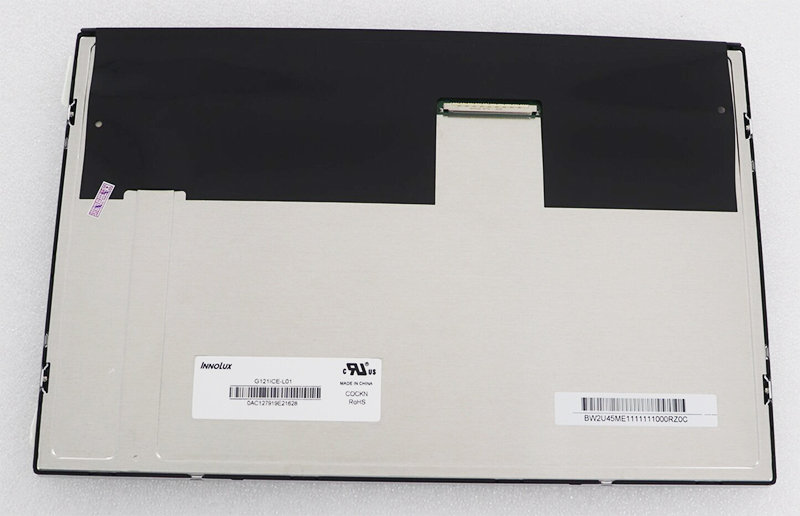
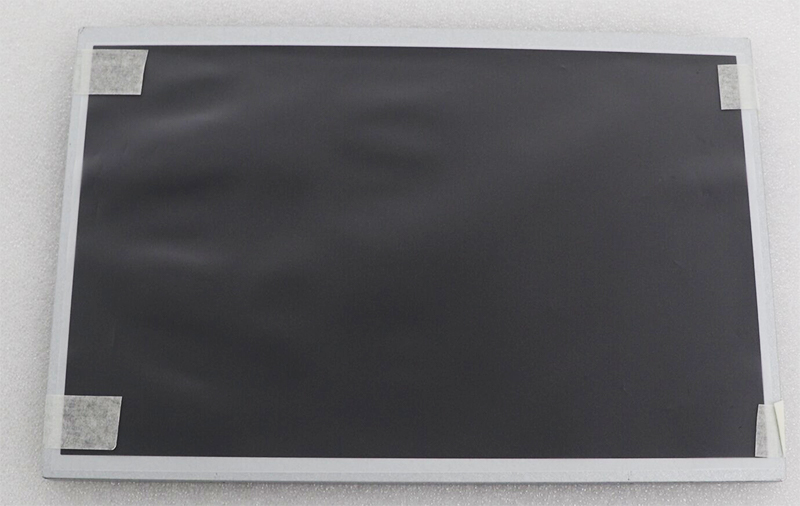
G121ICE-L01 new 12.1 inch 1280*800 LCD Screen Display
In the ever-evolving landscape of digital display technology, the introduction of a new panel often signals a leap in application possibilities and user experience refinement. The G121ICE-L01, a new 12.1-inch LCD screen with a resolution of 1280 x 800 pixels (WXGA), stands as a compelling component designed to bridge the gap between compact form factor and functional clarity. This display module is not merely a specification sheet; it represents a carefully engineered solution aimed at specific industrial, commercial, and embedded applications where reliability, readability, and integration are paramount.
As devices become smarter and interfaces more interactive, the demand for robust and high-performance displays in non-consumer environments has surged. The G121ICE-L01 enters this space, promising a blend of traditional LCD durability with modern interface support. This article will delve deep into the technical architecture, performance characteristics, and ideal use cases for this panel, providing engineers, product designers, and procurement specialists with a comprehensive understanding of its potential to enhance their next-generation projects.
Technical Architecture and Core Specifications
At the heart of the G121ICE-L01 lies a Twisted Nematic (TN) or potentially an Advanced Fringe Field Switching (AFFS) LCD panel, engineered for a balance of cost-effectiveness and performance. The 12.1-inch diagonal active area provides a substantial viewing canvas while maintaining a compact footprint. The native resolution of 1280 x 800 (WXGA) offers a 16:10 aspect ratio, which provides more vertical space compared to the common 16:9 ratio, beneficial for viewing documents, diagnostic interfaces, or control panels.
The module typically incorporates a standard LVDS (Low-Voltage Differential Signaling) interface, ensuring robust signal integrity and resistance to noise, which is critical in electrically complex environments. Key specifications include a defined range of brightness (often around 300-400 nits), a contrast ratio suitable for indoor use, and a color gamut covering a significant portion of the sRGB standard. Understanding these foundational specs is crucial for evaluating its compatibility with existing system controllers and environmental conditions.
Performance Analysis: Brightness, Contrast, and Viewing Angles
Performance in real-world conditions separates adequate displays from exceptional ones. The brightness level of the G121ICE-L01, typically calibrated for indoor use, ensures legibility under standard office or industrial lighting without excessive power draw. The contrast ratio defines the depth between the darkest black and the brightest white, impacting text sharpness and image clarity. For a panel of this class, the contrast is engineered to support detailed monochrome or color graphics essential for HMIs (Human-Machine Interfaces).
Viewing angle performance is a critical differentiator. While traditional TN panels may exhibit color shift at extreme angles, advanced versions or AFFS technology aim to widen these angles significantly, often to 160 degrees or more horizontally and vertically. This ensures that information on the screen remains consistent and accurate for operators viewing from off-center positions, a common scenario in kiosks, medical devices, or factory floor equipment.
Durability and Reliability for Demanding Environments
The G121ICE-L01 is built not for the living room, but for environments where stability is non-negotiable. Its construction often involves a robust metal frame and cover glass options that provide resistance to vibration, minor impacts, and environmental contaminants. Extended temperature range operation is a hallmark of such industrial-grade displays, allowing functionality in both chilled and high-ambient-temperature settings without image lag or failure.
Long-term reliability is ensured through the use of high-grade LEDs for backlighting, offering a long lifespan and consistent luminance over time. The design also focuses on minimizing electromagnetic interference (EMI), which is vital for integration into sensitive electronic systems. This inherent durability translates to lower total cost of ownership, reduced downtime, and trusted performance in critical applications from transportation to automated retail.
Interface and Integration Considerations
Seamless integration is key to adopting any new display module. The G121ICE-L01's standard LVDS interface simplifies connection to a wide array of single-board computers (SBCs) and embedded controllers that support this ubiquitous standard. Designers must consider the pin configuration, power requirements (often 3.3V or 5V), and the need for a compatible controller board (often called a timing controller or T-Con board) to translate video signals.
Furthermore, the mechanical integration—including mounting holes, bezel dimensions, and overall thickness—is designed for straightforward implementation into chassis and enclosures. The availability of touch panel options, such as resistive or projected capacitive (PCAP), adds a layer of interactivity. Selecting the right touch technology depends on the use case: resistive for gloved operation or stylus input, and PCAP for multi-touch, finger-driven gestures.
Comparative Advantage in the Market Landscape
Positioned within a crowded field of display options, the G121ICE-L01 carves its niche through a specific value proposition. Compared to consumer-grade panels, it offers superior durability and wider operating temperature ranges. Against smaller displays, the 12.1-inch size with WXGA resolution provides an optimal information density without requiring excessive scaling, which can degrade image quality.
When evaluated against higher-resolution panels of similar size, its advantage lies in lower system cost and reduced processing power requirements. The 1280x800 resolution is sufficiently detailed for most industrial UI applications while being less demanding on the host system's GPU and data bandwidth. This makes it an economically and technically efficient choice for refurbishing legacy systems or deploying new, cost-sensitive embedded solutions that do not require 4K visuals.
Target Applications and Industry Use Cases
The true test of a component is its application. The G121ICE-L01 finds its home in a diverse array of sectors. In industrial automation, it serves as the primary interface for PLCs, CNC machine controls, and SCADA systems, where clarity and reliability are safety-critical. The medical device industry utilizes it in patient monitoring equipment and diagnostic instruments, benefiting from its stable performance and cleanability.
Transportation and logistics leverage this display in vehicle telematics, forklift dashboards, and airport information kiosks. Its ability to withstand temperature fluctuations and vibration is key here. Additionally, it powers point-of-sale (POS) terminals, self-service kiosks, and gaming machines, where consistent uptime and user interaction are drivers of customer satisfaction and operational efficiency.
FAQs: G121ICE-L01 12.1-Inch LCD Display
10. What industries most commonly use this display module?Key industries include industrial automation, medical technology, transportation, point-of-sale systems, and various embedded computing applications.
Conclusion
The G121ICE-L01 12.1-inch WXGA LCD display emerges as a specialized tool in the engineer's arsenal, meticulously crafted to meet the rigorous demands of professional and industrial applications. Its value proposition is clear: deliver reliable, clear visual output in a compact and durable form factor, supported by a ubiquitous interface for straightforward integration. This analysis has moved beyond mere specifications to explore the performance nuances, environmental resilience, and practical integration pathways that define its real-world utility.
In a market oscillating between cost-sensitive solutions and ultra-high-performance panels, the G121ICE-L01 occupies a strategic middle ground. It provides a future-proof balance of sufficient resolution, robust construction, and operational stability. For product developers and system integrators aiming to build devices that perform consistently day in and day out, this display module represents a dependable choice that prioritizes long-term functionality over fleeting technological trends, ultimately contributing to the creation of more reliable and effective digital interfaces across countless industries.