- Industrial LCD display
-
Industrial Products
- DC Servo Drive
- AC Servo Drive
- other
- Heidelberg
- FANUC
- IFM
- Meter
- CCD
- Membrane Keypad
- Film
- YOKOGAWA Module
- Card
- ABB
- MITSUBISHI
- FANUC
- KEYENCE
- BECKHOFF
- Honeywell
- HOLLYSYS
- FUJI servo drives
- HP
- solenoid valve
- thermostat
- Siemens adapter
- color oscilloscope
- Fujitsu connector
- CHELIC
- SMC
- CISCO Module
- INTEL
- Key board
- FAIRCHILD
- Motherboard
- Board
- Bearing
- other
- Control Panel
- Contactor
- Circuit
- OMRON
- Relay
- Controller
- Photoelectric Switch
- Photoelectric Sensor
- Original
- Fan
- Motor Driver
- Limit Switch
- Amplifier
- power supply
- LENZE
- Cable
- Encoder
- Sensor
- Transformer
- Fiber Optic Sensor
- Protection Relay
- Temperature Controller
- Proximity Switch
- Switch Sensor
- Siemens
- Industrial board
- HMI Touch Glass
-
HMI Full Machine Whole unit
- OMRON HMI Touch Panel
- Siemens HMI Touch Panel
- Mitsubishi HMI Touch Panel
- Allen-Bradley automation HMI Touch Panel
- DELTA HMI Touch Panel
- EVIEW DELTA HMI Touch Panel
- KINCO DELTA HMI Touch Panel
- HITECH HMI Touch Panel
- WEINTECK HMI Touch Panel
- TECVIEW HMI Touch Panel
- WEINVIEW HMI Touch Panel
- PRO-FACE HMI Touch Panel
- SIMATIC HMI Touch Panel
- AMPIRE HMI Touch Panel
- HEIDELBERG HMI Touch Panel
- PANASONIC HMI Touch Panel
- PATLITE HMI Touch Panel
- KYOCERA HMI Touch Panel
- KEYENCE HMI Touch Panel
- WEINVIEW HMI Touch Panel
- HITECH HMI Touch Panel
- FUJI HMI Touch Panel
- HAKKO HMI Touch Panel
- SCHNEIDER HMI Touch Panel
- SAMKOON touch panel
- other
- Module
- lcd inverter
- Membrane Keypad Switch
- Winni Touch Screens
- Frequency Inverter
- Servo Motor
- PLC


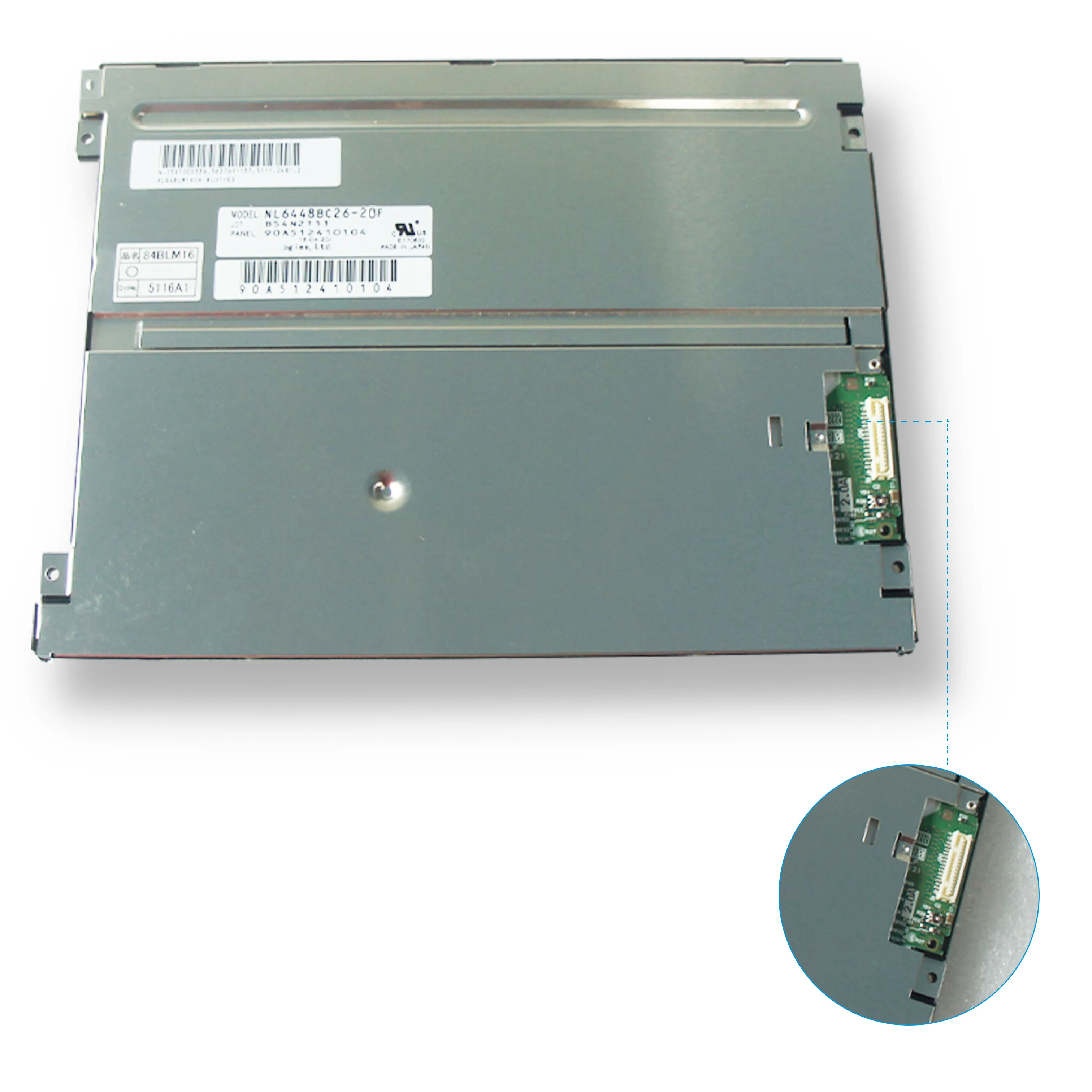

G121S1-L01 12.1 inch 800×600 lcd screen sales for industrial screen
In the demanding world of industrial technology, the display is often the critical interface between complex machinery and human operators. The selection of a screen is not merely a matter of size or resolution; it is a strategic decision impacting reliability, readability, and long-term operational efficiency. Among the specialized components serving this sector, the G121S1-L01 12.1-inch 800×600 LCD screen has established itself as a significant solution. This particular model, with its specific 4:3 aspect ratio and SVGA resolution, is engineered to meet the rigorous demands of environments where consumer-grade displays would rapidly fail.
This article delves into the technical specifications, application landscapes, and key selection criteria for the G121S1-L01 industrial LCD screen. We will explore why its seemingly modest resolution is a strength in industrial contexts, examine its robust construction features, and identify the diverse sectors where it proves indispensable. For engineers, procurement specialists, and system integrators, understanding the nuances of this component is essential for building durable and effective human-machine interfaces (HMIs).
Decoding the Specifications: Why 800×600 SVGA Matters
The G121S1-L01 features a 12.1-inch diagonal display with an 800×600 pixel resolution, commonly known as SVGA. In an era of 4K and ultra-high-definition consumer screens, this specification might appear outdated. However, in industrial automation, this perception is misleading. The 4:3 aspect ratio is a legacy standard for many machine control systems, PLC interfaces, and legacy software applications. Using a screen with this native ratio eliminates scaling artifacts or black bars, ensuring pixel-perfect rendering of crucial control graphics and text.
Furthermore, the 800×600 resolution offers exceptional clarity for character and schematic display without imposing excessive processing load on the often-embedded industrial computing units. The lower pixel count, compared to high-resolution panels, can also contribute to enhanced reliability and longevity, as the driving electronics are less complex and generate less heat. This makes the G121S1-L01 not a compromise, but an optimized solution for functional readability in controlled viewing environments.


Built for Endurance: Ruggedized Design and Environmental Resilience
What truly distinguishes an industrial screen from a commercial one is its construction. The G121S1-L01 is designed to operate reliably in conditions that would degrade or destroy standard displays. Key ruggedized features typically include a wide operating temperature range, often from -20°C to 70°C or beyond, allowing deployment in unheated warehouses or near heat-generating machinery. It incorporates high-brightness LED backlighting, frequently exceeding 500 nits, to ensure viewability under direct sunlight or bright factory lighting.
Physically, these modules are built to resist vibration, shock, and electromagnetic interference (EMI). The glass surface is often chemically strengthened or laminated, and the entire assembly is sealed to protect against dust and moisture ingress, sometimes meeting IP65 or similar ratings. This resilience ensures continuous operation in settings like manufacturing floors, outdoor kiosks, transportation systems, and agricultural equipment, where downtime is not an option.
Core Application Sectors: Where This Screen Excels
The application portfolio for the G121S1-L01 is vast, centered on any scenario requiring a durable, reliable, and clear display for monitoring or control. A primary domain is Industrial Automation and HMI. It is integrated into control panels for CNC machines, packaging lines, robotic workcells, and process control systems, providing operators with real-time data and touch interfaces.
In Transportation and Fleet Management, it serves as the display for vehicle telematics systems, onboard diagnostics for construction or agricultural vehicles, and passenger information systems in buses or trains. The Medical and Laboratory Equipment sector utilizes such screens in devices where consistent performance and clear readouts of diagnostic data are paramount. Other key areas include point-of-sale (POS) systems in harsh retail environments, building automation control panels, and specialized military or marine equipment.
Interface and Integration: Ensuring System Compatibility
Successful integration of the G121S1-L01 into an end product requires careful attention to its interface. This module typically uses an LVDS (Low-Voltage Differential Signaling) interface, a standard for transmitting high-speed video data with low noise and power consumption in embedded systems. Understanding the pin configuration, power requirements (often 3.3V or 5V), and backlight driving method (e.g., LED driver current) is crucial for engineers.
Additionally, many industrial screens offer optional integrated resistive or capacitive touch panels, such as the G121S1-L01 might be paired with. Selecting the right touch technology—resistive for use with gloves or stylus, capacitive for multi-touch and better clarity—is a vital part of the specification. Proper integration involves not just electrical connection but also mechanical mounting, considering bezel dimensions, mounting hole patterns, and heat dissipation.
Critical Selection Factors Beyond the Datasheet
While technical specifications are the starting point, several practical factors dictate the final selection. Supply Chain Longevity and Support are paramount in industrial design, where product lifecycles span decades. Choosing a screen model with a guaranteed long-term supply from the manufacturer or a reputable distributor like SZS prevents future redesigns. Customization Options can also be critical; some suppliers offer modifications like different connector placements, specific touchscreen integrations, or custom firmware for brightness control.
Equally important is evaluating the total cost of ownership. This includes not just the unit price, but the reliability that minimizes field failures, the quality of technical support for integration issues, and the availability of compatible accessories like controller boards or cables. A slightly higher upfront cost for a proven, reliable module often results in significantly lower lifecycle costs.
The Future Context: Niche Stability in an Evolving Market
The display technology market relentlessly advances towards higher resolutions and new form factors. However, the niche for specialized industrial screens like the G121S1-L01 remains stable and essential. The driving force in industrial sectors is not chasing consumer trends but ensuring interoperability, reliability, and longevity. Legacy machines still in operation for 15-20 years will require replacement screens that are exact form-fit-function matches.
Future iterations may see improvements in power efficiency, even wider temperature ranges, or enhanced optical bonding techniques to further reduce glare. However, the core value proposition—a rugged, purpose-built display for a specific set of professional tasks—will endure. This screen represents not outdated technology, but mature and optimized technology for a critical segment of the global economy.
FAQs: G121S1-L01 12.1-Inch Industrial LCD Screen
10. Where can I purchase the G121S1-L01 screen?It is available through specialized industrial electronic component distributors, direct from manufacturers, or through partners like SZS, who can provide technical support and supply chain assurance.
Conclusion
The G121S1-L01 12.1-inch 800×600 LCD screen exemplifies the principle that in industrial engineering, the optimal component is not always the one with the highest specifications, but the one most precisely aligned with the application's demands. Its SVGA resolution and 4:3 aspect ratio are not limitations but targeted features ensuring compatibility and clarity. Its true value is forged in its rugged construction, capable of withstanding the environmental rigors of factories, vehicles, and field operations where failure is not an option.
Selecting such a display requires a holistic view that balances technical specs with practical concerns like long-term availability, integration support, and total cost of ownership. For system integrators and product designers, understanding these nuances is key to building interfaces that are not only functional but fundamentally reliable. In the interconnected landscape of industrial automation, a robust and dependable screen like the G121S1-L01 remains a cornerstone of effective human-machine communication.