- Industrial LCD display
-
Industrial Products
- DC Servo Drive
- AC Servo Drive
- other
- Heidelberg
- FANUC
- IFM
- Meter
- CCD
- Membrane Keypad
- Film
- YOKOGAWA Module
- Card
- ABB
- MITSUBISHI
- FANUC
- KEYENCE
- BECKHOFF
- Honeywell
- HOLLYSYS
- FUJI servo drives
- HP
- solenoid valve
- thermostat
- Siemens adapter
- color oscilloscope
- Fujitsu connector
- CHELIC
- SMC
- CISCO Module
- INTEL
- Key board
- FAIRCHILD
- Motherboard
- Board
- Bearing
- other
- Control Panel
- Contactor
- Circuit
- OMRON
- Relay
- Controller
- Photoelectric Switch
- Photoelectric Sensor
- Original
- Fan
- Motor Driver
- Limit Switch
- Amplifier
- power supply
- LENZE
- Cable
- Encoder
- Sensor
- Transformer
- Fiber Optic Sensor
- Protection Relay
- Temperature Controller
- Proximity Switch
- Switch Sensor
- Siemens
- Industrial board
- HMI Touch Glass
-
HMI Full Machine Whole unit
- OMRON HMI Touch Panel
- Siemens HMI Touch Panel
- Mitsubishi HMI Touch Panel
- Allen-Bradley automation HMI Touch Panel
- DELTA HMI Touch Panel
- EVIEW DELTA HMI Touch Panel
- KINCO DELTA HMI Touch Panel
- HITECH HMI Touch Panel
- WEINTECK HMI Touch Panel
- TECVIEW HMI Touch Panel
- WEINVIEW HMI Touch Panel
- PRO-FACE HMI Touch Panel
- SIMATIC HMI Touch Panel
- AMPIRE HMI Touch Panel
- HEIDELBERG HMI Touch Panel
- PANASONIC HMI Touch Panel
- PATLITE HMI Touch Panel
- KYOCERA HMI Touch Panel
- KEYENCE HMI Touch Panel
- WEINVIEW HMI Touch Panel
- HITECH HMI Touch Panel
- FUJI HMI Touch Panel
- HAKKO HMI Touch Panel
- SCHNEIDER HMI Touch Panel
- SAMKOON touch panel
- other
- Module
- lcd inverter
- Membrane Keypad Switch
- Winni Touch Screens
- Frequency Inverter
- Servo Motor
- PLC


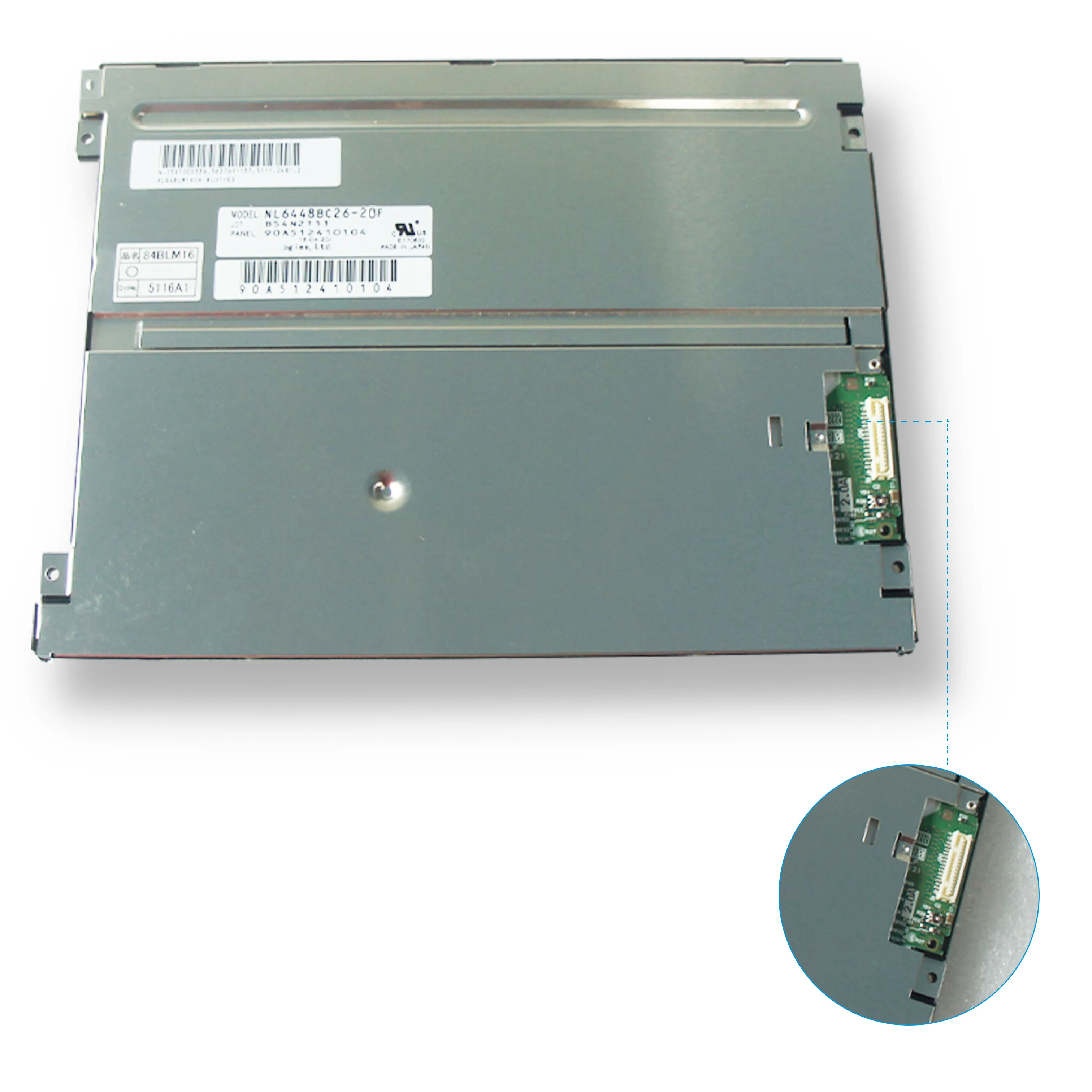

G121SN01 V402 AUO 12.1inch 800*600 LCD DISPLAY
In the intricate ecosystem of electronic components, certain parts become unsung heroes, powering critical applications away from the consumer spotlight. The G121SN01 V402, a 12.1-inch LCD display module manufactured by AUO (AU Optronics), is one such component. This display, with its specific 800 x 600 pixel resolution (SVGA), represents a carefully engineered solution designed not for flashy multimedia but for reliability, durability, and precision in demanding environments. While its specifications may seem modest compared to modern high-definition screens, this deliberate design choice is its greatest strength.
This article delves into a comprehensive technical and application analysis of the AUO G121SN01 V402 display. We will move beyond basic datasheet parameters to explore the engineering rationale behind its design, the niche markets it serves, and the key factors that make it a preferred choice for industrial and embedded system designers. Understanding this component is to understand the critical visual interface requirements of machines, medical devices, and specialized equipment where consistency trumps pixel density.
Decoding the Model: G121SN01 V402 Specifications Unveiled
The model name G121SN01 V402 is a concise data sheet in itself. 'G' often denotes AUO's industrial-grade panel series. '121' confirms the 12.1-inch diagonal screen size. The core specification is its 800 x 600 SVGA resolution, yielding a pixel pitch of approximately 0.3075mm x 0.3075mm. This results in a coarse but highly legible image, ideal for displaying text, numerical data, and schematic interfaces without the need for excessive scaling.
The module utilizes Twisted Nematic (TN) technology, chosen for its fast response times, high contrast ratio for monochrome data, and cost-effectiveness. It typically features a standard LVDS (Low-Voltage Differential Signaling) interface, ensuring robust signal transmission with low noise interference. The backlight is often a CCFL (Cold Cathode Fluorescent Lamp) system, though LED-backlit versions may exist, offering uniform brightness and a long operational lifespan crucial for 24/7 operations.
The Engineering Rationale Behind SVGA in an HD World
In an era dominated by 4K and beyond, the persistence of SVGA (800x600) might appear anachronistic. However, its continued use is a testament to fit-for-purpose engineering. For industrial human-machine interfaces (HMIs), medical monitors, and point-of-sale systems, information clarity and system stability are paramount. The lower resolution reduces the processing load on the often-embedded CPU, minimizes data transfer bandwidth requirements, and decreases system latency.
Furthermore, graphical user interfaces for these applications are designed with large buttons, clear fonts, and simple icons. A higher resolution would render these elements too small, defeating the purpose of quick, error-free readability, often in environments where operators may be at a distance or wearing gloves. The G121SN01 V402's resolution is a deliberate balance between sufficient information density and optimal human-factor ergonomics for its target use cases.
Core Applications: Where the G121SN01 Excels
The true value of the AUO G121SN01 V402 is realized in its application domains. It is a staple in industrial automation, serving as the primary interface for PLCs (Programmable Logic Controllers), CNC machine controls, and factory floor monitoring stations. Its rugged construction and stable performance under temperature fluctuations are critical here.
In the medical field, it finds use in diagnostic equipment, patient monitoring systems, and specialized instruments where consistent, flicker-free display of waveforms and numerical values is essential. Other key applications include transportation (in-vehicle information systems, fleet management), test and measurement equipment, and kiosks or POS terminals. In each scenario, reliability and longevity are prioritized over cinematic visual fidelity.
Critical Performance Parameters for System Integration
When integrating the G121SN01 V402 into a system, several parameters move beyond the datasheet into practical importance. Brightness (typically 300-400 nits) must be sufficient for environments with high ambient light. Viewing angles, a known limitation of TN technology, require careful consideration of the panel's mounting orientation to ensure the user is within the optimal cone of vision.
Operating temperature range (often from -20°C to 70°C) defines its environmental suitability. Power consumption and the associated thermal load impact overall system design. Finally, the mechanical interface—dimensions, bezel size, and mounting hole positions—must be precisely matched to the end product's chassis. Understanding these constraints is key to a successful implementation.


Comparative Landscape: TN vs. IPS and Alternative Sizes
While the G121SN01 V402 uses TN technology, designers often evaluate it against IPS (In-Plane Switching) panels. IPS offers vastly superior viewing angles and color reproduction but at a higher cost, with slightly slower response times and potentially higher power consumption. The choice hinges on the application: a multi-operator industrial station may benefit from IPS, while a fixed-angle medical monitor may not.
Similarly, the 12.1-inch size is part of a spectrum. Smaller sizes (10.4-inch) offer greater portability, while larger ones (15-inch) can display more concurrent data windows. The 12.1-inch form factor strikes a proven balance between information capacity and panel real estate, making it a standard "rack-mount" friendly size in many industries.
Sourcing, Compatibility, and Long-Term Availability
As a component designed for industrial product lifecycles, long-term supply is a major concern. The G121SN01 V402 may be available through authorized AUO distributors or specialized display module suppliers. A critical task is verifying pin-to-pin compatibility with potential alternative models from other manufacturers (like Innolux or BOE) to mitigate supply chain risk.
This involves meticulous comparison of not just the resolution and size, but the interface type (LVDS pinout), voltage requirements, backlight inverter specs, and mechanical footprint. Planning for the eventual end-of-life (EOL) of this specific module by designing for a compatible form factor is a best practice in embedded systems design.
FAQs: G121SN01 V402 LCD Display
10. Where can I source this display module?Through specialized electronic component distributors, display module suppliers, or potentially on B2B marketplaces that cater to industrial parts.
Conclusion
The AUO G121SN01 V402 is far more than a simple 12.1-inch screen; it is a purpose-built component engineered for durability, clarity, and reliability in mission-critical environments. Its SVGA resolution, rooted in TN technology, is not a limitation but a strategic design choice that aligns perfectly with the needs of industrial, medical, and embedded systems where information integrity and system stability are non-negotiable.
For engineers and procurement specialists, understanding this display involves appreciating the nuanced trade-offs between resolution, technology, environmental specs, and long-term supply chain logistics. In a world chasing higher pixels, the G121SN01 V402 stands as a robust testament to the principle that in specialized technology, the optimal solution is the one that most reliably performs its specific function over the longest period.