- Industrial LCD display
-
Industrial Products
- DC Servo Drive
- AC Servo Drive
- other
- Heidelberg
- FANUC
- IFM
- Meter
- CCD
- Membrane Keypad
- Film
- YOKOGAWA Module
- Card
- ABB
- MITSUBISHI
- FANUC
- KEYENCE
- BECKHOFF
- Honeywell
- HOLLYSYS
- FUJI servo drives
- HP
- solenoid valve
- thermostat
- Siemens adapter
- color oscilloscope
- Fujitsu connector
- CHELIC
- SMC
- CISCO Module
- INTEL
- Key board
- FAIRCHILD
- Motherboard
- Board
- Bearing
- other
- Control Panel
- Contactor
- Circuit
- OMRON
- Relay
- Controller
- Photoelectric Switch
- Photoelectric Sensor
- Original
- Fan
- Motor Driver
- Limit Switch
- Amplifier
- power supply
- LENZE
- Cable
- Encoder
- Sensor
- Transformer
- Fiber Optic Sensor
- Protection Relay
- Temperature Controller
- Proximity Switch
- Switch Sensor
- Siemens
- Industrial board
- HMI Touch Glass
-
HMI Full Machine Whole unit
- OMRON HMI Touch Panel
- Siemens HMI Touch Panel
- Mitsubishi HMI Touch Panel
- Allen-Bradley automation HMI Touch Panel
- DELTA HMI Touch Panel
- EVIEW DELTA HMI Touch Panel
- KINCO DELTA HMI Touch Panel
- HITECH HMI Touch Panel
- WEINTECK HMI Touch Panel
- TECVIEW HMI Touch Panel
- WEINVIEW HMI Touch Panel
- PRO-FACE HMI Touch Panel
- SIMATIC HMI Touch Panel
- AMPIRE HMI Touch Panel
- HEIDELBERG HMI Touch Panel
- PANASONIC HMI Touch Panel
- PATLITE HMI Touch Panel
- KYOCERA HMI Touch Panel
- KEYENCE HMI Touch Panel
- WEINVIEW HMI Touch Panel
- HITECH HMI Touch Panel
- FUJI HMI Touch Panel
- HAKKO HMI Touch Panel
- SCHNEIDER HMI Touch Panel
- SAMKOON touch panel
- other
- Module
- lcd inverter
- Membrane Keypad Switch
- Winni Touch Screens
- Frequency Inverter
- Servo Motor
- PLC



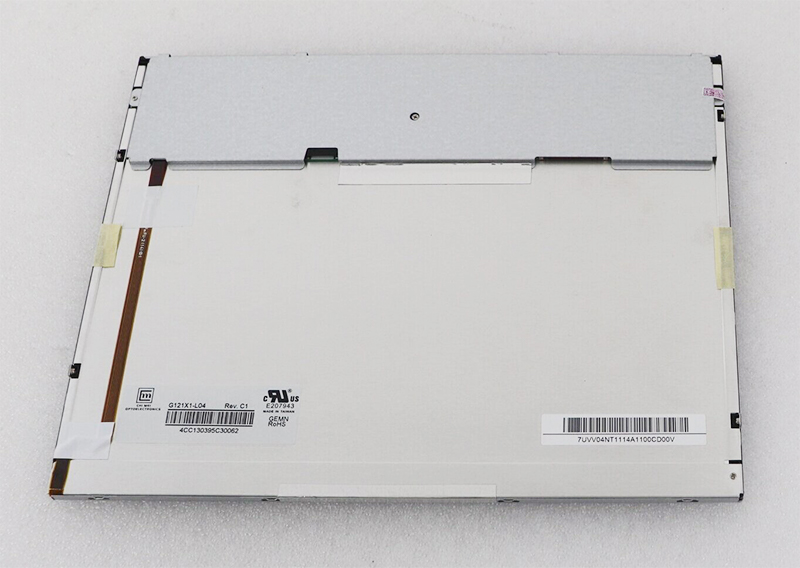
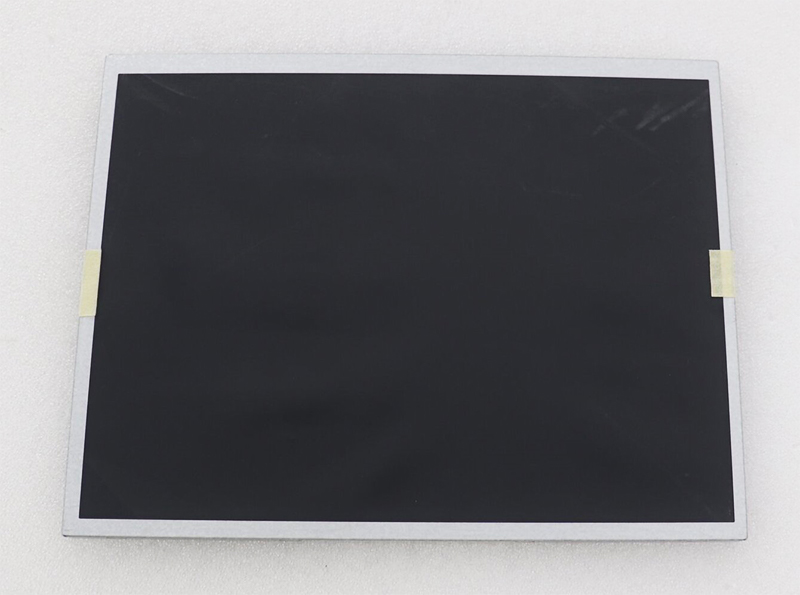
Innolux 12.1 inch 1024*768 XGA TFT-LCD Panel G121X1-L04
In the intricate world of industrial and embedded display solutions, the selection of a single panel can define the performance, reliability, and user experience of an entire product line. Among the myriad of options, the Innolux 12.1-inch 1024x768 XGA TFT-LCD Panel, model G121X1-L04, stands out as a mature and highly engineered component. This article delves deep into this specific display module, moving beyond basic datasheet specifications to explore its architectural significance, technological trade-offs, and ideal application landscapes.
We will dissect why this particular resolution and form factor remains persistently relevant in an era of 4K and OLED. The analysis will cover its core panel technology, the implications of its optical performance, and the critical interface and compatibility considerations for engineers. Furthermore, we will examine its ruggedness for demanding environments and perform a candid competitive analysis to position it within the current market. This comprehensive guide aims to provide product designers, engineers, and procurement specialists with the insights needed to make an informed decision on whether the G121X1-L04 is the optimal display engine for their next project.
Decoding the XGA Standard: Why 1024x768 Endures
The XGA (Extended Graphics Array) resolution of 1024x768 pixels, with its 4:3 aspect ratio, might seem like a relic in a world dominated by widescreen formats. However, its endurance is a testament to perfect suitability for specific applications. The G121X1-L04 leverages this standard to deliver sharp, legible imagery without imposing excessive processing overhead on embedded systems. For industrial control panels, medical diagnostic devices, and point-of-sale systems, the 4:3 aspect ratio efficiently displays traditional toolbars, data lists, and portrait-oriented documents without the wasted space common with widescreens on legacy interfaces.
This resolution represents a sweet spot between clarity and system resource management. It provides sufficient pixel density for a 12.1-inch diagonal, ensuring text and fine graphics are crisp, while keeping the data throughput requirements manageable for low-power CPUs and older graphic controllers. This balance makes it a cost-effective and performance-optimized choice for upgrading or maintaining systems originally designed around this ubiquitous standard, ensuring long-term supply and compatibility.
Core Technology and Optical Performance Breakdown
At the heart of the G121X1-L04 is a Twisted Nematic (TN) TFT-LCD panel. TN technology is chosen here for its proven reliability, fast response times, and cost efficiency. The panel offers a brightness of 300 nits (typical), making it viewable under normal indoor lighting conditions, and a contrast ratio of 500:1, which ensures adequate differentiation between dark and light areas for data-centric applications. The color depth is 262K/16.7M, indicating it can accept 6-bit or 8-bit data, providing flexibility in color reproduction fidelity based on the host system's capability.
Its optical performance is defined by a wide operating temperature range (-30 to +80°C), crucial for non-climate-controlled industrial environments. The viewing angles, typical of TN technology, are more constrained (e.g., 50/60/50/60 degrees in Left/Right/Up/Down directions) compared to IPS panels. This is a calculated trade-off: the application often dictates a primarily head-on viewing position, such as an operator directly facing a machine, allowing the benefits of faster response and lower cost to take precedence without compromising the intended user experience.
Interface and System Integration Considerations
The G121X1-L04 is designed for straightforward integration, featuring a single-channel LVDS (Low-Voltage Differential Signaling) interface. This 20-pin connector is an industry staple, known for its robustness against electromagnetic interference—a critical factor in electrically noisy industrial settings. The interface supports both 6-bit and 8-bit color data input, allowing system designers to choose between broader color gamut or simplified data handling.
Integration extends beyond the socket. The module includes an LED backlight system with a typical lifetime of 50,000 hours, minimizing maintenance concerns. Designers must account for the power sequencing requirements and the need for an external LCD controller (unless the host SoC provides a direct LVDS output). The mechanical footprint and the position of mounting holes are standardized, but careful attention to the datasheet's detailed drawings is essential for seamless physical integration into the end product's chassis.
Ruggedness and Reliability for Demanding Environments
This panel is engineered not for consumer luxury but for operational longevity. Its wide temperature tolerance is the first line of defense, ensuring functionality from freezing cold storage facilities to hot factory floors. The construction is designed to resist vibrations and minor impacts common in transportation, manufacturing, and field service equipment. The use of a robust metal frame and durable connector safeguards the internal components from physical stress.
Furthermore, the choice of materials and the manufacturing process are geared towards extended product lifecycles, which are common in B2B and industrial sectors where equipment is used for a decade or more. This reliability reduces the total cost of ownership by minimizing downtime and replacement needs. For applications in medical, automotive test equipment, or outdoor kiosks (with proper protective coverings), this inherent ruggedness is not a feature but a fundamental requirement.
Competitive Analysis and Market Positioning
Positioning the G121X1-L04 reveals its strategic niche. It competes not with high-end consumer displays but with other industrial-grade TFT modules from manufacturers like AUO, Sharp, or BOE. Its primary advantages are the proven XGA format, Innolux's supply chain stability, and a competitive price point for a reliable, long-life component. It often serves as a direct drop-in replacement for older panels in legacy systems, facilitating easy upgrades.
Compared to newer IPS panels, it concedes on viewing angles and color vibrancy but may lead in response time and cost. Against lower-resolution panels like SVGA, it offers superior clarity. Its market is defined by applications where fitness for purpose, reliability, and total lifecycle cost trump the pursuit of the latest display technology. It is the workhorse panel for systems where the display is a tool, not an entertainment center.
Ideal Application Scenarios and Use Cases
The G121X1-L04 finds its ideal home in environments where function, durability, and compatibility are paramount. Key verticals include Industrial Human-Machine Interfaces (HMIs) for factory automation and control systems, where its readability and ruggedness shine. In the Medical Field, it is suitable for diagnostic devices, patient monitors, and laboratory equipment that operate within controlled, front-facing viewing conditions.
Other prime use cases encompass Point-of-Sale (POS) terminals and kiosks, demanding long operational hours and consistent performance. It is also prevalent in transportation and logistics (e.g., vehicle telematics, forklift displays) and test and measurement equipment. In each scenario, the panel's value is derived from its ability to perform a specific visual task reliably, day in and day out, over many years, without demanding excessive resources from the host system.
FAQs
Q10: What applications is it NOT suitable for?A10: It is not ideal for consumer televisions, high-end graphic design, or any application requiring very wide viewing angles, ultra-high contrast, or touch functionality (unless a separate touch overlay is added).
Conclusion
The Innolux G121X1-L04 is far more than a simple collection of glass and electronics; it is a purpose-built solution engineered for durability, compatibility, and long-term performance in professional environments. Its continued relevance underscores a vital market principle: optimal technology is not always the newest, but the one that most precisely aligns with the application's core requirements. For systems demanding a reliable, legible, and resource-efficient display in a 12.1-inch XGA format, this panel remains a compelling and intelligent choice.
In a landscape chasing ever-higher pixel counts, the G121X1-L04 stands as a testament to robust, practical design. It serves as a critical reminder for engineers and designers that successful product integration hinges on understanding the operational ecosystem. By choosing a display like this, one invests not in fleeting specs, but in operational stability, lifecycle cost-efficiency, and the assurance that the visual interface will perform as expected, year after year, in the field.