- Industrial LCD display
-
Industrial Products
- DC Servo Drive
- AC Servo Drive
- other
- Heidelberg
- FANUC
- IFM
- Meter
- CCD
- Membrane Keypad
- Film
- YOKOGAWA Module
- Card
- ABB
- MITSUBISHI
- FANUC
- KEYENCE
- BECKHOFF
- Honeywell
- HOLLYSYS
- FUJI servo drives
- HP
- solenoid valve
- thermostat
- Siemens adapter
- color oscilloscope
- Fujitsu connector
- CHELIC
- SMC
- CISCO Module
- INTEL
- Key board
- FAIRCHILD
- Motherboard
- Board
- Bearing
- other
- Control Panel
- Contactor
- Circuit
- OMRON
- Relay
- Controller
- Photoelectric Switch
- Photoelectric Sensor
- Original
- Fan
- Motor Driver
- Limit Switch
- Amplifier
- power supply
- LENZE
- Cable
- Encoder
- Sensor
- Transformer
- Fiber Optic Sensor
- Protection Relay
- Temperature Controller
- Proximity Switch
- Switch Sensor
- Siemens
- Industrial board
- HMI Touch Glass
-
HMI Full Machine Whole unit
- OMRON HMI Touch Panel
- Siemens HMI Touch Panel
- Mitsubishi HMI Touch Panel
- Allen-Bradley automation HMI Touch Panel
- DELTA HMI Touch Panel
- EVIEW DELTA HMI Touch Panel
- KINCO DELTA HMI Touch Panel
- HITECH HMI Touch Panel
- WEINTECK HMI Touch Panel
- TECVIEW HMI Touch Panel
- WEINVIEW HMI Touch Panel
- PRO-FACE HMI Touch Panel
- SIMATIC HMI Touch Panel
- AMPIRE HMI Touch Panel
- HEIDELBERG HMI Touch Panel
- PANASONIC HMI Touch Panel
- PATLITE HMI Touch Panel
- KYOCERA HMI Touch Panel
- KEYENCE HMI Touch Panel
- WEINVIEW HMI Touch Panel
- HITECH HMI Touch Panel
- FUJI HMI Touch Panel
- HAKKO HMI Touch Panel
- SCHNEIDER HMI Touch Panel
- SAMKOON touch panel
- other
- Module
- lcd inverter
- Membrane Keypad Switch
- Winni Touch Screens
- Frequency Inverter
- Servo Motor
- PLC



NEW G101STN01.5 FOR AUO 10.1-inch 1024*600 LCD display panel
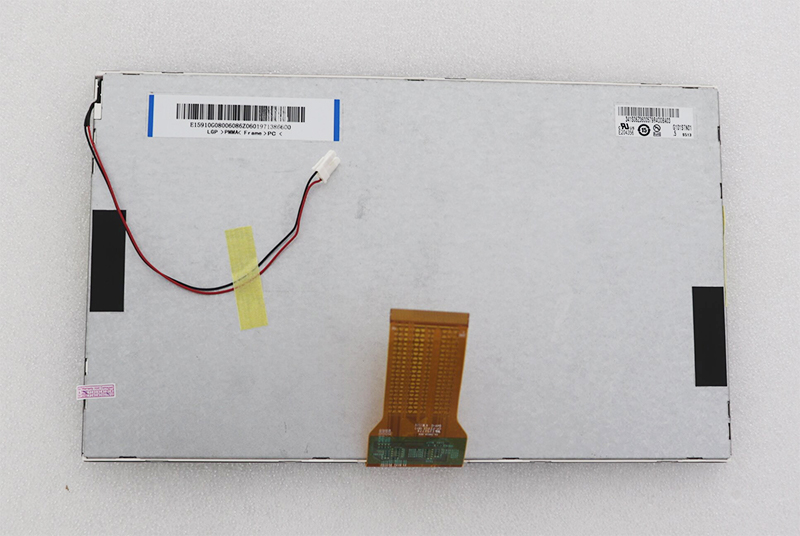
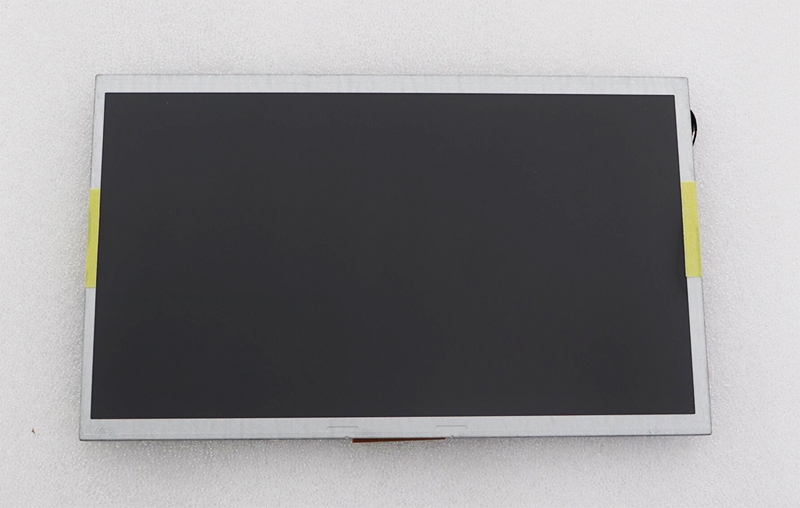
In the intricate ecosystem of modern display technology, the choice of a specific LCD panel can define the performance, reliability, and visual quality of an entire device. For engineers, procurement specialists, and product developers working with 10.1-inch display solutions, the AUO G101STN01.5 panel emerges as a critical component worthy of detailed examination. This model, a 10.1-inch LCD panel with a resolution of 1024(RGB)×600, represents a mature yet highly relevant standard in applications ranging from industrial human-machine interfaces (HMIs) and portable medical devices to in-vehicle infotainment systems and point-of-sale terminals.
This article delves into a comprehensive technical and commercial analysis of the NEW G101STN01.5 panel. We will move beyond basic datasheet specifications to explore its underlying technology, key performance characteristics, and the specific market niches it serves. Our analysis will provide actionable insights for professionals tasked with integrating this display into their products, considering factors from optical performance and mechanical robustness to supply chain logistics and compatibility considerations. Understanding the nuances of this panel is essential for making informed design decisions that balance cost, quality, and long-term viability.
Decoding the G101STN01.5: Core Technology and Architecture
The "G101STN01.5" nomenclature follows AUO's standard coding, where 'G10' indicates a 10.x-inch diagonal size, '1STN' specifies the panel type, and the subsequent digits denote revision and backlight configuration. This panel utilizes a Twisted Nematic (TN) liquid crystal mode, a technology prized for its fast response times, high contrast ratio, and manufacturing cost-effectiveness. The 1024(RGB)×600 resolution translates to a pixel pitch that offers a balance between sharpness and power consumption, suitable for mid-range graphical user interfaces.
Architecturally, the panel employs an LVDS (Low-Voltage Differential Signaling) interface, a robust and widely adopted standard for transmitting high-speed video data with minimal electromagnetic interference. This makes it compatible with a vast array of standard display controllers and system-on-chip (SoC) solutions. The integration of an LED backlight unit provides uniform illumination, long lifespan, and better energy efficiency compared to older CCFL technology. The mechanical design, including its outline dimensions and mounting hole positions, is standardized to facilitate drop-in replacement and design consistency across product generations.
Optical Performance and Viewing Experience Analysis
The visual performance of the G101STN01.5 is defined by a set of key optical parameters. Its typical brightness of 300 nits (cd/m²) ensures adequate visibility in most indoor environments, while its contrast ratio, typically around 600:1, delivers deep blacks and clear image differentiation—a strength of TN technology. The color gamut coverage, often around 50-60% of NTSC, is sufficient for applications where accurate color reproduction is secondary to reliability and text clarity.
However, a critical consideration for TN panels is their viewing angle performance. This panel exhibits characteristic TN limitations, with color shift and contrast inversion occurring at wider vertical and horizontal angles. This makes it ideal for applications where the user views the screen primarily from a direct, frontal position, such as a fixed-mount HMI panel or a driver's dashboard display. For applications requiring wide viewing angles, an IPS alternative would be necessary, but often at a higher cost and with slightly slower response times.
Target Applications and Market Fit
The technical profile of the G101STN01.5 directly aligns with several key industrial and commercial markets. Its robustness, stable supply, and cost-effectiveness make it a preferred choice for Industrial Automation, where it serves in PLC interfaces, control panels, and test equipment that demand 24/7 reliability. In the Transportation sector, it finds use in rear-seat entertainment, fleet management systems, and navigation displays, benefiting from its wide operating temperature range.
Furthermore, the panel is well-suited for Medical Monitoring devices (where fast response times are crucial for displaying real-time data), Kiosks and POS systems, and various Embedded Computing platforms. Its longevity in the market means a mature ecosystem of compatible touch screen overlays (resistive or capacitive), controller boards, and metal bezels, significantly reducing development time and risk for OEMs.
Integration Considerations and Design Challenges
Successfully integrating the G101STN01.5 into a final product requires attention to several engineering details. Power sequencing is paramount; improper voltage application to the LCD driver IC can cause permanent damage. Designers must adhere strictly to the timing diagrams in the datasheet. EMC (Electromagnetic Compatibility) design around the LVDS lines is also critical—differential pair routing with controlled impedance and proper shielding ensures a clean signal and prevents noise from disrupting other components.
Another challenge involves thermal management. While LED backlights generate less heat than CCFLs, prolonged operation in sealed enclosures, especially in high-ambient-temperature industrial settings, can affect longevity and brightness. Adequate ventilation or heat sinking may be required. Finally, sourcing a compatible LCD controller board that matches the panel's resolution, interface (LVDS), and power requirements is a fundamental step in the integration process.
Supply Chain and Sourcing Strategies
As a panel that has been in production for multiple years, the G101STN01.5 is typically available through a network of authorized distributors and specialized display module suppliers. However, professionals must develop a savvy sourcing strategy. Verifying authenticity is crucial to avoid counterfeit or refurbished panels being sold as new, which can lead to field failures and increased warranty costs.
Engaging with suppliers who provide full technical support, including detailed datasheets, mechanical drawings, and application notes, adds significant value. For long-term projects, discussing inventory buffers and end-of-life (EOL) forecasts with the supplier is essential to mitigate supply chain disruption risks. In some cases, identifying and qualifying a pin-to-pin compatible alternative from another manufacturer can serve as a vital risk mitigation strategy.
The Future Context: Legacy Reliability vs. Emerging Tech
In an era of rapid advancement towards OLED and Mini-LED displays, the G101STN01.5 occupies a vital space defined by proven reliability and total cost of ownership. For many B2B and industrial applications, the latest display technology is not just overkill but potentially unsuitable due to burn-in risks (OLED) or higher cost structures. This panel represents a "sweet spot" of mature, dependable technology.
Its future relevance is secured by the ongoing digitization of industrial and commercial equipment. While its core technology may not be cutting-edge, iterative improvements in backlight efficiency and manufacturing processes continue. For new designs, it remains a strong candidate. For legacy product maintenance and refreshes, its continued availability is often the linchpin for sustaining product lines for years to come, avoiding costly and time-consuming complete redesigns.
FAQs: NEW G101STN01.5 Display Panel
Q10: Is this panel still in active production?A10: As a widely used model, it is generally in active production, but its status should be confirmed with suppliers for any long-term project planning.
Conclusion
The AUO G101STN01.5 10.1-inch LCD panel stands as a testament to the enduring value of mature, well-engineered display technology. Its combination of TN performance characteristics, robust LVDS interface, and standardized form factor has cemented its position as a reliable workhorse across diverse industrial and commercial sectors. This analysis has moved beyond mere specifications to explore the practical realities of its optical behavior, ideal applications, integration complexities, and sourcing landscape.
For product developers and engineers, the key takeaway is that selecting a display is a strategic decision balancing technical requirements, lifecycle costs, and supply chain security. The G101STN01.5 offers a compelling solution where reliability, cost-effectiveness, and a proven track record are paramount. By understanding its strengths within the context of viewing angle limitations and by implementing careful design and sourcing practices, professionals can leverage this component to build durable and effective digital products that stand the test of time in demanding environments.